
On this page
What's Happening in UK Kitchen Flooring Right Now
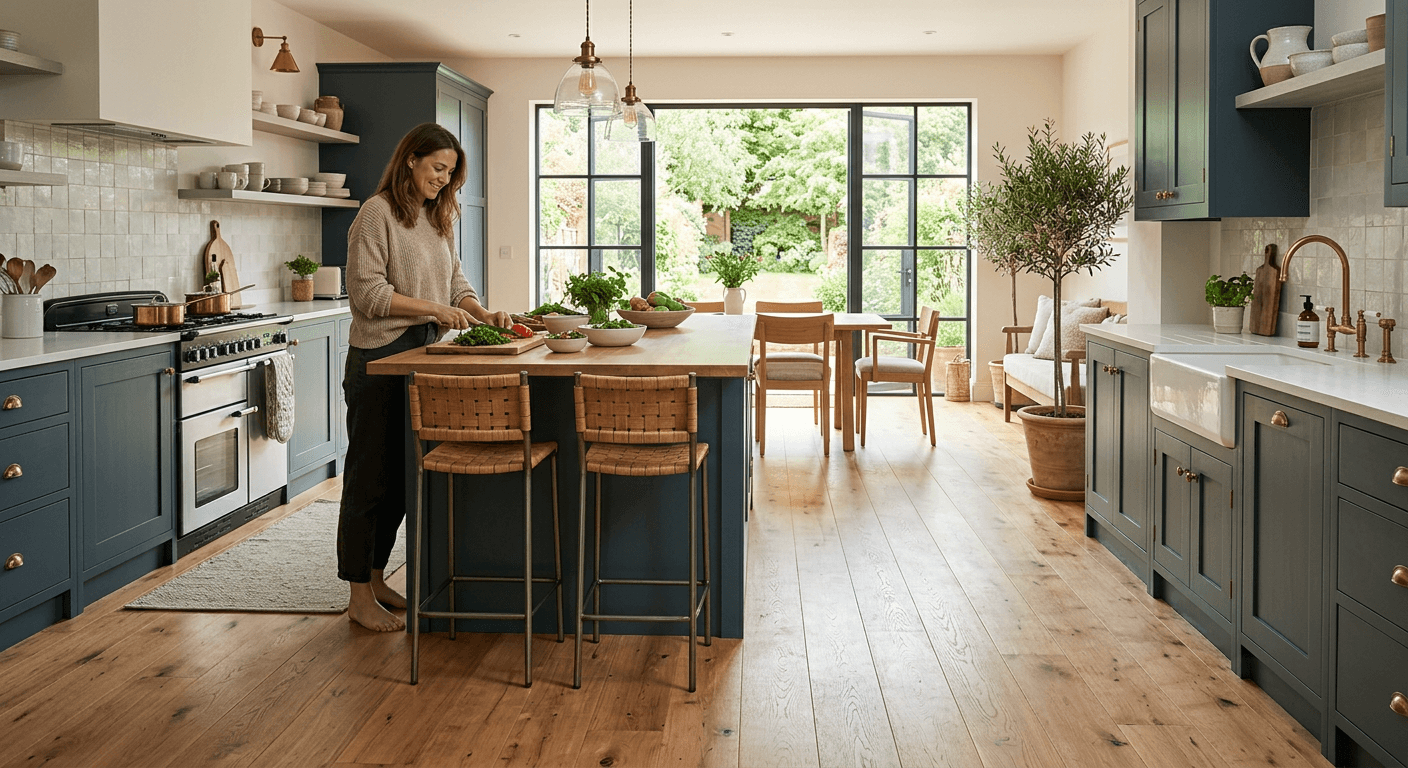
The search for the best flooring for kitchens has changed dramatically over the past two years. We've seen a seismic shift away from traditional ceramic tiles towards warmer, more resilient materials that balance practicality with aesthetics. Luxury vinyl tile (LVT) now accounts for nearly 40% of new kitchen flooring installations across the UK, according to data from the Contract Flooring Association, whilst engineered wood continues its steady climb in popularity—particularly in open-plan living spaces where kitchen zones blur into dining and living areas.
Key Takeaways
- LVT dominates: Luxury vinyl tile has overtaken ceramic as the most popular kitchen flooring choice, offering water resistance and underfloor heating compatibility at £25-£60 per m²
- Engineered oak remains premium: Expect to pay £40-£90 per m² for quality engineered oak flooring, with installation adding £15-£25 per m² in most UK regions
- Wide planks are trending: The shift towards 220mm+ plank widths continues, creating a more contemporary, spacious feel
- Sustainability matters: FSC-certified wood and recyclable LVT options are increasingly requested by environmentally conscious homeowners
- Textured finishes rising: Smooth, glossy surfaces are fading fast—brushed, wire-brushed, and hand-scraped textures dominate 2024 specifications
The Clear Winner: Why LVT Has Conquered UK Kitchens
Luxury vinyl tile's rise to dominance isn't accidental. We've watched this category evolve from a budget compromise into a genuinely premium option that often outperforms natural materials in kitchen environments.
The numbers tell the story. A luxury vinyl tile vs laminate comparison reveals why discerning homeowners are choosing the former: LVT offers 100% waterproofing (laminate remains vulnerable at joins), superior scratch resistance, and quieter underfoot performance. Brands like Karndean, Amtico, and Moduleo have refined their products to the point where visual distinction from real wood or stone requires close inspection.
Pricing has become remarkably competitive. Entry-level LVT starts around £25 per m² at the major retailers—Wickes and B&Q stock decent own-brand ranges—whilst premium collections from Amtico Signature or Karndean Art Select reach £55-£75 per m². Installation typically adds £20-£30 per m² depending on subfloor preparation requirements.
The best part? LVT ticks every box for underfloor heating compatible flooring types. Its dimensional stability and excellent thermal conductivity make it ideal for UFH systems, which continue to grow in popularity across UK new-builds and renovations.
Engineered Oak: The Premium Choice That's Getting More Affordable
Engineered oak hasn't surrendered its position as the aspirational kitchen flooring choice. The material offers authenticity that even the best LVT can't quite replicate—real wood grain, natural colour variation, and a tactile warmth that appeals to design-conscious homeowners.
Is Engineered Wood Better Than Solid Wood?
For kitchen applications, the answer is unequivocally yes. Engineered wood's layered construction—a real oak veneer bonded to a stable plywood or HDF core—provides dimensional stability that solid wood simply cannot match in environments with temperature and humidity fluctuations.
Solid wood expands and contracts seasonally, creating gaps in winter and potential buckling in summer. Engineered oak remains stable year-round, making it compatible with underfloor heating (solid wood generally isn't recommended for UFH installations).
The engineered oak flooring cost per m2 has compressed considerably. Three years ago, quality products started at £60-£70 per m². Today, reputable suppliers offer excellent engineered oak from £40-£50 per m², with premium wide-plank options (220mm+) ranging from £65-£90 per m². Installation costs mirror LVT at £15-£25 per m² for straightforward projects.
Based on listings in our flooring directory, we're seeing more specialist installers offering engineered wood alongside LVT, reflecting the growing demand for both materials.
What's Trending: The Aesthetic Shifts Reshaping UK Kitchens
Wide Planks and Long Lengths
Narrow 125mm-150mm planks feel dated. The market has embraced wider formats—190mm is now standard, with 220mm-260mm planks increasingly common in new installations. Longer plank lengths (1800mm-2200mm) reduce the number of end joints, creating cleaner sightlines.
This trend spans both LVT and engineered wood categories. Karndean's Van Gogh range and Quick-Step's Impressive collection both emphasise generous proportions that create visual spaciousness—particularly valuable in smaller UK kitchens.
Natural, Matte, and Textured Finishes
High-gloss and perfectly smooth surfaces have fallen from favour. Today's preferences lean heavily towards:
- Wire-brushed textures that emphasise grain patterns
- Hand-scraped finishes that add character
- Matt and satin lacquers rather than glossy polyurethane
- Authentic knots, mineral streaks, and colour variation
- Lime-washed and white-oiled oak treatments
This shift reflects broader interior design trends favouring natural, lived-in aesthetics over pristine showroom perfection. The practical benefit? Textured finishes hide scratches and wear far better than smooth surfaces—crucial for the best flooring for pets and children UK families are seeking.
Warmer, Richer Tones Are Back
The grey wood trend that dominated 2015-2020 has finally peaked. We're seeing a pronounced return to warmer honey oaks, mid-brown tones, and even richer walnut and espresso colours. This doesn't mean cool tones have disappeared—they've simply lost their monopoly.
Interestingly, regional preferences vary. Our directory data shows London specifications still skew towards contemporary greys and whites, whilst Manchester and Birmingham have embraced warmer palettes more enthusiastically.
What's Fading: Trends on Their Way Out
High-Gloss Ceramic Tiles
Large-format gloss porcelain tiles dominated kitchen floors throughout the 2010s. They're now retreating rapidly, undermined by:
- Cold underfoot feel (even with UFH)
- Unforgiving hardness causing fatigue and broken crockery
- Slippery surfaces when wet
- Harsh acoustic properties in open-plan spaces
- Clinical appearance that feels dated
Where tiles persist, we're seeing matt or textured finishes in smaller formats (200mm x 200mm or decorative patterns) rather than the 600mm x 600mm gloss slabs that once dominated.
Laminate in Kitchen Zones
Laminate flooring had a good run, but its vulnerability to water damage makes it increasingly hard to justify in kitchens. Even water-resistant laminates can't match LVT's impermeability. The small price difference (quality laminate runs £20-£40 per m², barely cheaper than entry-level LVT) doesn't compensate for the performance gap.
Laminate retains relevance in bedrooms and living areas, but for kitchens specifically, we're watching its market share decline year-on-year.
What's Emerging: The Next Generation
Sustainable and Recycled Materials
Environmental credentials increasingly influence purchasing decisions. FSC-certified engineered wood has moved from niche to standard specification. LVT manufacturers are responding with recyclable products—Tarkett's iQ Natural collection uses recycled content and remains 100% recyclable at end-of-life.
Cork and bamboo flooring maintain small but growing niches, particularly among environmentally conscious homeowners. Both materials offer natural antimicrobial properties and renewable sourcing, though neither has achieved mainstream adoption yet.
Rigid Core LVT
The latest LVT evolution—rigid core or SPC (stone plastic composite) formats—offers enhanced durability and simpler installation. These products feature a dense, dimensionally stable core that eliminates the need for perfectly level subfloors.
Brands like Quick-Step's Livyn Rigid and Moduleo's LayRed ranges have popularised this category. Pricing sits slightly above standard LVT at £35-£65 per m², but installation costs often decrease due to faster fitting times.
Practical Considerations: Matching Flooring to Your Household
What Is the Most Durable Flooring for a Family Home?
For the best flooring for pets and children UK families need, we recommend rigid core LVT or quality engineered oak with a robust finish. Both handle the punishment of daily family life admirably.
LVT offers superior scratch resistance—particularly important for homes with dogs whose claws can damage softer surfaces. Look for products with wear layer ratings of 0.55mm or above for heavy domestic use. Karndean Knight Tile and Amtico Spacia both exceed this specification comfortably.
Engineered oak with factory-applied UV-cured lacquer (6-7 coats) provides excellent durability. Brands like Boen, Kahrs, and Quick-Step offer 25-30 year residential warranties on their premium ranges, which speaks volumes about expected longevity.
Best Flooring for Hallways High Traffic
Hallways present unique challenges—they're the highest-traffic zones in most homes, suffer from outdoor dirt and moisture, and set the aesthetic tone for the entire property.
The best flooring for hallways high traffic demands considers:
- Wear layer thickness (0.55mm+ for LVT)
- Surface texture to hide scratching
- Colour and pattern that disguises dirt
- Easy cleaning and maintenance
Medium-toned engineered oak or LVT in wood-effect patterns with natural variation work exceptionally well. Avoid very dark or very light colours that show every speck of dirt and every scratch.
Can You Put Underfloor Heating Under Laminate?
Technically yes, but with significant caveats. Laminate's wood fibre core makes it less thermally conductive than LVT or engineered wood, reducing UFH efficiency. More concerningly, heat cycling can accelerate laminate degradation, causing edge lifting and surface deterioration.
If you're committed to laminate over UFH, ensure:
- Maximum floor temperature never exceeds 27°C
- The product is explicitly rated for UFH use
- Combined tog rating (underlay plus flooring) stays below 2.5
- You use thin, high-density underlay designed for UFH
Honestly though, we'd steer you towards engineered wood or LVT instead. Both materials are among the best underfloor heating compatible flooring types available, offering superior thermal conductivity and longevity.
Regional Price Variations Worth Knowing
Flooring costs vary considerably across the UK. London installation rates typically run 20-30% above national averages—expect £30-£40 per m² for fitting versus £20-£25 elsewhere. Material costs remain relatively consistent as most purchases happen through national chains or online suppliers.
Southern England generally sees higher labour costs than Northern regions, though major cities everywhere command premium rates. Urban installations often involve additional challenges: restricted parking, stair access to flats, and tight working schedules that push prices upward.
For a typical 15m² kitchen, total project costs (materials and installation) break down approximately:
- Budget LVT: £900-£1,200
- Premium LVT: £1,400-£1,800
- Mid-range engineered oak: £1,200-£1,650
- Premium engineered oak: £1,800-£2,400
These figures assume straightforward installation on suitable subfloors. Preparation work, removal of existing flooring, or complex layouts add costs.
Making Your Decision: A Framework
Choosing flooring involves balancing aesthetics, performance, and budget. Here's how we'd approach the decision:
Choose LVT if you prioritise:
- Waterproofing and spill resistance
- Lower maintenance requirements
- Budget considerations (initial cost)
- Compatibility with aggressive cleaning products
- Pet-friendly durability
Choose engineered oak if you prioritise:
- Authentic natural material aesthetics
- Long-term value and refinishing potential
- Warmth underfoot and acoustic properties
- Premium interior design positioning
- Environmental considerations (if FSC-certified)
Both options work superbly with underfloor heating, suit family homes, and offer excellent longevity when properly specified.
Finding the Right Installer
Product selection represents only half the equation. Installation quality determines whether your flooring performs as intended or disappoints within months.
Look for installers with relevant trade association memberships—the National Institute of Carpet and Floorlayers (NICF) or the Contract Flooring Association provide credibility markers. Check reviews across multiple platforms and always view previous work if possible.
Many specialists in our directory offer both supply and fit services, which can streamline projects and clarify warranty responsibilities. When you're ready to move forward, you can browse flooring businesses in your area or search our company directory to compare local options.
For comprehensive kitchen renovations, consulting fitted kitchens specialists alongside flooring contractors ensures proper sequencing and coordination between trades.
The Bottom Line
The best flooring for kitchens in 2024 means LVT or engineered oak for the vast majority of UK households. Both categories have matured to offer exceptional performance, aesthetic appeal, and reasonable pricing.
LVT dominates for good reason—it handles kitchen environments brilliantly whilst delivering contemporary design at accessible price points. Engineered oak remains the premium choice for those wanting authentic natural materials with the stability modern homes demand.
Grey wood is waning, warm tones are ascendant, and wide planks with textured finishes define contemporary specifications. Whatever your choice, avoiding dated high-gloss tiles and vulnerable laminate will serve you well.
Ready to get started? List your business on HouseJester if you're a flooring professional, or browse all categories to explore related services for your home improvement project.
Sources & Further Reading
- Contract Flooring Association: UK Flooring Market Insights - Industry data and trends
- Which?: Best Flooring for Kitchens - Independent product testing and consumer advice
- Building Regulations Approved Document L - Thermal performance standards for floors with underfloor heating systems
This article was created with AI assistance and reviewed by the HouseJester editorial team for accuracy and relevance.
Written by
Tom Davies
Renovation & Building Correspondent
Tom covers everything from flooring and furniture to eco-friendly building solutions. With a background in sustainable construction, he helps readers make informed choices that balance quality, cost, and environmental impact.
- Flooring
- Furniture
- Storage Solutions
- Eco & Sustainable