
On this page
The debate between carpet vs hard flooring continues to dominate UK home improvement discussions, but the landscape has shifted dramatically over the past few years. We've seen a fundamental change in how homeowners approach flooring choices, driven by lifestyle changes, pet ownership rates reaching record highs, and technological advances that have made hard surfaces more comfortable and practical than ever before.
Key Takeaways
- Hard flooring now accounts for approximately 65% of new flooring installations in UK homes, up from 45% in 2018
- Engineered oak with underfloor heating compatibility is the fastest-growing category, with prices ranging from £35-£85 per m²
- Luxury vinyl tile (LVT) has overtaken laminate as the budget-conscious choice for families, offering superior waterproofing and durability
- Carpet remains dominant in bedrooms but has declined sharply in living areas and hallways
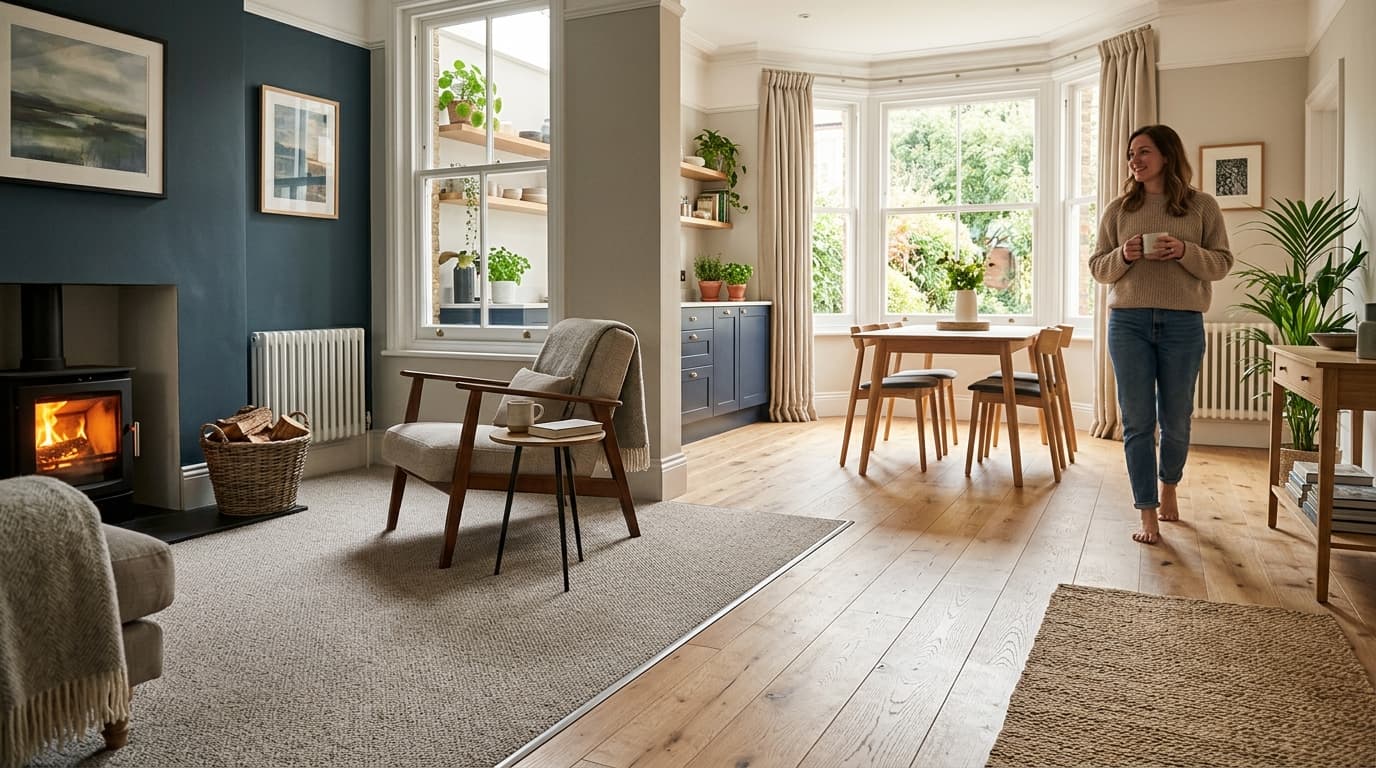
- Hybrid flooring solutions—combining materials in different rooms—are becoming the preferred approach for family homes
The Hard Flooring Revolution: What's Driving the Shift?
The statistics tell a compelling story. According to Which?, hard flooring installations have increased by 43% since 2019, with the pandemic accelerating a trend that was already well underway. Families working from home discovered that hard surfaces were easier to keep clean, allergen-free, and better suited to the daily chaos of remote working and home schooling.
We've observed this shift reflected in our flooring directory listings, where specialist hard flooring installers now outnumber carpet fitters by nearly two to one. The businesses adapting fastest are those offering hybrid expertise—combining traditional craftsmanship with modern materials knowledge.
Pet ownership has played a particularly significant role. With over 34% of UK households now owning a dog and 27% owning a cat, the best flooring for pets and children UK searches have skyrocketed. Hard flooring simply performs better when you're dealing with muddy paws, accidents, and the general wear that comes with active family life.
What is the Most Durable Flooring for a Family Home?
Durability requirements vary enormously depending on your household, but we can offer concrete guidance based on real-world performance data. The Flooring Industry Trade Association reports that properly installed hard flooring can last 20-40 years in residential settings, compared to 10-15 years for quality carpet.
For families with children and pets, luxury vinyl tile (LVT) consistently outperforms other options. The material resists scratching, handles moisture brilliantly, and can be replaced in sections if damaged. Expect to pay £25-£55 per m² supply and fit from reputable installers in most UK regions, though London prices typically run 15-25% higher.
Engineered oak comes in second for durability, particularly when you choose boards with a wear layer of at least 4mm. The engineered oak flooring cost per m2 ranges from £35 for basic grades to £85+ for premium wide-plank options with oil finishes. Installation adds another £15-£30 per m² depending on subfloor preparation requirements.
Solid hardwood remains popular but ranks third for family durability. The material dents more easily than engineered alternatives and requires more maintenance. That said, it can be sanded and refinished multiple times, potentially outlasting any other flooring type.
Is Engineered Wood Better Than Solid Wood?
The answer depends entirely on your specific circumstances, but engineered wood has won the battle for new installations in UK homes. Here's why we recommend it for most situations:
Engineered wood offers dimensional stability that solid wood simply cannot match. The cross-ply construction resists the expansion and contraction that causes solid boards to cup, gap, or crown in response to humidity changes. This matters enormously in the UK, where relative humidity can swing from 40% in heated winter homes to 70%+ in summer.
Underfloor heating compatibility is another decisive factor. Most engineered boards work beautifully over water-based underfloor heating systems, whilst solid wood requires careful species selection and meticulous installation to avoid problems. We'll address this in detail shortly.
The cost difference has narrowed considerably. Quality engineered oak from suppliers like Kährs, Boen, or Woodpecker Flooring costs roughly the same as mid-grade solid wood, but delivers better long-term performance in most UK homes.
That said, solid wood has undeniable appeal for period properties where authenticity matters. You can sand solid boards five to seven times over their lifetime, compared to two to three times for engineered wood with a 4-6mm wear layer. For heritage restorations or high-end renovations where you're planning to stay for decades, solid remains a defensible choice.
The Best Flooring for Hallways High Traffic Areas
Hallways present unique challenges. They take more punishment per square metre than any other space in your home, deal with wet shoes and bags dumped by the door, and set the visual tone for your entire property.
Carpet has fallen dramatically out of favour for hallways. The 2023 Homebuilding & Renovating reader survey found that only 18% of respondents chose carpet for entrance halls and corridors, down from 42% in 2015. The reasons are obvious once you've tried to keep a cream hall runner clean through a British winter.
Here's what actually works:
Porcelain tile dominates in modern builds and complete renovations. Prices range from £30-£100+ per m² installed, with rectified large-format tiles (600x600mm or larger) creating the sleek look currently popular in Birmingham and Manchester new builds. The material is virtually indestructible and handles moisture without complaint.
LVT in rigid core formats has captured the renovation market where ripping up existing floors isn't practical. Products like Karndean, Amtico, or Moduleo can go directly over old vinyl, concrete, or even stable existing flooring. Budget £35-£65 per m² supply and fit.
Engineered oak in darker tones or wire-brushed finishes works brilliantly when you want warmth without maintenance headaches. The textured surface hides minor scratches and dirt, whilst the engineered construction handles the temperature fluctuations near external doors.
Luxury Vinyl Tile vs Laminate Comparison: The Budget Battle
These two materials compete directly for the value-conscious market, but LVT has pulled decisively ahead over the past three years. Our conversations with installers across our directory confirm that luxury vinyl tile vs laminate comparison searches reflect a real shift in consumer behaviour.
LVT advantages are compelling:
- Completely waterproof core construction means you can use it in bathrooms, utility rooms, and fitted kitchens without worry
- Warmer and quieter underfoot than laminate due to vinyl's natural flexibility
- Can be installed as a floating floor or glued down, offering more versatility
- Better wear resistance in high-traffic areas
- Easier to replace individual planks or tiles if damaged
Laminate retains some advantages, primarily price at the very bottom end (£8-£15 per m² for basic products versus £15-£25 for entry-level LVT). Some homeowners also prefer laminate's harder, more wood-like surface feel.
The sweet spot sits around £25-£40 per m² supply and fit for quality LVT that will genuinely last. Products in this range typically carry 15-20 year residential warranties and perform brilliantly for families. Laminate at similar prices cannot match the practical benefits.
Can You Put Underfloor Heating Under Laminate?
You can, but it's not ideal. Laminate conducts heat poorly due to its high-density fibreboard core and requires careful product selection to avoid long-term problems. The Building Regulations Approved Document Part L requires floor finishes over underfloor heating to have a combined thermal resistance (R-value) below 0.15 m²K/W.
Many laminate products exceed this threshold, meaning your heating system works harder and costs more to run whilst delivering less heat to the room. Additionally, the temperature cycling can cause cheaper laminates to expand, contract, and eventually fail at the locking mechanisms.
Underfloor heating compatible flooring types that actually work well include:
- Engineered wood with maximum 15mm total thickness: The thinner the board, the better the heat transfer. Look for products explicitly rated for UFH with R-values below 0.10.
- LVT and luxury vinyl flooring: Excellent heat conductivity and completely stable across temperature ranges. Most products work perfectly with both water and electric systems.
- Porcelain and ceramic tile: The gold standard for underfloor heating, offering the best heat transfer of any flooring material.
- Carpet with hessian or synthetic backing: Maximum tog rating should be 1.5 for the carpet and underlay combined. This severely limits your options but some low-pile commercial-grade carpets work adequately.
Water-based underfloor heating systems work with all these materials. Electric systems require more careful specification due to higher surface temperatures. We always recommend consulting with both your heating installer and flooring supplier to verify compatibility before committing to products.
Emerging Trends to Watch
Several developments are reshaping the UK flooring market as we move through 2024:
Cork and bamboo are making a comeback, marketed as sustainable alternatives to traditional hardwood. Prices have become more competitive (£30-£55 per m² installed), and the materials offer genuine environmental benefits. Cork particularly excels for standing comfort, making it popular for kitchen renovations.
Extra-wide engineered boards (220mm+) continue growing in popularity, creating a more contemporary look with fewer visible joints. Expect to pay a 20-40% premium over standard widths.
Micro-concrete and polished concrete floors have moved from industrial conversions to mainstream renovations, especially in open-plan living areas. Costs vary wildly (£80-£200+ per m² depending on finish complexity), but the aesthetic appeals to design-conscious homeowners.
Reclaimed and parquet flooring is experiencing renewed interest as homeowners seek character and sustainability. Herringbone and chevron patterns have moved beyond period properties into new builds, though installation costs are substantial (£60-£120 per m² for labour alone).
What's Fading: Flooring Trends on the Way Out
High-gloss laminates that dominated the mid-2010s now look dated. Matt and satin finishes have comprehensively taken over, offering a more natural appearance and showing scratches less obviously.
Very light, bleached oak finishes peaked around 2020-2021. We're seeing a definite shift toward mid-tones and even darker browns as homeowners tire of the Scandinavian minimalist aesthetic.
Cheap vinyl sheet flooring is virtually extinct outside rental properties. LVT's price has dropped enough to make traditional sheet vinyl economically irrelevant for most applications.
Making Your Decision: Practical Steps Forward
The carpet versus hard flooring decision ultimately comes down to your specific household requirements, budget, and long-term plans. We recommend this approach:
-
Audit your lifestyle honestly. How many people live in your home? Do you have pets? Young children? Do family members have allergies? These factors should drive your decision more than aesthetics.
-
Get samples and live with them. Every reputable supplier offers sample packs. Place them in the actual rooms, observe them in morning and evening light, and walk on them barefoot. The material that looks perfect online might feel completely wrong in your space.
-
Budget realistically for the full project. Floor removal, subfloor preparation, and finishing touches (skirting boards, thresholds, underlays) easily add 30-50% to the headline material costs. For a typical UK semi-detached home, expect total project costs of £3,500-£8,000 for complete ground-floor hard flooring replacement with good quality materials and professional installation.
-
Use our directory to find multiple quotes. Browse our flooring specialists to find experienced installers in your area. We've found that getting three quotes from different types of businesses—a general flooring contractor, a material-specific specialist, and a larger regional company—gives you the best perspective on fair pricing and available options.
-
Consider hybrid solutions. Hard flooring for living areas, hallways, and kitchens, with quality carpet retained for bedrooms, often delivers the best combination of practicality and comfort.
The UK flooring market offers more choice, better quality, and more competitive pricing than ever before. The carpet versus hard flooring debate isn't about one winning definitively—it's about matching materials to your specific needs. For most family homes, the trend toward hard surfaces reflects genuine practical advantages that make daily life easier.
Ready to start your flooring project? Browse specialists in our flooring category or list your business if you're a flooring professional looking to reach more UK homeowners.
Sources & Further Reading
- Which? Flooring Reviews and Buying Guides - Comprehensive independent testing and consumer research on flooring products
- Homebuilding & Renovating Magazine - UK-focused renovation advice, trend analysis, and reader surveys
- The Flooring Industry Trade Association - UK trade body with technical guidance and industry standards
This article was created with AI assistance and reviewed by the HouseJester editorial team for accuracy and relevance.
Written by
Tom Davies
Renovation & Building Correspondent
Tom covers everything from flooring and furniture to eco-friendly building solutions. With a background in sustainable construction, he helps readers make informed choices that balance quality, cost, and environmental impact.
- Flooring
- Furniture
- Storage Solutions
- Eco & Sustainable