
On this page
Introduction
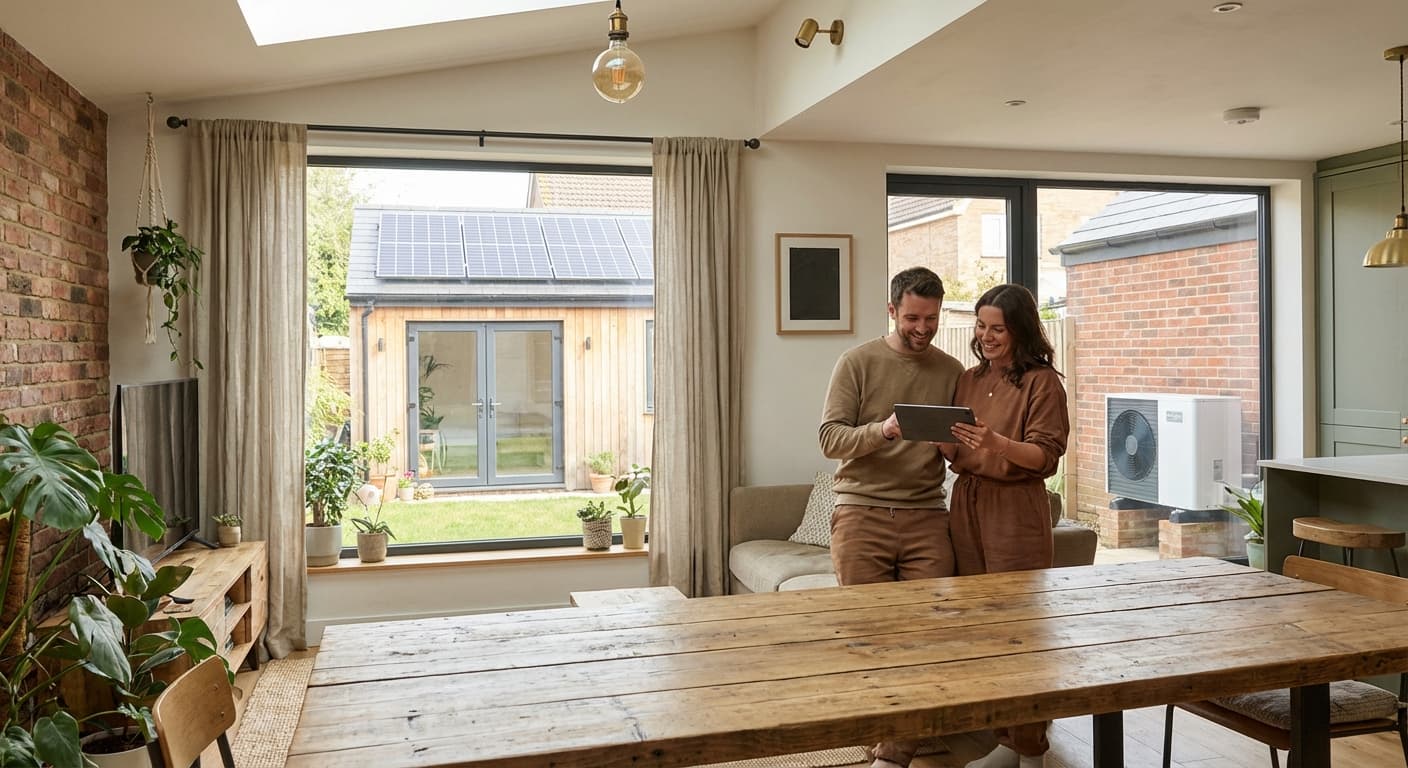
British homeowners are facing a perfect storm of rising energy bills, stricter Building Regulations, and growing environmental consciousness. The result? Eco home improvements UK installations have surged by over 40% since 2023, according to the Energy Saving Trust. Whether you're motivated by lower bills, a better EPC rating, or reducing your carbon footprint, this guide will walk you through the most cost-effective green upgrades for UK homes.
Our team has worked with dozens of eco & sustainable specialists across the country, and we've distilled their expertise into practical, actionable advice that works for British properties, climate, and budgets.
Key Takeaways
- Solar panels typically cost £5,000–£8,000 but can save £400–£800 annually on bills, with payback periods of 8–12 years
- Cavity wall and loft insulation remain the cheapest eco upgrades, costing £500–£1,500 and saving £200–£400 yearly
- Air source heat pumps (£10,000–£14,000 installed) now rival gas boilers on running costs, especially with the Boiler Upgrade Scheme grant
- Achieving EPC rating C requires a combination approach: insulation first, then heating system upgrades
- Government grants worth up to £7,500 are available for heat pumps in 2025, making now an excellent time to upgrade
How to Prioritise Your Eco Home Improvements
Start with an energy assessment. Most local councils offer free or subsidised surveys through the Home Energy Scotland programme (in Scotland) or Nest schemes (in Wales). England typically requires booking a private EPC assessor, costing £60–£120.
We recommend this order of priority:
- Seal the envelope first — Fix draughts, upgrade windows, and insulate before changing heating systems
- Upgrade insulation — Loft and cavity walls deliver the fastest payback
- Improve heating efficiency — Only after insulation is sorted
- Generate renewable energy — Solar panels and battery storage as final steps
This approach maximises efficiency. Installing a heat pump in a poorly insulated Victorian terrace is like pouring water into a leaky bucket.
Are Solar Panels Worth It in the UK?
Short answer: yes, but it depends on your roof orientation and electricity usage.
The solar panel installation cost UK 2025 savings equation has improved dramatically. A typical 4kW system costs £5,000–£8,000 (£10,000–£14,000 with battery storage). With electricity prices hovering around 24–27p per kWh in 2025, a well-positioned system saves £400–£800 annually.
What Makes Solar Viable in Your Home
South-facing roofs perform best, but east-west splits work well too, especially if you're home during morning and evening peaks. North-facing installations rarely make financial sense in Britain's climate.
Roof condition matters — If your roof needs replacing within 10 years, do it first. Removing and reinstalling panels costs £800–£1,500.
Shading kills performance — Even partial shade from trees or chimneys can reduce output by 30–50%. Companies listed on HouseJester can conduct free shade analysis using satellite imagery.
Most suppliers we've worked with in London and Manchester now include monitoring apps as standard. These show real-time generation and help you shift heavy electricity use (washing machines, dishwashers) to sunny periods.
The payback period typically ranges from 8–12 years. After that, you're generating essentially free electricity for another 15–20 years, as most panels carry 25-year performance warranties.
How Much Does Home Insulation Save UK?
Insulation delivers the highest return on investment of any eco upgrade. According to Which?, properly insulated homes can reduce heating bills by 25–40%.
Cavity Wall Insulation Cost and Savings UK
Most UK homes built between 1920 and 1990 have cavity walls — two brick layers with a gap between. Filling this cavity costs £500–£1,500 for a typical three-bedroom semi, depending on your region.
Expect savings of £200–£400 yearly, giving a payback period of just 2–4 years. The work takes 2–3 hours with minimal disruption.
Critical check: Ensure installers are registered with the Cavity Insulation Guarantee Agency (CIGA). We've seen botched installations cause damp problems in exposed coastal properties. Reputable contractors assess wall condition and exposure before recommending cavity fill.
Loft Insulation
Upgrading from 100mm to 270mm of loft insulation costs £400–£800 for DIY materials from B&Q or Wickes, or £800–£1,200 professionally installed. Annual savings reach £200–£350.
Most Birmingham properties we've surveyed have inadequate loft insulation — it compresses over time, reducing effectiveness.
Solid Wall Insulation
Pre-1920s properties often have solid walls (single brick thickness). Insulating these costs significantly more:
- External wall insulation: £8,000–£15,000 (changes appearance but more effective)
- Internal wall insulation: £4,000–£8,000 (reduces room size by 10–15cm)
Savings reach £400–£600 annually, giving payback periods of 10–20 years. External insulation requires planning permission in conservation areas.
What Is the Cheapest Way to Heat a Home UK?
This question has become fiercely debated since energy prices surged in 2022–2023. The answer depends on your property type and insulation standard.
Air Source Heat Pump vs Gas Boiler Cost Comparison
| Feature | Air Source Heat Pump | Gas Boiler (Condensing) |
|---|---|---|
| Installation cost | £10,000–£14,000 (minus £7,500 BUS grant = £2,500–£6,500) | £2,000–£3,500 |
| Annual running cost (well-insulated 3-bed semi) | £800–£1,200 | £900–£1,400 |
| Annual running cost (poorly insulated property) | £1,500–£2,200 | £1,200–£1,800 |
| Lifespan | 20–25 years | 10–15 years |
| Maintenance | £100–£150 yearly | £80–£120 yearly |
| Carbon emissions | 0.5–0.8 tonnes CO2/year | 2.5–3.5 tonnes CO2/year |
| EPC impact | Significant boost (often 15–25 points) | Minimal if replacing like-for-like |
The Boiler Upgrade Scheme (BUS) offers £7,500 grants for air source heat pumps in 2025, dramatically improving the economics. Even after grant deductions, heat pumps cost £2,500–£6,500 more upfront than gas boilers.
Running costs have converged. With current electricity-to-gas price ratios and modern heat pump efficiency (SCOP of 3.0–3.5), annual heating costs are comparable — sometimes lower for heat pumps in well-insulated properties.
Our recommendation: Heat pumps make financial and environmental sense for properties with EPC rating C or better. For poorly insulated homes, upgrade insulation first or stick with gas until you can afford both upgrades.
Hybrid systems (heat pump plus gas boiler backup) cost £8,000–£12,000 and offer a middle ground, though we've found they complicate servicing and maintenance.
EPC Rating C: How to Improve UK Properties
From 2025 onwards, landlords cannot legally rent properties with EPC ratings below C (though this has been repeatedly delayed). Even if you're not a landlord, achieving EPC rating C how to improve UK standards makes financial sense.
Typical Upgrade Path from Rating D to C
A standard 1980s three-bedroom semi rated D typically needs:
- Cavity wall insulation — £1,200 (adds 8–12 EPC points)
- Loft insulation upgrade — £800 (adds 6–10 points)
- Double glazing remaining single-glazed windows — £3,000–£5,000 for 3–4 windows (adds 5–8 points)
- LED lighting throughout — £100–£200 (adds 1–2 points)
- Heating controls upgrade — £300–£500 for smart TRVs and wireless thermostat (adds 3–5 points)
Total cost: £5,400–£7,700
EPC improvement: Rating D (55–65) to Rating C (69–75)
Victorian and Edwardian properties prove more challenging. Solid walls, suspended floors, and single-glazed sash windows all haemorrhage heat. Expect to spend £15,000–£30,000 achieving rating C in period properties.
Government Green Home Grants UK 2025
Grant availability varies significantly across UK nations.
England
- Boiler Upgrade Scheme: £7,500 for air source heat pumps, £5,000 for biomass boilers (no income restrictions)
- ECO4 Scheme: Free or subsidised insulation and heating upgrades for low-income households or those on certain benefits
- Home Upgrade Grant: Up to £10,000 for off-gas-grid properties (income-tested)
Scotland
- Home Energy Scotland Grant: Up to £7,500 for insulation and renewables, plus interest-free loans up to £15,000
Wales
- Nest Scheme: Free improvements for low-income households
- Welsh Government Warm Homes Programme: Various grants depending on circumstances
Northern Ireland
- Boiler Replacement Scheme: Grants up to £1,000 for efficient boiler upgrades
The Energy Saving Trust website provides a postcode-based grant checker — essential before planning any major upgrades. Some grants cannot be combined, so strategic timing matters.
Common Mistakes to Avoid
Installing renewables before insulating — We've seen countless homeowners install expensive heat pumps or solar panels without first upgrading insulation. The heat pump then struggles to maintain comfort, or the solar panels can't offset the massive heating demand.
Choosing the cheapest installer — Heat pumps require precise sizing and installation to Part L Building Regulations standards. Undersized systems run constantly; oversized ones cycle inefficiently. Use MCS-certified installers only.
Ignoring planning requirements — Solar panels on listed buildings, properties in conservation areas, or front-facing roofs often need planning permission. Budget 8–12 weeks for council approval.
Forgetting about ventilation — Sealing a leaky Victorian house without adding controlled ventilation causes condensation and mould. Budget £800–£2,000 for mechanical ventilation with heat recovery (MVHR) in heavily insulated older properties.
Skipping maintenance — Heat pumps need annual servicing (£100–£150) to maintain efficiency and warranty coverage. Solar panels benefit from cleaning every 2–3 years, especially in low-rainfall areas.
Finding Reliable Eco-Friendly Installers
Quality installation separates successful eco upgrades from expensive disappointments. Browse all categories on HouseJester to compare verified specialists.
Look for:
- MCS certification (mandatory for heat pumps and solar to qualify for grants)
- TrustMark endorsement (government-backed quality scheme)
- CIGA or BBA certification for insulation work
- Membership in trade bodies like the Renewable Energy Consumer Code (RECC)
Request three quotes minimum. The cheapest rarely proves the best value — we've seen poor installations void warranties and underperform by 30–40%.
Check how long companies have traded. Many heat pump installers entered the market post-2022 with minimal experience. Established firms with 5+ years in renewables provide better troubleshooting and aftercare.
Businesses can list your business on HouseJester to reach homeowners actively seeking eco improvements.
Maintenance and Long-Term Performance
Eco improvements require ongoing attention to maintain savings.
Solar panels: Surprisingly low maintenance. Clean every 2–3 years (£100–£150 professional clean or DIY with extending brush). Check inverter annually — most fail after 10–15 years and cost £800–£1,500 to replace.
Heat pumps: Annual service essential (£100–£150). Check pressure gauge monthly. Keep outdoor unit clear of leaves and debris. Most manufacturers require annual servicing to maintain warranties.
Insulation: Loft insulation lasts 40+ years but check after loft work for compressed areas. Cavity wall insulation requires no maintenance if properly installed.
Smart controls: Update firmware annually. Replace batteries in TRVs and sensors every 1–2 years.
Regional Price Variations
London and Southeast prices typically run 15–25% higher than Midlands and Northern regions. A heat pump installation costing £14,000 in London might cost £10,000–£11,000 in Newcastle or Leeds.
Labour costs drive this variation more than materials. Solar panels and heat pumps have similar wholesale prices nationwide, but day rates for installers range from £200–£300 (Midlands/North) to £350–£500 (London/Southeast).
Offset higher costs by accessing more competitive markets — the Southeast has far more installers competing for work, potentially yielding better quotes despite higher base rates.
Making Eco Improvements Work Together
The most successful eco retrofits take a whole-house approach. Piecemeal upgrades often disappoint.
Consider this pathway for a typical 1980s semi:
Year 1: Insulation package (£2,500) + LED lighting + smart heating controls (£500)
Year 2: Solar panels 4kW system (£6,500) using Year 1 energy savings
Year 3: Heat pump installation (£6,500 after BUS grant) using combined savings from Years 1–2
Total spend: £16,000 over three years
Annual savings: £900–£1,200
Payback: 13–18 years
Property value increase: £15,000–£25,000 (Nationwide Building Society research shows homes with EPC A/B ratings command 5–10% premiums)
Staggering improvements spreads costs and lets you learn from each phase. Many homeowners adjust plans after seeing real-world performance data.
Browse Eco & Sustainable Businesses on HouseJester
Our directory includes 661 verified UK businesses across 21 categories, with specialist eco & sustainable installers covering solar, heat pumps, insulation, and whole-house retrofits. Filter by location, certifications, and customer reviews to find the right partner for your project.
The transition to an eco-friendly home represents the single largest improvement most of us will make to our properties. Choose experienced, certified professionals who'll still be around in 10 years when you need support.
Sources & Further Reading
- Energy Saving Trust: Home Energy Grants — Comprehensive guide to UK grants by nation and region
- Which? Guide to Heat Pumps — Independent testing and cost comparisons updated for 2025
- MCS Certified Installers Directory — Official register of accredited renewable energy installers
This article was created with AI assistance and reviewed by the HouseJester editorial team for accuracy and relevance.
Written by
Tom Davies
Renovation & Building Correspondent
Tom covers everything from flooring and furniture to eco-friendly building solutions. With a background in sustainable construction, he helps readers make informed choices that balance quality, cost, and environmental impact.
- Flooring
- Furniture
- Storage Solutions
- Eco & Sustainable