
On this page
Introduction
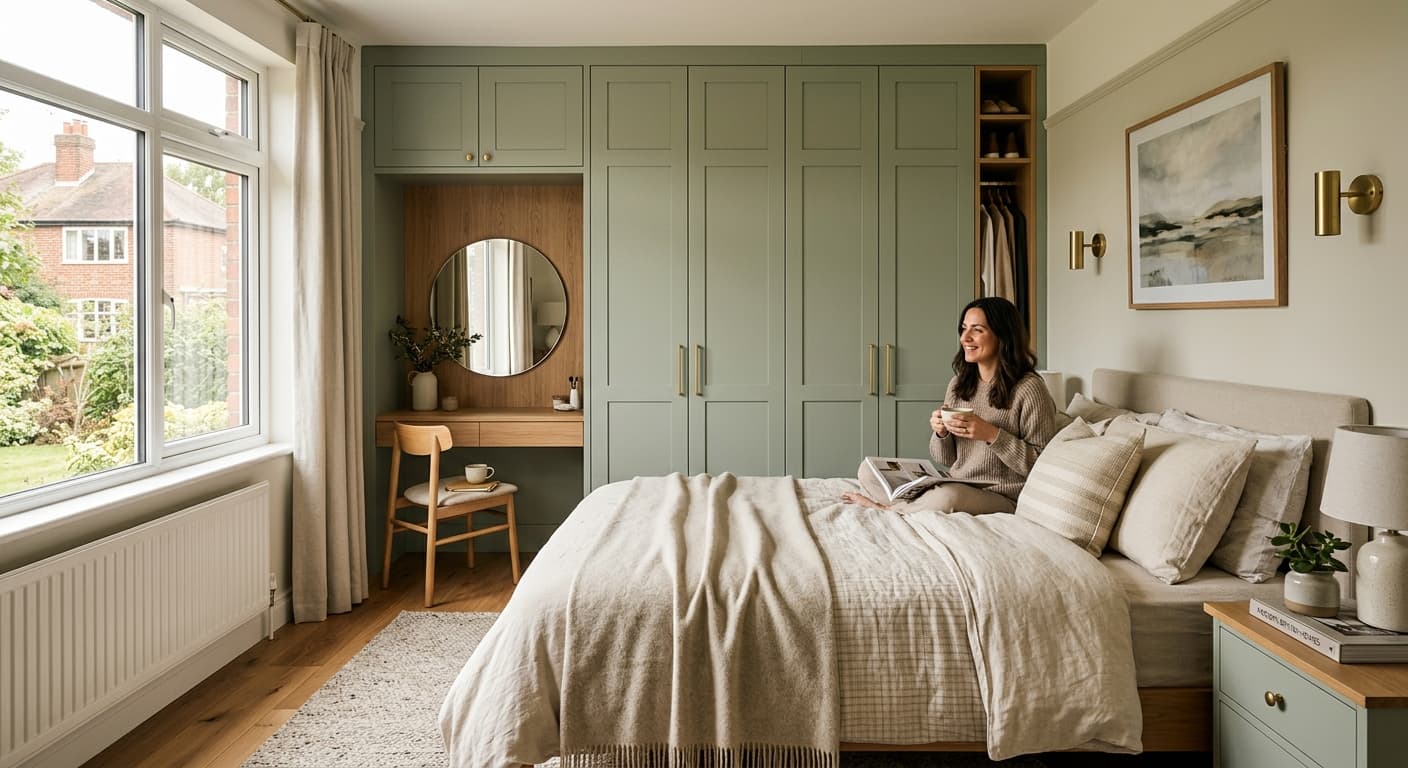
Fitted bedrooms UK installations have become the gold standard for maximising space and creating bespoke storage solutions tailored to your home. Rather than assembling flat-pack furniture or settling for off-the-shelf wardrobes that never quite fit, more homeowners are turning to fitted solutions that make every centimetre count. We've compiled answers to the most common questions we hear from UK homeowners planning their bedroom transformations.
Key Takeaways
- Fitted wardrobes typically cost £1,500–£4,000 for a standard 2.4-metre run, with London prices often 15-20% higher
- Memory foam and pocket sprung mattresses are generally best for side sleepers, with prices ranging from £400–£1,500 for quality options
- The average mattress lifespan is 7-10 years, though back pain or visible sagging indicates earlier replacement is needed
- Sliding wardrobes save floor space but offer less internal capacity than hinged doors of the same width
- Built-in storage solutions can increase usable space in small bedrooms by up to 40% compared to freestanding furniture
How much do fitted wardrobes cost in the UK?
The fitted wardrobes vs freestanding cost comparison often surprises homeowners. Whilst freestanding wardrobes from retailers like IKEA or John Lewis might set you back £300–£800 per unit, fitted solutions deliver superior space efficiency at a higher initial investment.
Expect to pay:
- Budget fitted wardrobes: £800–£1,500 (often DIY supply-only from companies like Hammonds or Sharps during sales)
- Mid-range installations: £2,000–£4,000 for a 2.4-metre run with standard finishes
- Premium bespoke joinery: £4,000–£8,000+ for high-end materials, intricate designs, or walk-in configurations
- London and Southeast premium: Add 15-25% to these figures
According to Checkatrade's 2023 pricing data, the average fitted wardrobe installation in the UK costs around £2,800 for a standard bedroom. This typically includes design consultation, materials, and professional fitting.
Our team has found that materials dramatically affect pricing. Melamine-faced chipboard represents the budget end, whilst solid wood internals with painted or veneered doors push costs considerably higher. Interior fittings—soft-close mechanisms, LED lighting, pull-out shoe racks, and velvet-lined jewellery drawers—can add £300–£800 to your total.
Regional variations matter. Fitted bedroom specialists in Manchester and Birmingham often charge 10-15% less than comparable services in London, though material costs remain relatively consistent nationwide.
When browsing bedrooms specialists, request itemised quotes that separate materials, labour, and additional features. This transparency helps you understand where your money goes and identify potential savings.
Are sliding wardrobes better than hinged?
The sliding door wardrobes pros and cons debate divides homeowners, and the right choice depends entirely on your space and priorities.
Sliding wardrobe advantages:
- Require no clearance space for door swing—ideal for tight bedrooms
- Create a sleek, contemporary aesthetic
- Mirror panels can visually enlarge small rooms
- Generally quieter operation with quality tracks
Sliding wardrobe disadvantages:
- You can only access half the wardrobe width at any time
- Internal capacity reduces by 100-150mm due to track mechanisms
- Bottom tracks accumulate dust and require regular cleaning
- Repair costs for damaged runners can reach £200–£400
Hinged wardrobe advantages:
- Full access to entire wardrobe interior simultaneously
- Simpler mechanism means fewer maintenance issues
- Maximum internal depth utilisation
- Often 10-15% cheaper than equivalent sliding systems
Hinged wardrobe disadvantages:
- Require 600-700mm clearance for door opening
- Can dominate small bedrooms when doors are open
- Multiple doors on wide runs can look cluttered
We've seen the best results when homeowners match door style to room size. Bedrooms under 2.5 metres wide benefit enormously from sliding mechanisms, whilst larger rooms with adequate circulation space work beautifully with hinged doors that showcase internal organisation.
Which? research from 2022 found that sliding wardrobe mechanisms from reputable manufacturers like Hettich or Hafele typically last 10-15 years with normal use, whilst budget alternatives often develop issues within 3-5 years.
What is the best mattress type for side sleepers?
Side sleeping—the UK's most common sleep position—requires specific mattress characteristics to maintain spinal alignment and prevent pressure points.
Memory foam mattresses excel for side sleepers. They contour precisely to shoulders and hips, reducing pressure whilst supporting your spine's natural curve. Quality options from brands like Emma, Simba, or Eve range from £400–£1,200 for a UK double. The best mattress for back pain UK specialists often recommend memory foam density of 50-60 kg/m³ for optimal support.
Pocket sprung mattresses offer excellent support with better temperature regulation than memory foam. Individual springs respond independently to body pressure, providing targeted support. Premium models from John Lewis or Dreams typically cost £600–£1,500 for a king size. Look for mattresses with 1,000+ springs for a double, 1,500+ for a king.
Hybrid mattresses combine pocket springs with memory foam or latex layers, offering the benefits of both technologies. These represent the premium end of the market (£800–£2,000 for a king) but deliver exceptional comfort for side sleepers with shoulder or hip pain.
Avoid traditional open-coil mattresses if you're a side sleeper—they lack the targeted support necessary to prevent pressure points and often sag prematurely in high-pressure areas.
The Sleep Council recommends medium-firm to medium mattresses for side sleepers, whilst back sleepers typically need firmer support. Always trial mattresses before purchasing. Most reputable UK retailers offer 100-night trial periods.
How do I maximise storage in a small bedroom?
Small bedroom storage ideas built-in solutions deliver remarkable space efficiency. We've watched cramped, cluttered bedrooms transform into organised sanctuaries through strategic fitted storage.
Floor-to-ceiling wardrobes eliminate wasted vertical space. Standard freestanding wardrobes stop at 180-200cm, leaving 40-60cm of unused height. Fitted wardrobes reaching the ceiling add 25-35% more storage capacity in the same footprint.
Built-in solutions around the bed create storage from dead space:
- Overhead bridging units above the headboard (add 1-1.5 metres of shelf space)
- Bedside units integrated into the headboard design
- Under-bed drawers on runners (typically 150-200mm deep)
- Window seat storage beneath bay windows
Corner wardrobes utilise awkward angles that freestanding furniture can't accommodate. A well-designed corner unit can provide 40-60% more hanging space than attempting to fit standard wardrobes into the same area.
Ottoman beds with hydraulic lift mechanisms reveal cavernous storage beneath the mattress—typically 300-400 litres depending on bed size. Models from Dreams or Bensons for Beds start around £400 for a double.
Alcove wardrobes fitted into chimney breast recesses make perfect use of space that otherwise accommodates little more than a narrow bookshelf. These typically add 600-900mm of hanging rail plus shelving.
According to research from Homebuilding & Renovating magazine, built-in storage solutions increase usable bedroom storage capacity by 35-45% compared to equivalent freestanding furniture arrangements.
When planning small bedroom storage, work with specialists listed in our bedrooms category who understand spatial efficiency. Many offer 3D design visualisations that help you maximise every centimetre.
What are the latest walk-in wardrobe design ideas in the UK?
Walk-in wardrobe design ideas UK homeowners are requesting reflect both American influences and practical British space constraints. True walk-in wardrobes require minimum 1.8 × 2.4 metres, though 2.4 × 2.4 metres creates more comfortable circulation.
U-shaped layouts maximise storage on three walls with central access. These work brilliantly in square rooms or converted box rooms, providing approximately 4-6 metres of combined hanging and shelving space.
L-shaped configurations suit rectangular spaces and often incorporate a window, using natural light to reduce the claustrophobic feeling some homeowners experience in enclosed dressing areas.
Island units represent the luxury end—freestanding drawer units positioned centrally with storage wrapping the perimeter. These require rooms of 3 × 3 metres minimum but deliver boutique-style organisation.
Popular UK features include:
- LED strip lighting with motion sensors (£80-£200 installed)
- Full-height mirrors on doors or walls
- Velvet-lined jewellery drawers with compartments
- Pull-out trouser racks and tie rails
- Adjustable shelving for handbag or shoe collections
- Seating—either a small stool or upholstered bench
Many homeowners convert small bedrooms (often a third or fourth bedroom) into walk-in wardrobes, particularly in properties where bedroom count exceeds household needs. This typically adds more value than the bedroom itself would command, especially in premium properties.
Ventilation deserves consideration. Building Regulations don't mandate ventilation in walk-in wardrobes (they're not classified as habitable rooms), but we recommend either a window or mechanical ventilation to prevent moisture and odour accumulation. Budget £150-£300 for a basic extractor fan installation.
Browse our directory of bedrooms specialists to find designers experienced in walk-in configurations—many offer virtual consultations to assess your space before commitment.
What bedroom furniture do I really need?
Minimalism continues trending in UK bedroom design, but practical requirements remain consistent:
Essential furniture:
- Bed frame and mattress (obviously)
- Storage for clothing—whether fitted wardrobes or freestanding units
- Bedside table or surface for lamps, phones, and water glasses
Highly recommended additions:
- Window treatments—curtains or blinds for darkness and privacy
- Task lighting—bedside lamps or reading lights
- A chair or stool for dressing and temporary clothing storage
- Mirror—full-length or dresser-mounted
Optional depending on space and lifestyle:
- Dresser or chest of drawers (redundant if you have comprehensive fitted wardrobes)
- Desk or dressing table (increasingly popular with remote working)
- Ottoman or blanket box at the foot of the bed
- Armchair or reading nook furniture in large bedrooms
We've observed that homeowners investing in fitted bedrooms often eliminate separate dressers entirely, integrating drawer units into wardrobe runs instead. This approach typically saves 30-40cm of floor space whilst providing equivalent storage.
The bedroom furniture you genuinely need depends on your storage requirements and whether you use your bedroom purely for sleep or also for working, reading, or hobbies. Single-purpose sleep sanctuaries require remarkably little furniture beyond bed, storage, and lighting.
How often should you replace a mattress?
The standard recommendation suggests replacing mattresses every 7-10 years, but several factors affect actual lifespan.
Replace your mattress sooner if you experience:
- Morning back, neck, or shoulder pain that improves throughout the day
- Visible sagging exceeding 25mm depth
- You sleep better in hotels or as a guest elsewhere
- Noticeable lumps, damaged springs, or torn fabric
- Allergy symptoms worsening (dust mites accumulate over time)
- Significant weight changes (gain or loss of 20+ kg)
The Sleep Council's 2023 research found that 37% of UK adults sleep on mattresses over 10 years old, potentially compromising sleep quality and spinal health. Mattresses lose approximately 10% of their support capacity every 2-3 years through normal compression and wear.
Factors that extend mattress life:
- Using a quality mattress protector from day one
- Rotating the mattress every 3-4 months (unless it's single-sided)
- Adequate bed base support (minimum 15 slats for a double)
- Maintaining bedroom humidity below 60%
- Regular vacuuming to reduce dust mite populations
Premium mattresses with 10-year guarantees from established UK brands like Hypnos, Sealy, or Sleepeezee often achieve the upper end of lifespan expectations. Budget mattresses under £300 rarely last beyond 5-6 years before noticeable degradation occurs.
If you're investing in fitted bedroom furniture, coordinate mattress replacement to ensure everything ages together rather than mixing brand-new storage with a decade-old sleeping surface.
Finding the right fitted bedroom specialist
Selecting a reputable fitter makes the difference between a bedroom that transforms your space and an expensive mistake requiring remedial work.
Look for specialists who:
- Provide detailed written quotations itemising all costs
- Offer 3D visualisations or technical drawings
- Supply references from recent installations
- Carry appropriate public liability insurance (minimum £2 million)
- Provide guarantees on workmanship (typically 1-2 years) and materials (5-10 years)
Our directory features verified bedrooms businesses across the UK, making it straightforward to compare local specialists. When you're ready to transform your space, browse all categories to find complementary services like decorators or flooring installers who can complete your bedroom renovation.
Regional pricing variations mean obtaining multiple quotes proves essential. Specialists in major cities command premium rates reflecting higher overheads, but quality and experience vary enormously even within the same postcode. We recommend obtaining 3-4 detailed quotations before committing.
Many fitted bedroom companies offer interest-free finance over 12-24 months, making larger investments more manageable. Always read terms carefully—some "interest-free" deals include arrangement fees that effectively create interest charges by another name.
Ready to transform your bedroom?
Fitted bedrooms UK installations represent significant investments, but the combination of maximised storage, personalised design, and increased property value delivers returns that generic furniture simply can't match. Whether you're planning a complete bedroom overhaul or specifically targeting storage improvements, working with experienced specialists ensures your vision becomes reality.
Browse fitted bedroom specialists on HouseJester to find verified, reviewed businesses serving your area. Our directory includes detailed profiles, customer reviews, and direct contact information for specialists throughout the UK.
If you're a fitted bedroom specialist looking to connect with homeowners planning their next project, list your business on HouseJester to join our growing directory of trusted UK home improvement professionals.
Sources & Further Reading
- Checkatrade: How Much Do Fitted Wardrobes Cost? - Comprehensive 2023 pricing data for fitted wardrobe installations across the UK
- The Sleep Council: Mattress Advice - Independent UK research and guidance on mattress selection, care, and replacement
- Which? Bedroom Furniture Reviews - Independent testing and reviews of UK bedroom furniture retailers and manufacturers
This article was created with AI assistance and reviewed by the HouseJester editorial team for accuracy and relevance.
Written by
Tom Davies
Renovation & Building Correspondent
Tom covers everything from flooring and furniture to eco-friendly building solutions. With a background in sustainable construction, he helps readers make informed choices that balance quality, cost, and environmental impact.
- Flooring
- Furniture
- Storage Solutions
- Eco & Sustainable