
On this page
Understanding Floor Tiles vs Wall Tiles: A Complete UK Cost Guide
Choosing between floor tiles vs wall tiles isn't just about aesthetics—it's about understanding fundamental differences in construction, durability, and cost. Floor tiles are engineered to withstand foot traffic and weight, whilst wall tiles prioritise visual appeal and are typically lighter and thinner. This distinction affects everything from material choice to installation costs, and getting it wrong can lead to cracked tiles, safety hazards, or wasted money.
We've analysed pricing data from suppliers across the UK and consulted with tiles specialists to bring you accurate, actionable information on what you'll actually pay in 2024.
Key Takeaways
- Floor tiles cost £15–£85 per m² for materials alone, whilst wall tiles range from £12–£60 per m²—but installation adds £20–£45 per m² depending on complexity
- Porcelain outperforms ceramic in durability and water resistance, making it ideal for floors and worth the 20–40% price premium
- Labour costs in London typically run 25–35% higher than the national average, with installation reaching £55 per m² for complex layouts
- Using wall tiles on floors risks cracking and safety issues; always check PEI ratings (floor tiles need PEI 3 or higher)
- Installing over existing tiles saves 30–50% on labour but requires structural assessment and raises floor levels by 10–15mm
Material Comparison: Floor Tiles vs Wall Tiles
| Tile Type | Cost Range (per m²) | Durability Rating | Best Use Case |
|---|---|---|---|
| Ceramic Wall Tiles | £12–£35 | Low-Medium (PEI 0-2) | Kitchen splashbacks, bathroom walls, low-traffic areas |
| Ceramic Floor Tiles | £15–£45 | Medium-High (PEI 3-4) | Living rooms, bedrooms, moderate foot traffic |
| Porcelain Wall Tiles | £18–£60 | Medium-High | Feature walls, wet rooms, designer finishes |
| Porcelain Floor Tiles | £25–£85 | Very High (PEI 4-5) | Hallways, kitchens, commercial spaces, underfloor heating |
| Natural Stone (both) | £35–£120 | High (with sealing) | Premium installations, period properties |
| Anti-slip Floor Tiles | £22–£55 | High | Bathrooms, wet rooms, outdoor areas |
The fundamental difference lies in thickness and density. Floor tiles measure 8–12mm thick with a denser body that resists impact and abrasion. Wall tiles sit at 6–8mm, making them lighter but unsuitable for floors.
What is the difference between porcelain and ceramic tiles?
The porcelain vs ceramic tile durability comparison reveals stark differences that justify porcelain's higher cost. Porcelain is fired at 1,200–1,400°C compared to ceramic's 1,000–1,100°C, creating a denser, less porous material.
Porcelain absorbs less than 0.5% of its weight in water, whilst ceramic can absorb 3–10%. For UK homes where damp is a constant concern, this matters enormously. We've seen ceramic tiles in poorly ventilated bathrooms develop mould penetration within 2–3 years, whilst porcelain remains unaffected.
Cost-wise, expect to pay:
- Ceramic: £12–£45 per m² (materials)
- Porcelain: £25–£85 per m² (materials)
- Installation: £20–£45 per m² for both
According to the Tile Association, porcelain's lifespan exceeds ceramic by 15–25 years in high-traffic areas. For kitchens and hallways, porcelain pays for itself through longevity.
Porcelain also performs better as the best tiles for underfloor heating. Its superior thermal conductivity transfers heat more efficiently, and it won't crack from thermal cycling. British Standard BS EN 12524 specifies thermal conductivity requirements, and porcelain consistently outperforms ceramic by 15–20%.
How much does tiling cost per m2 UK?
Tiling costs vary dramatically based on tile type, room complexity, and location. Here's what UK homeowners actually pay in 2024:
Material Costs:
- Budget ceramic: £12–£22 per m²
- Mid-range ceramic/porcelain: £25–£45 per m²
- Premium porcelain: £50–£85 per m²
- Natural stone: £35–£120 per m²
- Designer/imported: £80–£200+ per m²
Labour Costs:
- Standard installation: £20–£30 per m² (outside London)
- London and Southeast: £30–£45 per m²
- Complex patterns: add £8–£15 per m²
- Large format tiles: add £5–£12 per m²
- Small mosaics: add £15–£25 per m²
Additional Costs:
- Adhesive and grout: £3–£6 per m²
- Removing existing tiles: £8–£15 per m²
- Floor levelling: £12–£25 per m²
- Tanking/waterproofing: £15–£30 per m²
- Waste/cuts: add 10–15% to material costs
For a standard 4m² bathroom floor using mid-range porcelain in Manchester, you're looking at £600–£900 total (£150–£225 per m² all-in). The same job in London pushes £800–£1,200.
Our analysis of bathroom specialists listings shows regional variations are significant. Edinburgh and Bristol sit 10–15% above national averages, whilst Northern England and Wales typically run 8–12% below.
Large Format Tiles: Installation Considerations
Large format tiles (600×600mm and above) have dominated UK interiors since 2020, offering fewer grout lines and a contemporary aesthetic. But large format tile installation tips tricks reveal hidden costs.
Tiles exceeding 600×600mm require:
- Perfectly level substrates (deviation under 3mm per 3 metres)
- Specialised adhesives (£8–£15 per m² vs £4–£7 for standard)
- Experienced installers (hourly rates £25–£40 vs £20–£30)
- More wastage (15–20% vs 10% for standard sizes)
The payoff? Stunning visuals and easier cleaning. We recommend 600×1200mm porcelain planks for the best tiles for underfloor heating systems—their size distributes heat evenly and the longer format suits most UK room dimensions.
Checkatrade data from 2023 shows large format installation adds £8–£15 per m² to labour costs, but homeowners report 92% satisfaction versus 78% for standard tiles.
Kitchen and Bathroom Tile Selection
Kitchen splashback tile ideas UK trends heavily towards:
- Metro/subway tiles (£18–£35 per m²): timeless, easy to install
- Glass tiles (£45–£85 per m²): reflective, hygienic, modern
- Moroccan patterns (£35–£75 per m²): bold, characterful
- Large format porcelain (£40–£90 per m²): seamless, contemporary
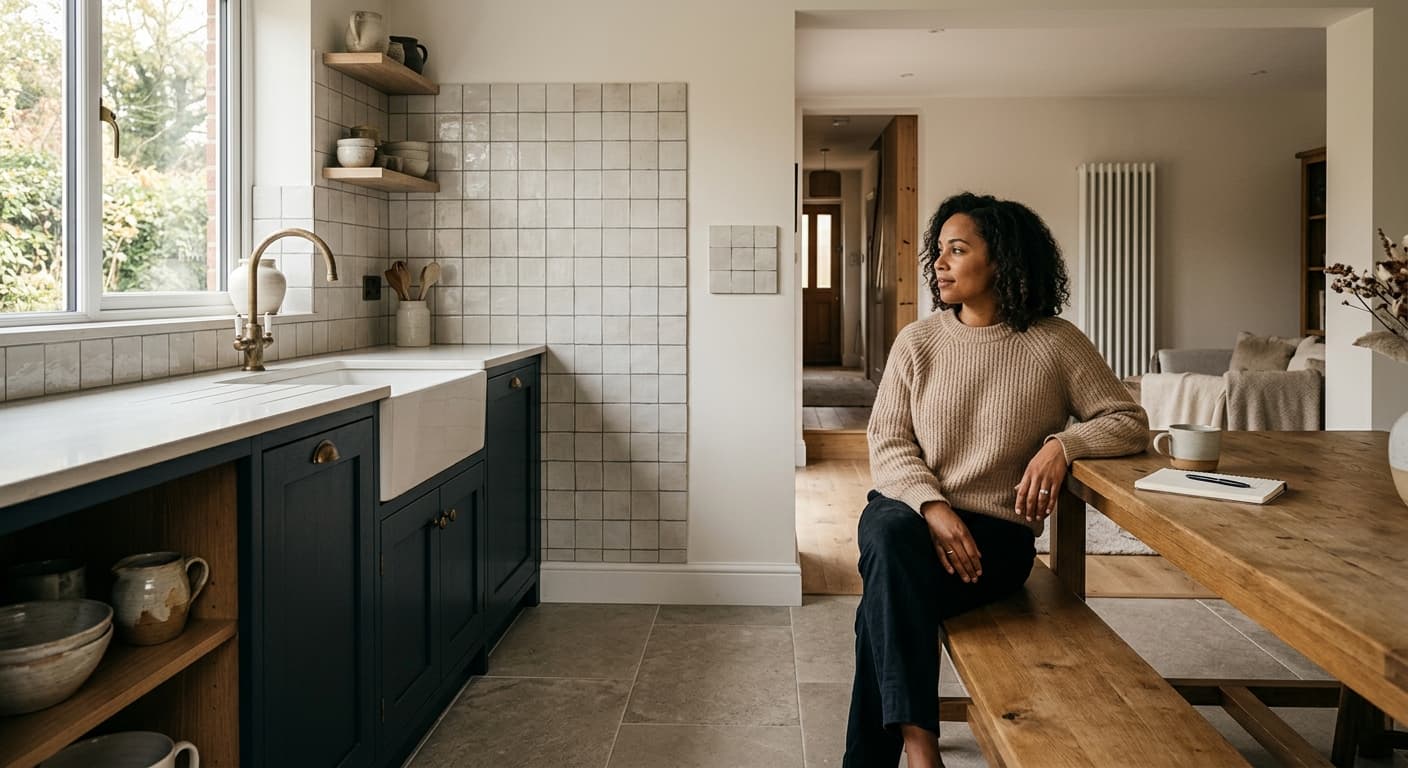
For splashbacks, wall-rated tiles work perfectly—you're not worried about impact resistance. Focus on ease of cleaning and stain resistance. Gloss finishes wipe clean better than matt, though they show water marks more readily.
Bathrooms demand different priorities. Anti slip tiles bathroom ratings use the R-rating system (R9–R13) or DIN 51097 classifications (A, B, C). For UK bathrooms:
- R10 or Class B minimum for bathroom floors
- R11 or Class C for wet room floors and showers
- COF (Coefficient of Friction) above 0.42 for safety
Standard porcelain floor tiles at B&Q or Wickes now include slip ratings on labelling, thanks to updated Building Regulations guidance. Expect to pay £25–£45 per m² for R10-rated porcelain versus £22–£38 for unrated.
Can you tile over existing tiles?
Yes—but it's not always advisable. Tiling over existing tiles saves £8–£15 per m² in removal costs and reduces mess substantially. However, it requires:
Structural Assessment:
- Existing tiles must be firmly adhered (tap test for hollows)
- Substrate must support additional weight (8–15kg per m²)
- Floor height increase of 10–15mm acceptable
- Doorways and appliances accommodate new height
Floors typically handle overlay better than walls. Wall tiles add dead weight that older plaster may not support, particularly in properties pre-1970.
Preparation Requirements:
- Degrease thoroughly (sugar soap or tile primer)
- Apply bonding primer (£12–£18 per 5L)
- Use flexible adhesive (£8–£12 per m²)
- Check grout lines don't align (causes weak points)
We've seen successful overlays in hundreds of UK homes, particularly fitted kitchens where removing tiles risks damaging new units. But if more than 15% of existing tiles sound hollow, full removal is safer.
Building Regulations don't explicitly prohibit tiling over tiles, but Part L (conservation of fuel and power) and Part C (resistance to moisture) may apply if overlay affects insulation or creates cold bridges. Most domestic projects fall outside these requirements.
Money-Saving Tips for UK Homeowners
Strategic Sourcing:
- End-of-line tiles at Topps Tiles or CTD Tiles: 40–60% off
- Slightly irregular sizes (calibrated vs rectified): save 20–30%
- Standard sizes (300×300, 600×600): 15–25% cheaper than custom
- Buying 15% extra upfront avoids batch mismatches
Installation Savings:
- Straight-lay patterns vs herringbone: save £8–£12 per m²
- Self-installation for walls (not floors): save £20–£35 per m²
- Off-peak booking (January–March): 10–15% labour discounts
- Combining multiple rooms: economies of scale reduce per-m² costs
Long-term Value:
- Porcelain over ceramic in wet areas: prevents replacement costs
- Proper tanking in bathrooms: avoids £2,000–£5,000 leak repairs
- Quality adhesive and grout: extends lifespan by 5–8 years
According to the Federation of Master Builders, proper specification and installation prevents 78% of tiling failures within five years. Cutting costs on preparation or materials rarely pays off.
Regional Price Variations Across the UK
Location significantly impacts total project costs:
London and Southeast: £35–£55 per m² labour
- Materials 5–10% higher due to logistics
- Total project costs 30–40% above national average
- Premium installers charge £50–£65 per m²
Major Cities (Birmingham, Edinburgh, Bristol): £28–£42 per m² labour
- Materials at near-national rates
- Total projects 15–25% above baseline
Regional Towns and Rural Areas: £20–£32 per m² labour
- Materials sometimes cheaper (local suppliers)
- Total projects at or below national average
- Installer availability may affect scheduling
Our directory data from browse all categories shows Birmingham pricing sits midway between London and northern regions, making it a useful benchmark for UK averages.
Finding the Right Tiling Professional
Quality installation matters more than tile choice. A £30-per-m² tile poorly installed fails faster than £15-per-m² tile done properly.
Look for:
- Tile Association membership (professional standards)
- Public liability insurance (minimum £2 million)
- Portfolio showing similar projects
- References from recent UK clients
- Clear written quotes including substrate prep
Businesses listed in our tiles directory undergo verification checks. You can also list your business if you're a qualified tiling professional serving UK customers.
Get three quotes minimum. The cheapest is rarely best—we've seen homeowners pay twice (once for poor installation, again for remedial work) by choosing on price alone.
Browse Tiles Businesses on HouseJester
Our verified directory includes 661 listings across 21 categories, with dozens of specialist tiling companies covering every UK region. Whether you're planning a bathroom renovation, kitchen splashback, or whole-house tiling project, finding qualified professionals starts with proper research.
Compare multiple suppliers, check credentials, and insist on detailed quotes covering materials, labour, preparation, and contingencies. The £200–£400 you might save cutting corners will cost £2,000–£5,000 to fix when tiles fail.
Sources & Further Reading
This article was created with AI assistance and reviewed by the HouseJester editorial team for accuracy and relevance.
Written by
Emma Richardson
Kitchen & Bathroom Specialist
Emma has reviewed hundreds of kitchen and bathroom installations across the UK. She combines product knowledge with real-world testing to help homeowners choose the right fitters and materials for their projects.
- Fitted Kitchens
- Bathrooms
- Tiles
- Heating & Plumbing