
On this page
Introduction
Choosing the right flooring can make or break a room. With countless flooring options UK homeowners face today, from traditional hardwoods to modern luxury vinyl, the decision involves balancing aesthetics, durability, budget, and lifestyle needs. We've worked with dozens of flooring specialists across the country to bring you this practical guide that cuts through the marketing speak and gives you actionable advice for your home.
The UK flooring market has evolved dramatically over the past decade. Engineered products now rival solid wood in quality, whilst luxury vinyl has shed its cheap reputation to become a genuine premium choice. Making the wrong decision can cost thousands and leave you replacing floors far sooner than expected.
Key Takeaways
- Engineered oak flooring typically costs £40-£100 per m² installed, offering better stability than solid wood for most UK homes
- Luxury vinyl tiles (LVT) outperform laminate for durability and water resistance, though both suit high-traffic areas
- Underfloor heating compatibility requires specific flooring types with low thermal resistance (tog rating under 1.0)
- Family homes with pets and children benefit most from scratch-resistant options like quality LVT or engineered wood with hard lacquer finishes
- London pricing typically runs 15-25% higher than regional UK rates for both materials and installation
Understanding Your Flooring Options: The Main Contenders
Let's break down the most popular flooring types available in the UK market. Each has distinct advantages depending on your specific needs.
Solid Wood Flooring
The traditional choice that never goes out of style. Solid wood planks, typically 18-20mm thick, can be sanded and refinished multiple times over their lifespan. Oak remains the most popular species, though ash, walnut, and engineered exotics are gaining ground.
Solid wood expands and contracts with humidity changes—a real concern in the UK's damp climate. We've seen countless cases of cupping and gapping in homes without proper acclimatisation. You'll need 7-14 days to let boards adjust to your home's moisture levels before installation.
Expect to pay £60-£150 per m² for materials, with installation adding another £20-£40 per m² depending on your location. London prices frequently exceed these ranges.
Engineered Wood Flooring
This is where many UK homeowners land after weighing the options. Engineered boards feature a real wood veneer (typically 3-6mm) bonded to a plywood or HDF core. The construction provides dimensional stability that solid wood simply cannot match.
Engineered oak flooring cost per m2 ranges from £25-£80 for materials, with premium brands like Kahrs, Boen, or V4 Wood Flooring commanding higher prices. Installation costs mirror solid wood at £20-£40 per m². A typical 30m² living room might cost £1,500-£3,600 fully installed.
The veneer thickness matters enormously. Anything under 3mm limits refinishing options—you might get one light sand at best. We recommend 4mm minimum if you plan to stay in your home long-term.
Luxury Vinyl Tile (LVT) and Vinyl Plank
The luxury vinyl category has exploded in popularity, and for good reason. Modern LVT bears little resemblance to the thin vinyl sheets of previous generations. These are rigid, multilayered products with photorealistic wood or stone imagery beneath a tough wear layer.
Quality matters hugely here. Commercial-grade LVT from Amtico, Karndean, or Moduleo costs £40-£100 per m² installed but will outlast budget alternatives by years. The wear layer thickness (measured in microns) tells you everything about longevity—look for 0.55mm minimum for residential use, 0.7mm for heavy traffic.
LVT handles moisture beautifully, making it ideal for fitted kitchens, bathrooms, and even utility rooms. It's also one of the best flooring for pets and children UK homes, resisting scratches and accidents that would ruin wood.
Laminate Flooring
Laminate remains the budget-friendly choice, though the gap with LVT has narrowed. These boards consist of a photographic layer over HDF core, topped with a melamine wear layer. Installation is straightforward thanks to click-lock systems.
Prices start at £8-£15 per m² for basic options from B&Q or Wickes, rising to £25-£50 per m² for premium German brands like Parador or Egger. Installation costs £10-£20 per m² for a competent DIYer-friendly job.
The Achilles heel? Water. Spills that sit for more than a few minutes can cause irreversible swelling. We've seen entire floors ruined by a leaking dishwasher or enthusiastic plant watering.
Natural Stone and Porcelain Tiles
Tiles suit specific applications brilliantly—conservatories, hallways, bathrooms, and underfloor heating systems. Porcelain offers better water resistance than natural stone and more consistent sizing for easier installation.
Budget £40-£150 per m² for materials depending on tile quality and origin. Italian porcelain costs more than Spanish, whilst natural limestone or travertine varies wildly. Professional installation is non-negotiable for most homeowners, adding £30-£60 per m² including screed preparation.
Luxury Vinyl Tile vs Laminate: The Head-to-Head
This luxury vinyl tile vs laminate comparison comes up constantly with clients. Here's how they stack up:
| Feature | Luxury Vinyl Tile (LVT) | Laminate Flooring |
|---|---|---|
| Water Resistance | Excellent – fully waterproof core | Poor – swells if saturated |
| Underfoot Feel | Slightly softer, warmer | Hard, hollow sound without underlay |
| Scratch Resistance | Very good (0.55mm+ wear layer) | Good to very good (AC4-AC5 rating) |
| Realism | Excellent texture and visuals | Can look plasticky in budget ranges |
| Installation | Glue-down or click-lock | Click-lock (easier DIY) |
| Typical Cost (mid-range) | £30-£60 per m² installed | £20-£35 per m² installed |
| Lifespan | 15-25 years | 10-15 years |
| UFH Compatible | Yes (check tog rating) | Yes (with suitable underlay) |
| Repair | Individual planks replaceable | Difficult to replace mid-floor |
For family homes, we lean towards quality LVT. The water resistance alone justifies the premium, and the authentic look has improved dramatically. Laminate works well for bedrooms or low-moisture areas where budget matters most.
What Is the Most Durable Flooring for a Family Home?
Durability means different things depending on your family's specific challenges. Let's address the most common scenarios.
For Pets and Children
The best flooring for pets and children UK households must resist scratches, stains, and moisture. Dog claws are particularly brutal on soft woods like pine. Here's our ranking:
- Commercial-grade LVT (Karndean Knight Tile, Amtico Spacia) – virtually indestructible
- Engineered oak with hard lacquer or UV oil – good scratch resistance, repairable
- Porcelain tile – bombproof but cold and hard for crawling toddlers
- High-AC rated laminate (AC4 or AC5) – decent performance, budget-friendly
Avoid: Solid softwoods, unsealed natural stone, pale carpets (obviously), and budget vinyl that shows every mark.
For High-Traffic Areas
Hallways cop an absolute battering—wet shoes, grit, keys dropped, furniture scraped. The best flooring for hallways high traffic includes:
- Engineered wood in darker tones (walnut, smoked oak) hides wear better than light finishes
- Textured porcelain tiles provide grip when wet and hide dirt
- Heavy-duty LVT (0.7mm wear layer minimum) handles anything
We've surveyed businesses listed on HouseJester across Birmingham and Manchester, and they universally recommend against laminate in external hallways due to moisture ingress from outside doors.
Is Engineered Wood Better Than Solid Wood?
This question divides homeowners, but the answer depends entirely on your circumstances.
Choose engineered wood if:
- You're installing over underfloor heating (more stable)
- Your property has concrete subfloors (easier installation)
- You live in a humid or variable climate (less movement)
- You want wider planks (engineered handles width better)
- Budget matters (typically 20-30% cheaper than equivalent solid)
Choose solid wood if:
- You plan to stay 20+ years (more sandings possible)
- You have suspended timber floors in good condition
- You want maximum authenticity (some people just prefer solid)
- You're matching existing solid wood in adjacent rooms
According to the Homebuilding & Renovating 2023 reader survey, 64% of renovators now choose engineered over solid wood—a significant shift from a decade ago. The performance gap has essentially closed whilst engineered maintains practical advantages.
Both require similar maintenance: sweep regularly, wipe spills immediately, and avoid steam mops. Expect to refresh oil finishes every 2-3 years or recoat lacquer every 5-7 years depending on traffic.
Can You Put Underfloor Heating Under Laminate?
Yes, but with important caveats. Underfloor heating compatible flooring types require low thermal resistance to allow heat transfer efficiently.
Building Regulations Part L specifies that floor finishes over underfloor heating (UFH) should have a tog rating below 1.0 for electric systems and 1.5 for water-based systems. Most modern laminate manufacturers publish tog ratings—check before buying.
Best Flooring Options for Underfloor Heating
Excellent choices:
- Porcelain or ceramic tiles (0.2-0.4 tog) – heat transfer champions
- Engineered wood (14mm or less) (0.7-1.0 tog) – works well with gradual temperature changes
- LVT (0.3-0.7 tog) – responds quickly, ideal for pattern heating
Acceptable with care:
- Laminate (0.7-1.2 tog) – ensure it's UFH-rated and install appropriate underlay
- Solid wood (under 18mm) – requires careful moisture monitoring
Avoid:
- Thick solid wood (20mm+)
- Carpet with thick underlay
- Natural stone with high porosity
The Energy Saving Trust notes that pairing UFH with appropriate flooring can improve system efficiency by 15-20%, reducing running costs significantly.
Never exceed manufacturer temperature limits—typically 27°C for wood products, 40°C+ for tiles and vinyl. A decent installer will include floor temperature sensors; don't skip this.
Common Mistakes to Avoid When Choosing Flooring
We've witnessed countless flooring disasters that could have been prevented. Here are the most frequent errors:
Skipping Subfloor Preparation
Your subfloor must be clean, dry, level, and sound. "Level" means within 3mm deviation over 3 metres—use a long straight edge to check. Uneven subfloors cause clicking laminate, cracked tiles, and premature wear. Budget £15-£30 per m² for professional levelling with latex screed if needed.
Ignoring Moisture Testing
Concrete subfloors in UK homes frequently retain moisture, especially in new builds or ground floors. British Standard BS 8203 requires moisture testing before installing impermeable flooring. DIY calcium chloride tests cost £15-£30; professional hygrometer testing is more accurate.
Choosing the Wrong Underlay
Underlay isn't just cushioning—it provides acoustic insulation, moisture protection, and thermal performance. Combining underfloor heating with thick acoustic underlay creates an insulating barrier that defeats the entire purpose. Match underlay specification to your floor type and subfloor conditions.
Forgetting Expansion Gaps
Wood and laminate products need 10-15mm expansion gaps around room perimeters. We've seen floors buckle catastrophically when fitted tight to walls or heavy furniture. Beading and scotia cover gaps aesthetically—don't be tempted to skimp.
Going Too Cheap
The temptation to save £500 on a whole-house flooring project is strong. Resist it. Budget flooring looks acceptable initially but wears poorly, with visible traffic patterns emerging within 12-18 months. The Which? 2024 flooring report found that products under £20 per m² scored consistently lower for long-term satisfaction.
Room-by-Room Recommendations
Different rooms have different requirements. Here's what we recommend:
Living rooms and dining rooms: Engineered wood or quality LVT. These spaces benefit from the warmth and authenticity of wood-effect flooring. Budget £1,500-£4,000 for a standard 25-35m² combined space.
Kitchens: LVT or porcelain tiles. Water resistance is non-negotiable. Karndean or Amtico LVT costs £2,000-£4,500 for a typical 15-20m² kitchen installed.
Bathrooms: Porcelain tiles or waterproof LVT. Never use laminate or solid wood in bathrooms regardless of what your mate's cousin's builder says.
Bedrooms: Engineered wood, laminate, or even quality carpet if you prefer. Lower traffic means more options. Budget laminate from Wickes or Homebase starts at £300-£600 per room.
Hallways: Engineered wood in dark finishes, textured porcelain, or heavy-duty LVT. Factor £800-£2,000 for a typical hallway depending on length and width.
Finding the Right Flooring Specialist
Installation quality matters as much as product choice. A brilliant floor installed poorly will disappoint; a mid-range floor installed expertly will exceed expectations.
Our directory features verified flooring specialists nationwide. Look for businesses with:
- Public liability insurance (minimum £5 million)
- Product-specific training certificates (especially for resin or specialist LVT)
- Recent portfolio work similar to your project
- Transparent pricing including preparation work
- Written warranties covering both materials and labour
Don't automatically choose the cheapest quote. Price differences usually reflect experience, insurance, and whether subfloor preparation is included or assumed to be "fine."
If you run a flooring business, consider listing your company to reach homeowners actively seeking quality installers.
Budgeting for Your Flooring Project
Total project costs include more than just materials and installation. Build in these additional expenses:
- Subfloor preparation: £10-£30 per m²
- Removing existing flooring: £5-£15 per m²
- Furniture removal/replacement: £100-£300 for whole-house projects
- Skirting board replacement: £8-£15 per linear metre
- Thresholds and trims: £10-£40 per doorway
- Underlay: £3-£12 per m²
- Waste (typically 10-15% extra materials): Factor this in
A complete ground-floor reflooring (60m²) with mid-range engineered oak typically costs £4,500-£8,000 fully completed. Premium LVT throughout might run £4,000-£7,500. Budget laminate could drop to £2,500-£4,000.
London and South East prices consistently run 15-25% higher than Midlands or Northern regions. VAT applies to both materials and labour at standard rate (20%).
Making Your Final Decision
Start by assessing your priorities:
- Lifestyle needs – Do you have pets, children, or mobility considerations?
- Aesthetic preferences – Traditional wood warmth or modern minimal?
- Budget constraints – What can you genuinely afford including preparation?
- Timeframe – How quickly do you need completion?
- Future plans – Selling within 5 years or settling for decades?
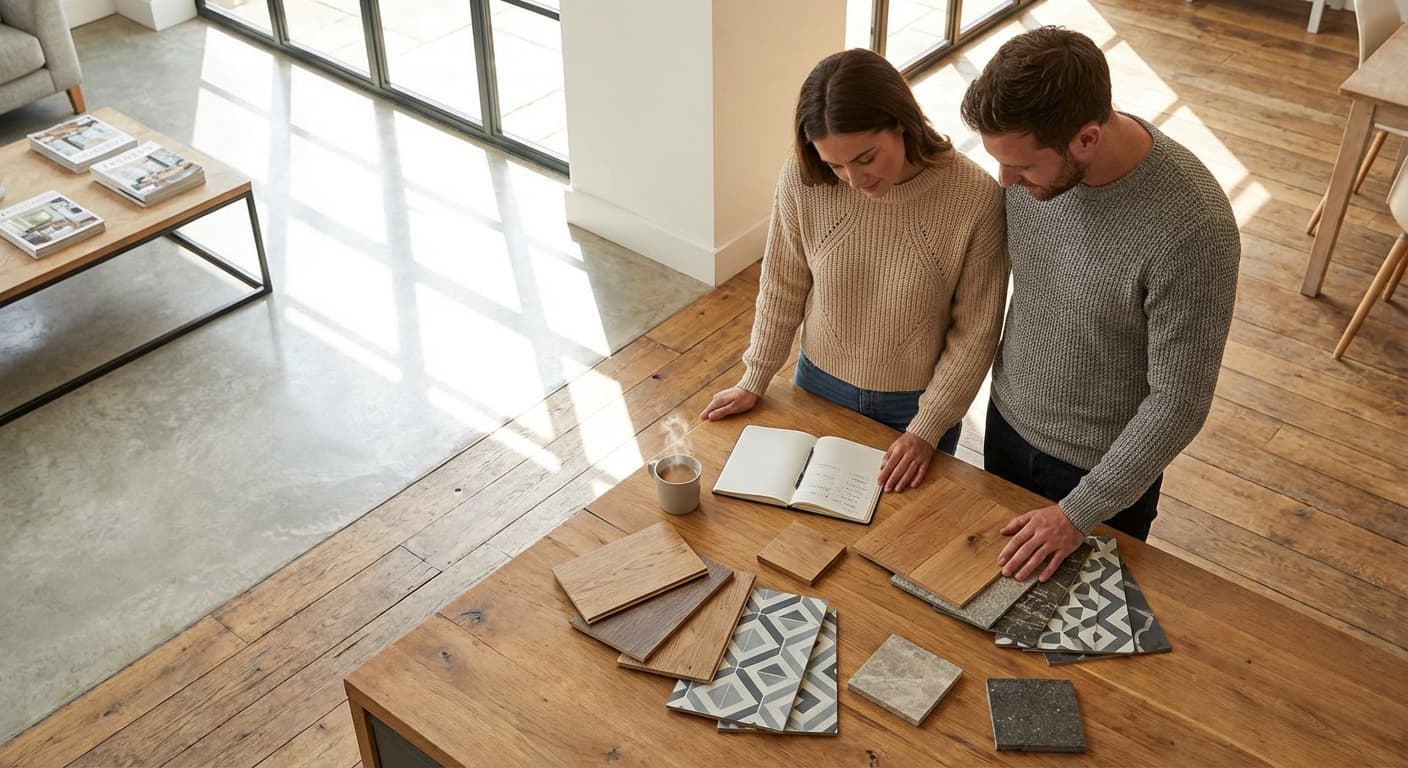
Request samples from multiple suppliers. John Lewis, Topps Tiles, and specialist showrooms will provide large samples free or for a small deposit. Live with samples for a week, viewing them in different lights and alongside existing décor.
Get three written quotes covering identical specifications. The middle quote often represents the sweet spot between cowboy builders and unnecessary premium pricing.
Browse through various professionals in our directory and explore other relevant services by checking all categories to ensure you find the perfect match for your complete home improvement project.
Sources & Further Reading
- Which? Flooring Guide 2024 – Comprehensive testing and reviews of flooring products: www.which.co.uk
- Building Regulations Part L (Conservation of Fuel and Power) – Official guidance on thermal performance requirements: www.gov.uk/government/publications/conservation-of-fuel-and-power-approved-document-l
- Energy Saving Trust – Underfloor Heating Guide – Advice on efficient heating systems and compatible flooring: energysavingtrust.org.uk
This article was created with AI assistance and reviewed by the HouseJester editorial team for accuracy and relevance.
Written by
Tom Davies
Renovation & Building Correspondent
Tom covers everything from flooring and furniture to eco-friendly building solutions. With a background in sustainable construction, he helps readers make informed choices that balance quality, cost, and environmental impact.
- Flooring
- Furniture
- Storage Solutions
- Eco & Sustainable