
On this page
Transforming your home with professional help doesn't have to remain a distant dream. Interior design services UK range from budget-friendly consultations at £150 to full-service projects exceeding £10,000, making professional design guidance accessible to homeowners across all budgets. Understanding what you'll pay—and what you'll get for your money—helps you make informed decisions about investing in your home's aesthetic and functionality.
Key Takeaways
- Interior designers charge £50-£200+ per hour depending on experience and location, with London rates typically 30-50% higher than the rest of the UK
- One-off consultations cost £150-£500 and provide actionable design advice without long-term commitment
- Full-service projects typically charge 10-20% of the total project budget, covering everything from concept to installation
- Regional variations are significant: a project costing £8,000 in Manchester might reach £12,000 in central London
- Virtual design services offer 40-60% savings compared to traditional in-person projects whilst still delivering professional results
How Much Does It Cost to Hire an Interior Designer UK?
The cost structure for interior design services varies considerably based on the scope of work, designer experience, and your location. We've analysed pricing across our directory and found distinct tiers that suit different needs and budgets.
Hourly Rates
Most designers charge between £50-£200 per hour. Junior designers or those outside major cities typically charge £50-£80 hourly, whilst experienced professionals in London command £120-£200+ per hour. This pricing model works well for smaller projects or when you need specific guidance rather than comprehensive design management.
Fixed-Fee Projects
For whole-room or whole-home redesigns, fixed fees provide budget certainty. A single room refresh typically costs £800-£2,500, covering initial consultation, mood boards, shopping lists, and layout plans. Multi-room projects range from £3,000-£8,000, whilst complete home transformations can exceed £15,000.
Percentage of Project Budget
High-end designers often charge 10-20% of the total project cost, which includes furnishings, trades, and materials. For a £50,000 renovation including fitted kitchens and bathroom updates, you'd pay £5,000-£10,000 for design services. This model aligns the designer's fee with project complexity and typically includes full project management.
Interior Design Consultation: What to Expect
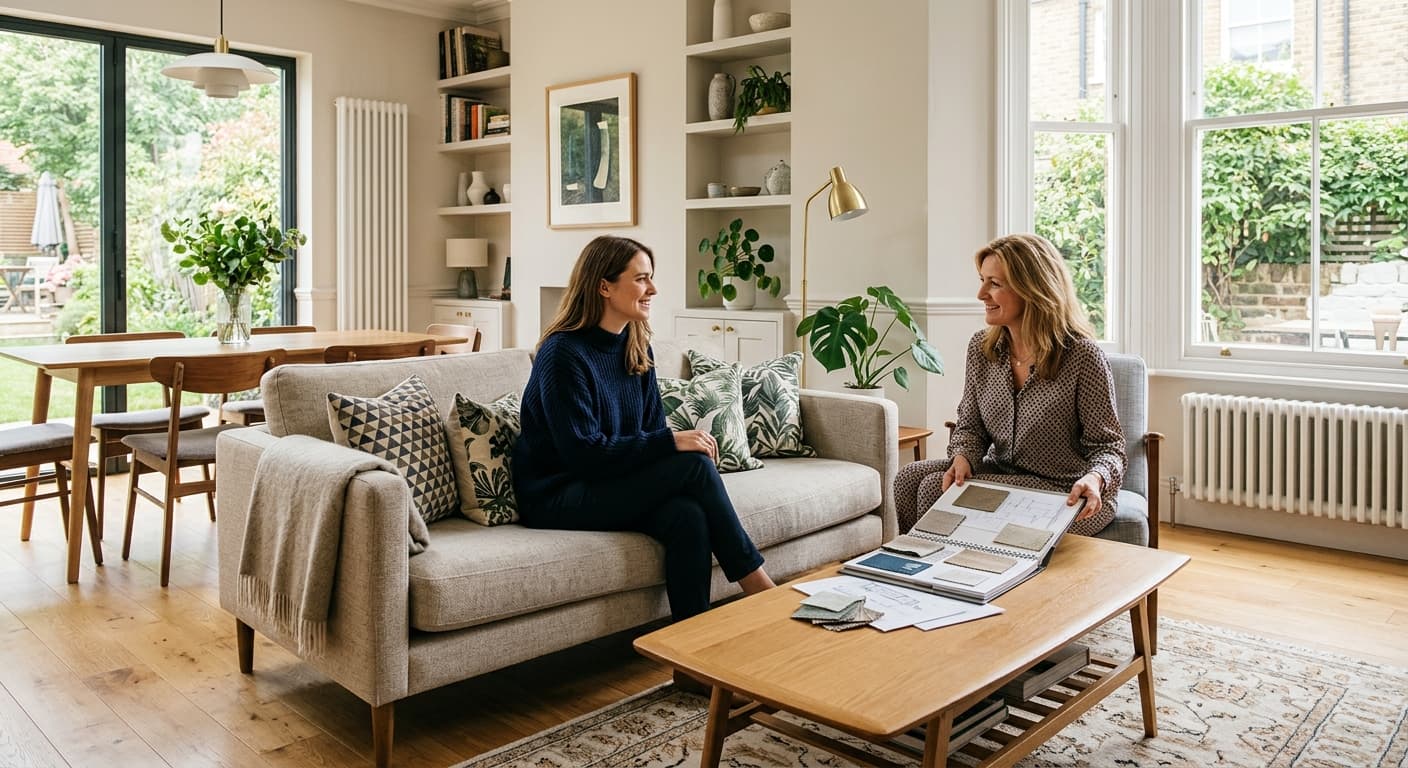
A professional interior design consultation what to expect typically lasts 1-2 hours at your property. The designer assesses your space, discusses your lifestyle needs, explores your aesthetic preferences, and identifies structural or layout challenges. Many designers in our directory offer initial consultations at reduced rates (£150-£300) that can be credited towards larger projects.
You'll receive immediate verbal feedback during the visit, followed by a written summary within 5-7 days. This document usually includes recommended colour schemes, furniture placement suggestions, lighting improvements, and a prioritised action plan with estimated costs. Some consultations also incorporate colour psychology in interior design principles, explaining how specific hues affect mood and perceived space—blues for calming bedrooms, warm yellows for sociable kitchens, greens for productive home offices.
Factors Affecting Interior Design Costs
Several variables significantly impact your final bill. Understanding these helps you budget accurately and make strategic decisions about where to invest.
Designer Experience and Reputation: Award-winning designers with features in Ideal Home or House Beautiful charge premium rates. Newly established designers offer excellent value whilst building their portfolios. We've seen talented newcomers deliver exceptional results at 30-40% below established practitioner rates.
Project Complexity: Simple cosmetic updates (paint, soft furnishings, accessories) cost considerably less than structural alterations requiring Building Regulations approval. Open plan living room design ideas UK projects often involve removing load-bearing walls, installing RSJs (rolled steel joists), and coordinating multiple trades, substantially increasing design fees due to technical drawings and liaison work.
Location: Birmingham and Manchester rates typically run 20-30% below London pricing. A consultation costing £400 in Kensington might be £250 in Leeds. Travel expenses also apply if your designer must journey beyond their usual radius—expect £40-80 for distant site visits.
Service Level: Some designers provide concept work only (mood boards, layouts, shopping lists), leaving you to implement independently. Full-service offerings include trade liaison, project management, furniture sourcing, and installation supervision, commanding higher fees but reducing your time commitment and stress.
Sourcing and Procurement: Designers often receive trade discounts (20-40%) from suppliers and retailers. Some pass these savings to clients; others retain them as additional compensation. Clarify this arrangement upfront to understand true costs.
Comparison of Interior Design Service Options
| Service Type | Cost Range | Time Commitment | Best For |
|---|---|---|---|
| DIY Consultation | £150-£500 | 2-3 hours designer time | Confident homeowners wanting expert direction for self-implementation |
| Virtual/E-Design | £300-£1,500 per room | 2-4 weeks turnaround | Budget-conscious projects, simple refreshes, remote properties |
| Partial Service | £800-£3,000 per room | 4-8 weeks | Homeowners happy to manage trades and purchasing with designer guidance |
| Full-Service Design | £3,000-£15,000+ | 3-6 months | Complex renovations, busy professionals, high-specification projects |
| Design & Build | 15-25% of project cost | 4-12 months | Complete renovations requiring architectural and design integration |
Popular Interior Design Styles and Associated Costs
Your chosen aesthetic significantly influences project expenses. Some styles require specialist materials or custom elements that inflate budgets.
Japandi Interior Design Style Explained
The japandi interior design style explained combines Japanese minimalism with Scandinavian functionality—clean lines, neutral palettes, natural materials, and uncluttered spaces. This increasingly popular aesthetic actually offers budget advantages. The focus on quality over quantity means fewer but better pieces, whilst the neutral foundation allows gradual investment in statement items.
Japandi projects typically cost 10-15% less than maximalist or traditional styles because they require fewer accessories, simpler window treatments, and less ornate furniture. A japandi living room might feature a £1,200 oak coffee table, £800 linen sofa, and £300 ceramic accessories versus a traditional scheme requiring £2,000 in curtains, cushions, and decorative objects alone.
Contemporary and Modern
Sleek, minimalist spaces with statement lighting and architectural features. Budget £2,500-£6,000 per room including furniture. High-end finishes like polished concrete or Corian surfaces increase costs but deliver striking results.
Traditional and Country
Richer in detail with period features, layered textiles, and ornate furniture. Expect £3,000-£8,000 per room. Sourcing authentic antiques or quality reproductions requires designer expertise and time, justifying higher fees.
Industrial and Loft
Exposed brick, metal accents, and utilitarian lighting. Costs vary wildly (£2,000-£10,000 per room) depending on whether you're enhancing existing features or creating them from scratch. Authentic reclaimed materials cost more but provide unmatched character.
What Interior Design Style Suits My Home?
Your property type, architecture, and lifestyle should guide style selection. Georgian and Victorian homes naturally accommodate traditional or maximalist schemes, though contemporary contrasts can create stunning results when executed skilfully. Post-war and new-build properties suit modern, Scandinavian, or industrial aesthetics.
Consider your maintenance tolerance. Minimalist white schemes require frequent cleaning with young children or pets. Layered, textured spaces disguise wear better. Think about longevity—classic neutrals remain appealing longer than trend-led colours, potentially saving money on future updates.
We recommend browsing completed projects from professionals in our interior design category to identify styles that resonate. Save images that appeal to you, then analyse commonalities—are you drawn to warm or cool tones, busy or sparse arrangements, traditional or contemporary furniture?
Is an Interior Designer Worth the Money?
This depends entirely on your skills, time availability, and project complexity. Professional designers bring measurable value through:
Trade Discounts: Access to trade-only suppliers and showrooms, with discounts offsetting 30-60% of design fees. A designer sourcing a £4,000 sofa might pay £2,400, sharing part of that saving with you.
Avoiding Costly Mistakes: Poor furniture scaling, incorrect lighting placement, or clashing colours waste money. One designer client nearly purchased a £2,500 corner sofa that wouldn't fit through their doorway—consultation fees of £300 prevented a £2,500 error.
Space Planning Expertise: Designers maximise functionality and flow. Optimised layouts often eliminate the need for extensions or additional rooms, saving £20,000-£50,000 in building costs.
Time Savings: Project management, trade coordination, and problem-solving consume significant time. Busy professionals often find the £3,000-£5,000 design fee worthwhile to avoid dozens of hours researching, shopping, and supervising.
Resale Value: According to research from the National Association of Estate Agents, well-designed interiors add 5-15% to property values. Professional design of a £300,000 home might increase its value by £15,000-£45,000 against a £5,000 design investment.
For straightforward cosmetic updates in standard room configurations, talented amateurs often achieve satisfactory results independently. Complex renovations involving structural work, custom fitted kitchens, or bathroom specialists benefit enormously from professional design input.
Money-Saving Strategies for Interior Design Projects
Professional design needn't break the bank. Strategic approaches help you access expertise whilst managing costs:
Start with a Consultation: A £200-£400 consultation provides direction for DIY implementation. You receive professional space planning, colour recommendations, and shopping guidance without ongoing fees.
Use Virtual Design Services: Online-only services cost 40-60% less than traditional offerings. You submit measurements, photos, and style preferences; designers return detailed plans, mood boards, and shopping links within 2-4 weeks. This works brilliantly for straightforward projects without complex spatial challenges.
Phase Your Project: Design the entire home upfront (establishing a cohesive vision), then implement room-by-room as budget allows. This prevents costly style changes midway through multi-year projects.
Retain Existing Elements: Repainting existing furniture, updating cabinet hardware, or reupholstering sofas costs far less than buying new. Designers excel at transforming existing pieces you'd assumed needed replacing.
Mix High and Low: Invest in key pieces (sofas, beds, dining tables) that endure heavy use, then complement with budget accessories from retailers like H&M Home, Zara Home, or IKEA. Designers know precisely which items warrant investment and which don't.
Hire for Planning Only: Pay for design concepts, specifications, and sourcing lists, then handle purchasing and installation yourself. This hybrid approach saves 40-50% on full-service fees whilst still benefiting from professional vision.
Negotiate Fixed Fees: Hourly rates can spiral unexpectedly. Fixed-fee agreements provide certainty and often work out cheaper, particularly if you're organised and decisive, minimising designer time.
Finding the Right Interior Designer
The right professional match matters enormously. Portfolio compatibility matters more than price—a £75/hour designer whose aesthetic aligns with yours delivers better results than a £150/hour designer working outside their natural style.
Request initial consultations from 2-3 designers before committing. Chemistry and communication style significantly affect project satisfaction. Some designers prefer autonomous decision-making; others involve clients extensively. Neither approach is superior—choose what suits your personality.
Check qualifications and memberships. The British Institute of Interior Design (BIID) and Interior Decorators & Designers Association (IDDA) maintain professional standards. Members carry appropriate insurance and commit to ethical practices.
Review testimonials and case studies carefully, paying attention to projects similar to yours in scope and budget. A designer specialising in £100,000 whole-home renovations might not suit a £3,000 bedroom refresh.
Browse verified professionals in our directory to search our company directory and compare local options. Reading multiple reviews helps identify consistent strengths and potential concerns.
Regional Cost Variations Across the UK
Location dramatically affects pricing. London commands the highest rates, with designers charging 30-50% above national averages. A full-service living room design costing £4,500 in Bristol might reach £6,500-£7,000 in Chelsea or Notting Hill.
The South East (Surrey, Berkshire, Hertfordshire) follows London pricing closely, typically 20-35% above northern regions. Scotland, Wales, the North East, and North West offer the most competitive rates, with excellent designers available at £50-£90 hourly versus £100-£150 in southern regions.
Travel charges affect regional pricing too. Rural properties far from design hubs incur additional expenses. Some designers charge mileage beyond a certain radius; others incorporate travel time into hourly rates. Virtual design services eliminate this issue entirely.
Material and labour costs also vary regionally. Tradespeople charge more in affluent areas, affecting projects requiring building work. A decorator charging £180 daily in County Durham might expect £280-£320 in Oxfordshire for identical work.
Getting Started with Your Interior Design Project
Begin by clarifying your objectives, budget, and timeline. Create a Pinterest board or Instagram saved folder with inspiring images—not to replicate exactly, but to communicate preferences to designers. Include examples of what you dislike too; elimination helps designers understand boundaries.
Measure your space accurately. Provide floor plans if available; designers work more efficiently with precise dimensions. Photograph the space from multiple angles, including architectural details, existing furniture, and natural light at different times of day.
Establish a realistic budget including contingency (typically 10-15% for unforeseen issues). Be transparent with designers about financial limits—they can adapt proposals to suit constraints but can't work miracles with inadequate budgets.
Consider whether you need related specialists. Large renovations might require architects or structural engineers alongside interior designers. Projects involving significant electrical or plumbing work benefit from early trade involvement. You can browse all categories on HouseJester to find complementary services.
Many excellent designers remain undiscovered by homeowners who don't know where to look. Beyond personal recommendations, online directories provide access to verified professionals with transparent reviews. If you're a designer reading this, you can list your business to reach homeowners actively seeking services.
Typical Project Timeline and Payment Structures
Understanding payment expectations prevents surprises. Most designers request deposits (25-50% of estimated fees) before commencing work. This covers initial design development and material sourcing. The balance typically splits between project milestones—design approval, midpoint, and completion.
Some designers separate design fees from procurement charges. You might pay £2,500 for design concepts, then additional amounts for furniture purchasing and installation coordination. Clarify the complete fee structure in writing before starting.
Small consultations complete within 1-2 weeks. Single-room designs take 3-6 weeks from brief to presentation. Whole-home projects span 8-16 weeks for design development, plus implementation time (which varies based on building work complexity and furniture lead times—often 8-20 weeks).
Custom furniture and made-to-measure elements extend timelines significantly. Bespoke sofas, joinery, or window treatments might require 12-16 weeks from order to installation. Factor this into your planning, especially for time-sensitive projects.
Maximising Your Designer Relationship
Clear communication drives successful outcomes. Provide honest feedback during concept stages—designers can't read minds, and early corrections prevent expensive late-stage changes. If something doesn't work for you, explain why. Good designers welcome constructive input.
Respond promptly to queries about preferences, measurements, or approvals. Delayed decisions extend timelines and can increase costs if designers must schedule additional site visits. Decisive clients get better results and value.
Trust expertise whilst maintaining involvement. You hired a professional for their knowledge, so consider recommendations seriously. Designers suggest unconventional choices for valid reasons—scale, proportion, light reflection, durability. That said, you inhabit the space, so comfort and personal preference ultimately matter most.
Be realistic about budgets. Designers can stretch money impressively but can't conjure £10,000 results from £3,000 budgets. Communicate openly about financial constraints; most designers happily work within limits when informed upfront.
Ready to transform your home with professional design guidance? Browse verified interior design businesses on HouseJester to find experienced professionals in your area. Our directory features 661 verified listings across the UK, complete with authentic reviews, portfolio examples, and transparent pricing information.
Sources & Further Reading
- British Institute of Interior Design (BIID): Professional standards and designer directory - biid.org.uk
- Which? Home & Garden: Independent advice on hiring interior designers and understanding contracts - which.co.uk/home-garden
- Homebuilding & Renovating Magazine: Cost guides and case studies for UK renovation projects - homebuildingandrenovating.co.uk
This article was created with AI assistance and reviewed by the HouseJester editorial team for accuracy and relevance.
Written by
Sarah Mitchell
Interior Design Editor
Sarah has spent over 12 years covering UK interiors and design trends. She works closely with interior designers and soft furnishings specialists across the country to bring readers expert insights on creating beautiful, functional living spaces.
- Interior Design
- Soft Furnishings
- Paint & Wallpaper
- Lighting