
On this page
Lighting is often described as the single most transformative element of interior design, yet it is frequently the last thing homeowners consider. The right lighting scheme can make a small room feel spacious, a cold room feel warm, and a functional space feel inviting. Conversely, poor lighting can undermine even the most beautifully designed interior.
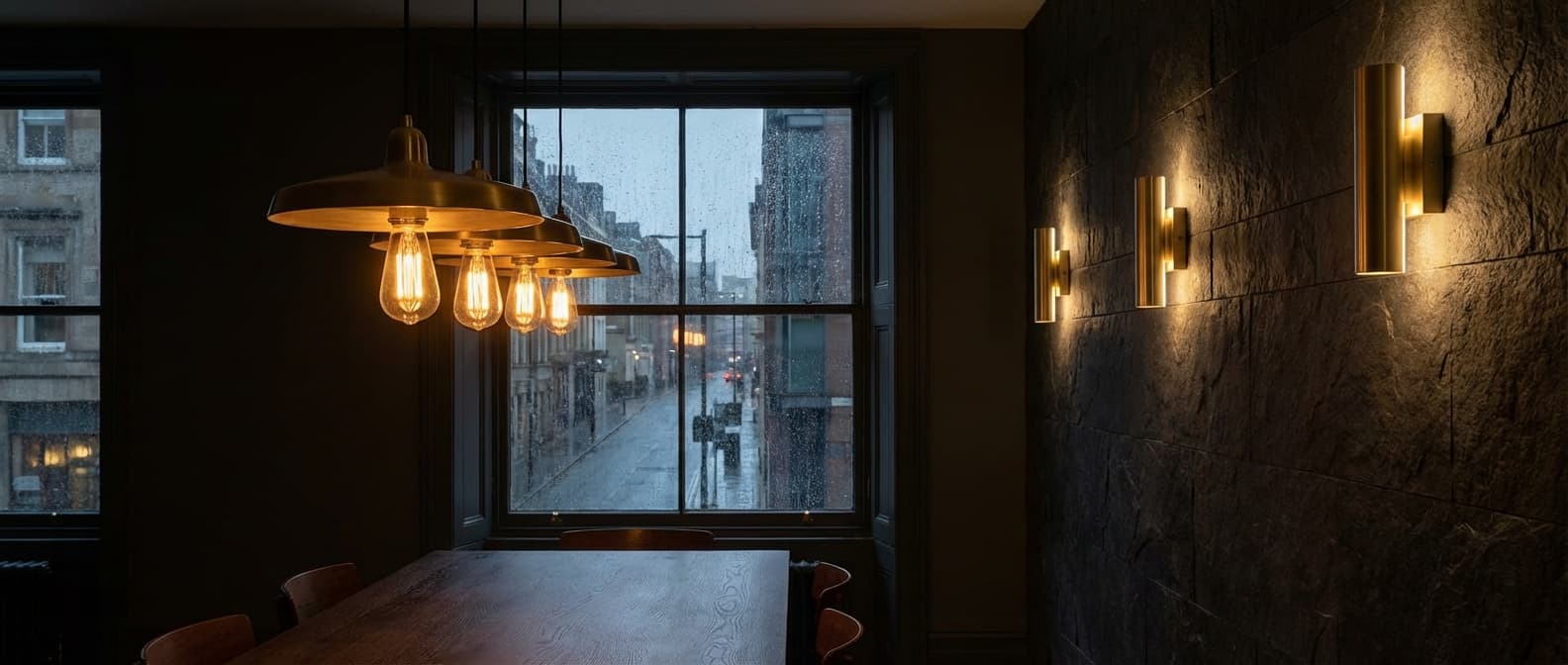
Professional lighting design goes far beyond choosing attractive light fittings. It involves layering three types of light — ambient (general overhead), task (focused illumination for work areas), and accent (highlighting architectural features, artwork, or textures) — to create a scheme that is functional, atmospheric, and energy-efficient. A lighting designer or specialist retailer can help you plan this layered approach for every room.
The UK lighting industry has been revolutionised by LED technology. LEDs now account for over 85% of domestic lighting sales, offering energy savings of up to 90% compared to traditional incandescent bulbs, with lifespans of 25,000-50,000 hours. Beyond efficiency, LEDs have enabled entirely new design possibilities: slim recessed downlights, flexible LED strip, tuneable white light that adjusts from warm to cool throughout the day, and colour-changing systems that create dynamic atmospheres.
Smart lighting has moved from niche to mainstream, with systems from brands like Philips Hue, Lutron, and Control4 allowing homeowners to control every light in the house from a smartphone, voice assistant, or automated schedule. This technology is particularly relevant under the 2026 Future Homes Standard, which emphasises energy-efficient lighting and smart controls as part of a home's overall energy performance.
HouseJester's directory features lighting designers, specialist retailers, and installation companies across the UK. Whether you need a complete lighting design for a new-build, a retrofit LED upgrade, smart lighting installation, or simply the right pendant for your dining room, our verified listings connect you with the expertise you need.
Browse lighting companies on HouseJester
How Much Does Lighting Design and Installation Cost in the UK?
Lighting costs depend on the scope — from a single room to a whole-house scheme:
| Service | Typical Cost | What You Get |
|---|---|---|
| Lighting design consultation | £200 – £600 per room | Professional lighting plan with fixture specification, circuit layouts, and switching schedules |
| Supply and install (per room) | £500 – £2,000 | LED downlights, pendants, or wall lights supplied and installed including wiring |
| Whole-house LED upgrade | £1,500 – £5,000 | Replacement of all existing lighting with energy-efficient LED throughout a 3-4 bedroom house |
| Smart lighting system | £2,000 – £10,000+ | Smart switches, dimmers, app control, and automation for a 3-4 bedroom house |
| Architectural/landscape lighting | £3,000 – £15,000+ | Exterior and garden lighting design and installation |
Individual fittings range from £20 for a basic LED downlight to £500+ for designer pendants. Electrician rates for lighting installation are typically £40-£70 per hour.
What to Look For When Choosing a Lighting Company
- Design expertise — Look for companies that offer a design service, not just product sales. A lighting plan ensures the right light levels and atmosphere in every room.
- LED specialisation — Ensure the company is up to date with current LED technology, including CRI (Colour Rendering Index), colour temperature, and dimming compatibility.
- Electrical qualifications — Installers must be Part P certified (NICEIC, NAPIT, or ELECSA registered) for domestic electrical work.
- Smart home integration — If you want smart lighting, choose a company experienced with your chosen ecosystem (Lutron, Philips Hue, KNX, Control4).
- Showroom or demonstration — Seeing lighting in person is invaluable. Visit a showroom or ask for a demonstration of dimming, colour temperature, and smart features.
- Energy efficiency advice — A good lighting company will optimise your scheme for energy efficiency, potentially qualifying for reduced energy costs under new building performance ratings.
- Product quality — Cheap LED downlights can flicker, buzz, or fail prematurely. Ask about the LED driver quality, warranty, and expected lifespan.
- Dimming expertise — LED dimming is more complex than traditional dimming. Ensure the company specifies compatible dimmers to avoid flickering.
- Reviews and portfolio — Browse completed projects on HouseJester and read customer reviews.
- Aftercare — Check whether the company offers post-installation support for smart system configuration and warranty claims.
Frequently Asked Questions
How many downlights do I need in a room?
As a general guide, space LED downlights approximately 1-1.5 metres apart and 0.5-0.75 metres from walls. A typical 4m x 5m living room needs 6-8 downlights for ambient lighting. However, a well-designed scheme does not rely solely on downlights — complement them with pendants, wall lights, table lamps, and LED strip to create layers. Over-reliance on downlights creates a flat, institutional feel. A professional lighting designer will calculate the exact number based on room dimensions, ceiling height, reflective surfaces, and intended use.
What colour temperature should I choose for home lighting?
Colour temperature is measured in Kelvin (K). For living rooms and bedrooms, warm white (2700K-3000K) creates a relaxing, inviting atmosphere. For kitchens, bathrooms, and home offices, neutral white (3500K-4000K) provides clearer, more energising light. Tuneable white LED systems allow you to adjust colour temperature throughout the day — warmer in the evening to support natural sleep cycles, cooler during the day for alertness. Avoid cool white (5000K+) in residential settings as it feels clinical and harsh.
Is smart lighting worth the investment?
Smart lighting offers convenience, energy savings, and enhanced atmosphere. You can create scenes (e.g. 'dinner', 'movie', 'morning'), automate lighting based on time of day or occupancy, and control lights remotely. Energy savings from automated schedules and dimming can be significant — dimming LEDs to 50% reduces energy consumption by approximately 40%. Entry-level smart bulbs start at £15-£20 each, while whole-house systems with dedicated smart switches cost £2,000-£10,000+. For most homeowners, a hybrid approach — smart switches in key rooms with standard LEDs elsewhere — offers the best value.
Do LED lights really last 25,000 hours?
Quality LEDs from reputable manufacturers do achieve 25,000-50,000 hours in practice, equating to 15-30 years of typical residential use (4-5 hours daily). However, cheap unbranded LEDs may degrade faster, losing brightness or developing colour shift within a few years. The LED driver (the electronic component that regulates power) is usually the component that fails first. Look for LEDs with a 5-year warranty minimum and drivers rated for 50,000 hours. Avoid installing LEDs in enclosed fittings without adequate ventilation, as heat buildup accelerates degradation.
Can I retrofit LED lighting without rewiring?
In most cases, yes. LED GU10 and bayonet/screw-fit bulbs can directly replace halogen and incandescent bulbs in existing fittings. However, you may need to replace your dimmer switches with LED-compatible dimmers to avoid flickering. Retrofitting recessed downlights is also straightforward — LED downlight modules fit into existing ceiling cut-outs. For more significant upgrades such as adding new lighting circuits, LED strip installations, or smart lighting systems, some rewiring will be necessary and should be carried out by a qualified electrician.
This article was created with AI assistance and reviewed by the HouseJester editorial team for accuracy and relevance.
Written by
HouseJester Editorial
Editorial Team
The HouseJester editorial team brings together specialists in furniture, interior design, and home improvement to provide trusted guidance for UK homeowners.