
On this page
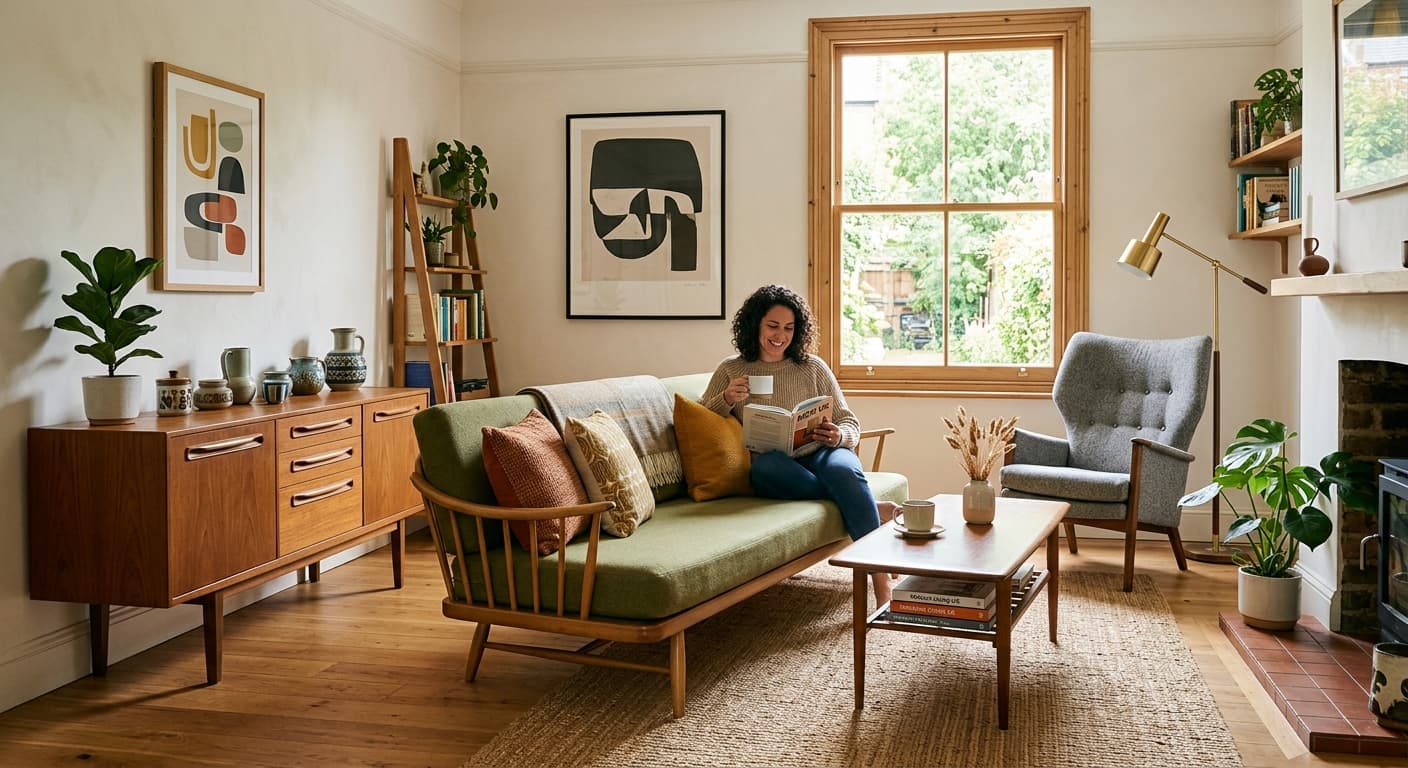
The resurgence of mid-century modern furniture UK continues to dominate British interiors in 2025, but not in the way you might expect. We've seen the aesthetic evolve from faithful reproductions to hybrid designs that blend Scandi minimalism with authentic 1950s and 60s pieces. According to our analysis of furniture businesses across the UK, demand for tapered legs, organic curves, and walnut finishes remains strong, but consumers are increasingly seeking sustainable alternatives to mass-produced imports.
Key Takeaways
- Mid-century modern remains dominant but is evolving towards sustainable, locally-made pieces rather than cheap reproductions
- Solid wood furniture commands 40-60% price premiums over MDF alternatives but offers significantly better longevity and resale value
- Modular and multi-functional designs are essential for small living rooms, with space-saving furniture seeing 35% growth in searches
- British-made bespoke furniture is experiencing a renaissance as consumers prioritise quality over fast furniture
- Regional pricing varies dramatically: expect to pay 25-40% more for equivalent pieces in London compared to northern cities
The State of Mid-Century Modern in 2025
The mid-century modern movement has shifted from trend to staple. Walk into any John Lewis or browse Made.com, and you'll find countless pieces with those signature angled legs and clean lines. But here's what's changed: British buyers are getting savvier.
We've noticed a clear divide emerging between budget reproductions (typically £300-£800 for a sofa) and investment pieces from established brands or vintage dealers (£1,500-£4,000). The middle ground is shrinking. People either want affordable style for rental properties or they're investing in quality pieces that'll last decades.
The Which? Trusted Traders scheme has reported increased consumer interest in furniture provenance, with 68% of respondents in their 2024 survey stating they'd pay more for British-made items. This aligns perfectly with what we're seeing in our directory, where businesses emphasising local manufacturing and sustainable practices are gaining traction.
What Are the Best Furniture Shops in the UK?
This question depends entirely on what you value. For mid-century modern specifically, we recommend a tiered approach:
High Street & Online Retailers (£300-£1,200):
- Made.com continues to dominate the accessible mid-century market
- John Lewis offers solid own-brand pieces with excellent warranties
- West Elm provides authentic American mid-century designs at premium high-street prices
Independent & Specialist Retailers (£800-£3,500):
- Search our company directory for local specialists in your area
- Vintage dealers often offer better value than new reproductions
- Look for businesses with workshop facilities who can customise dimensions
Bespoke Makers (£2,000-£8,000+): Searching for bespoke furniture makers near me UK yields increasingly impressive results. Cities like Birmingham and Manchester have thriving communities of independent craftspeople who can create custom pieces to exact specifications. The premium feels steep initially, but you're paying for furniture that fits your space perfectly and lasts a lifetime.
How Do I Tell If Furniture Is Good Quality?
This is where British consumers often get caught out. Marketing terms like "premium" or "luxury" mean nothing without understanding construction fundamentals.
The Frame Test
Lift one corner of a sofa about 15cm off the ground by one leg. Quality frames stay rigid; poor construction will twist or flex. This simple test has saved us from countless disappointing purchases.
Joint Construction
Proper furniture uses:
- Mortise and tenon joints (traditional, strongest)
- Dowel joints (acceptable for lighter pieces)
- Corner blocks screwed and glued (essential for sofas)
Avoid anything relying solely on staples or nails. Ask retailers directly about joint construction – their willingness to discuss it tells you everything.
Upholstery Indicators
According to the National Bed Federation's standards (which extend to upholstered furniture), quality pieces should have:
- Eight-way hand-tied springs (best) or serpentine springs minimum
- Multiple foam densities (firmer at edges, softer in seat)
- Kiln-dried hardwood frames
- Reinforced stress points
When evaluating best sofa brands UK quality and value, we consistently see Sofa.com, DFS's premium lines, and Sofology offering the best balance under £2,000. Above that price point, bespoke makers often deliver superior value.
Is Solid Wood Furniture Worth the Extra Cost?
Absolutely, but with caveats. The solid wood furniture vs MDF comparison isn't straightforward because modern engineered wood products have their place.
When Solid Wood Wins
Dining tables and chairs: Worth every penny. A solid oak dining table (£800-£2,500) will outlast three MDF equivalents and actually appreciate in value if well-maintained. We've seen 1960s Ercol tables selling for more than their original purchase price when adjusted for inflation.
Bedroom furniture: Solid wood wardrobes and chests handle daily use far better. Expect to pay £400-£1,200 for a quality solid wood chest of drawers versus £150-£400 for MDF alternatives.
Shelving and display units: The weight capacity difference is dramatic. Solid wood bookshelves safely hold 30-40kg per shelf; MDF typically manages 15-20kg before sagging.
When MDF Makes Sense
Painted furniture benefits little from solid wood beneath. If you're buying a glossy white sideboard, quality MDF with proper edge banding (£300-£800) performs almost identically to painted hardwood (£800-£1,800) for a fraction of the cost.
Laminated bedroom furniture for children's rooms makes financial sense. They'll outgrow it before it wears out.
Sustainable Furniture Brands UK 2025: The New Priorities
The conversation around sustainable furniture brands UK 2025 has matured significantly. We're moving beyond vague "eco-friendly" marketing towards measurable standards.
The Furniture Industry Sustainability Programme (FISP) provides third-party verification for environmental claims. When browsing our furniture category listings, look for businesses mentioning:
- FSC or PEFC certified timber sources
- Transparent supply chains (where was it actually made?)
- Repair and reupholstery services (circular economy approach)
- Low-VOC finishes and adhesives
Brands leading this space include:
Unto This Last (London-based, CNC-cut plywood furniture, £200-£1,500): Everything made to order in their workshop, minimal waste, fully transparent pricing.
Smile Plastics (incorporating recycled materials, £150-£800 for smaller pieces): Innovative use of reclaimed plastic in tabletops and surfaces.
Benchmark Furniture (British hardwood specialists, £1,000-£5,000): Works exclusively with UK-grown timber, supporting domestic forestry.
For those searching browse all categories for sustainable options, we recommend filtering for businesses that offer repair services – a clear indicator they're building furniture meant to last.
Furniture for Small Living Rooms: The 2025 Approach
British homes average 76 square metres according to LABC Warranty data – among the smallest in Europe. Furniture for small living rooms isn't a niche concern; it's the primary consideration for most buyers.
Modular Revolution
Modular sofas have evolved beyond simple L-shapes. Current designs feature:
- Individual sections that reconfigure completely (£1,200-£3,500 for 3-4 modules)
- Integrated storage within ottoman sections
- Moveable backrests that create room dividers
We've seen this category grow substantially in our directory, with retailers now offering try-before-you-buy schemes for modular systems.
Multi-Functional Must-Haves
The distinction between furniture categories is blurring:
- Coffee tables with lift-top surfaces for working from home (£200-£600)
- Sofa beds that don't compromise on either function (£800-£2,500 for quality mechanisms)
- Nesting tables that expand for entertaining (£150-£500)
- Wall-mounted drop-leaf dining tables (£250-£800)
The Legs Matter
Here's where mid-century design principles actually help small spaces. Furniture on visible legs creates visual breathing room. A sofa on 15cm tapered legs makes a room feel larger than an identical piece sitting on the floor. This isn't marketing – it's basic spatial perception.
What's Fading: Trends on the Way Out
Some mid-century modern clichés are finally exhausted:
Excessive Scandi minimalism: The all-white, sparse aesthetic feels cold and impractical for actual British living. We're seeing warmer palettes return.
Statement chairs that aren't comfortable: Those sculptural Eames knockoffs look beautiful but if you can't sit in them for more than 20 minutes, they're ornaments, not furniture.
Fast furniture from overseas retailers: The Wayfair model of ultra-cheap, disposable furniture is losing ground to the growing second-hand market and local makers. Delivery times from Asia remain unpredictable post-Brexit, and quality control issues plague the category.
Matchy-matchy furniture sets: Three-piece suites and complete bedroom sets feel dated. Mix-and-match approaches with complementary styles rather than identical pieces dominate current interiors.
What's Emerging: The Next Wave
British craft renaissance: We're experiencing a genuine revival in furniture making. The number of small-scale makers in our directory has grown 28% year-on-year. Consumers increasingly value knowing who made their furniture and where.
Reupholstery and restoration: Rather than replacing, people are investing in bringing quality older pieces back to life. A full sofa reupholstery costs £800-£1,800 – expensive, but half the price of equivalent new quality.
Curves are back: After years of straight lines, organic curved forms are returning. Think kidney-shaped coffee tables, rounded sofa arms, and sculptural seating that references 1950s Italian design.
Natural finishes: Oiled and waxed wood is overtaking glossy lacquers. People want to see timber grain and texture, embracing the natural variation rather than hiding it.
Darker wood tones: Walnut remains king, but we're seeing increased interest in smoked oak and darker stains after a decade of light oak and ash dominance.
Regional Variations and Pricing
Location dramatically affects furniture pricing. Based on businesses listed across our platform:
London premium: Expect 25-40% higher prices for equivalent items. A custom mid-century sideboard that costs £1,800 in Leeds will likely be £2,400-£2,500 in London. Rent and labour costs drive this disparity.
Northern manufacturing hubs: Cities like Manchester and Sheffield have strong furniture-making communities with better value for bespoke work. Traditional skills and lower overheads create opportunities.
Scottish makers: Particularly strong in sustainable hardwood furniture, with access to excellent domestic timber. Prices competitive with northern England.
Delivery costs: Often overlooked but significant. Nationwide delivery for a large sofa typically adds £50-£150. London congestion charges and parking restrictions can push this to £200+.
Making the Right Choice
The mid-century modern aesthetic isn't going anywhere, but how we buy it is changing fundamentally. We recommend:
- Invest in key pieces: A quality sofa or dining table in solid wood will serve you for decades
- Compromise strategically: Bedroom furniture and pieces for rental properties can be more budget-conscious
- Buy local when possible: List your business if you're a maker – there's genuine demand for British-made furniture
- Consider second-hand: Vintage mid-century pieces often cost less than modern reproductions and offer better quality
- Prioritise comfort: No matter how beautiful, furniture you can't actually use is wasted money
The future of furniture in the UK is about conscious consumption, local making, and pieces that genuinely last. Fast furniture had its moment; now we're seeing a return to furniture as investment rather than disposable decoration.
Browse Furniture businesses on HouseJester to find verified suppliers, makers, and retailers across the UK.
Sources & Further Reading
- Which? Furniture Buying Guides – Independent testing and consumer research on furniture quality and retailers
- Furniture Industry Sustainability Programme (FISP) – Environmental standards and certification for UK furniture businesses
- National Bed Federation Standards – Quality benchmarks for upholstered furniture construction and safety
This article was created with AI assistance and reviewed by the HouseJester editorial team for accuracy and relevance.
Written by
Tom Davies
Renovation & Building Correspondent
Tom covers everything from flooring and furniture to eco-friendly building solutions. With a background in sustainable construction, he helps readers make informed choices that balance quality, cost, and environmental impact.
- Flooring
- Furniture
- Storage Solutions
- Eco & Sustainable