
On this page
The orangery vs conservatory debate has dominated UK home improvement discussions for years, but 2025 is bringing fresh perspectives to this classic dilemma. We're seeing dramatic shifts in what homeowners actually want from their garden extensions, with thermal performance now trumping square footage and hybrid designs blurring the lines between traditional categories.
Key Takeaways
- Modern conservatories are moving away from all-glass designs toward solid roofs with minimal glazing, effectively becoming insulated garden rooms
- Orangeries now start from around £25,000–£35,000 (up 12% from 2023), while quality conservatories range from £8,000–£22,000 depending on specification
- Retrofit roof replacements are the fastest-growing segment, with homeowners converting old conservatories rather than building new
- Planning permission rules remain generous for both, but Building Regulations Part L now drives design choices more than aesthetics
- The "lifestyle room" concept is replacing traditional conservatories, with year-round usability the primary concern
What Is the Difference Between an Orangery and Conservatory?
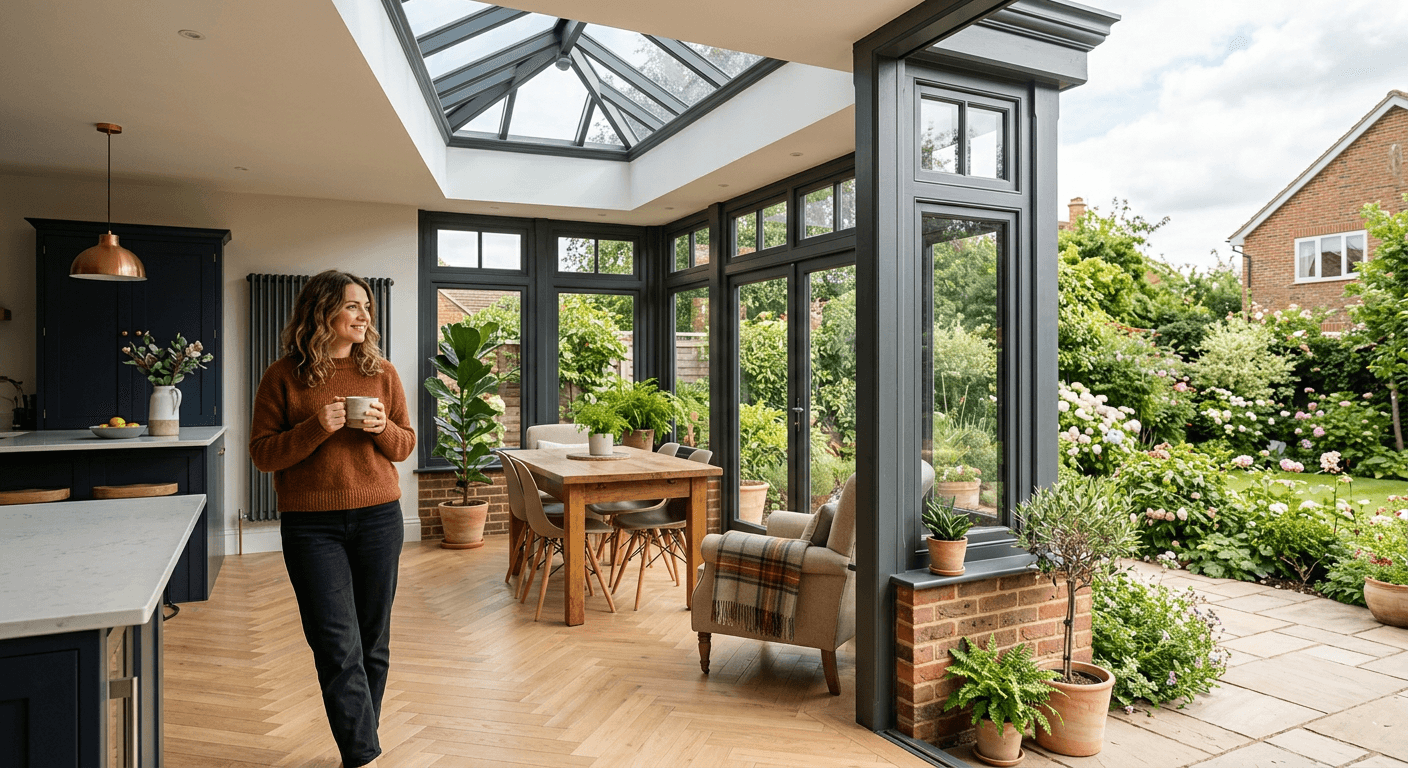
The technical distinction has become muddier in 2025, but the fundamentals still matter. A traditional conservatory features a glazed roof (typically at least 75% glass or polycarbonate) and predominantly glazed walls. Orangeries have solid perimeter walls with brick pillars, flat roof sections with a glazed lantern, and generally no more than 50% glass on the roof.
But here's what we've observed across conservatories businesses in our directory: the terminology has become marketing fluff. What suppliers call an "orangery-style conservatory" might be what another labels a "solid-roof garden room." The real differentiator isn't the name—it's the thermal efficiency rating.
According to the Glass and Glazing Federation's 2024 member survey, 68% of new "conservatory" installations now feature solid insulated roofs rather than glazed ones. That's a complete reversal from five years ago.
Current Trends: What UK Homeowners Actually Want in 2025
The Solid Roof Revolution
Glazed conservatory roofs are rapidly falling out of favour. We've seen this shift accelerate dramatically since energy costs spiked in 2022–2023. Homeowners installing new garden extensions in London and Manchester are overwhelmingly choosing insulated tiled or slate roofs over glass.
The conservatory roof replacement tiles vs glass debate is essentially settled: tiles win on almost every practical measure except one (natural light, which LED lighting now addresses cheaply). Replacement Guardian Warm Roof systems or Ultraframe's Livinroof cost £5,000–£8,500 for a typical 3m x 4m conservatory, and the transformation is remarkable. Your unusable hotbox becomes a genuine living space.
Suppliers report that glazed roofs now account for under 25% of new builds, mostly on north-facing extensions where solar gain isn't problematic. Even then, customers specify high-performance glass with solar control coatings.
Orangeries Are Evolving Too
Traditional orangery designs—those elegant brick-pillar structures with flat roofs and central roof lanterns—remain popular but expensive. The orangery vs conservatory price comparison typically shows orangeries costing 2.5–3 times more than equivalent-sized conservatories.
In 2025, expect to pay:
- Standard uPVC conservatory (3m x 4m): £8,000–£15,000
- Premium aluminium conservatory: £15,000–£25,000
- Basic orangery: £25,000–£40,000
- High-specification orangery: £45,000–£70,000+
Prices in the capital run 15–25% higher. That's based on quotes we've analysed from businesses across our company directory.
What's emerging is the "lite" orangery: essentially a solid-roof conservatory with some brickwork detailing and wider eaves. It delivers 70% of the visual appeal at 50% of the cost. Ultraframe, Origin, and other major systems suppliers have developed specific product lines targeting this middle market.
Garden Rooms Are Eating Everyone's Lunch
The biggest trend? Neither traditional conservatories nor orangeries. Purpose-built garden rooms—fully insulated, electrical-certified, Building Regulations compliant from the start—are capturing market share from both categories.
These aren't flimsy garden offices. We're talking about proper extensions that happen to be constructed differently. Composite panel systems from UK manufacturers like Green Retreats, Cabin Master, or Swift Garden Rooms offer better thermal performance than most conservatories at competitive prices (£15,000–£35,000 turnkey).
The advantage? Speed. A garden room goes up in days rather than weeks, often with no groundworks beyond a simple base. Read our complete guide to garden rooms and orangeries UK guide for more on this category.
How Much Does a Conservatory Cost in the UK?
Let's get specific about how much does a conservatory cost UK 2025, because quotes vary wildly.
Budget uPVC conservatory (3m x 3m): £6,500–£10,000 You'll get a basic lean-to or Victorian style with polycarbonate or entry-level glass roof, uPVC frames, and standard double glazing. Fine for occasional use but will still overheat in summer and feel cold in winter. Supply-only deals from retailers like Anglian or Everest start around £4,000, but installation adds £2,500–£4,000.
Mid-range conservatory (3m x 4m): £12,000–£20,000 Aluminium or premium uPVC frames, insulated solid roof (tiles or composite), underfloor heating, proper Building Regulations compliance. This is the sweet spot for most UK homeowners. Expect to use it year-round.
Premium conservatory/orangery (4m x 5m+): £25,000–£50,000 Bespoke designs, slim-frame aluminium from Origin or Schüco, heated flooring, full electrical installation, brickwork detailing. Often features bi-fold or sliding doors opening onto the garden.
Luxury orangery (5m x 6m+): £50,000–£100,000+ Architectural designs, engineered oak frames, underfloor heating with smart controls, high-end lighting, premium tiles or natural slate roofing. Common in Birmingham's suburbs and affluent areas across the Southeast.
Foundations, groundworks, electrics, plastering, decorating, and building control fees add 25–40% to base structure costs. Always budget for overruns.
Do I Need Planning Permission for a Conservatory?
Generally no, thanks to permitted development rights—but the rules tightened in recent years.
Garden room planning permission rules UK allow conservatories and orangeries without planning permission if they meet these criteria:
- No more than 50% of garden area covered by extensions and outbuildings
- Maximum 4 metres projection (3 metres for attached buildings on boundaries)
- Maximum eaves height 3 metres, overall height 4 metres for pitched roofs
- Not forward of the principal elevation facing a highway
- No verandas, balconies or raised platforms above 30cm
These rules don't apply in conservation areas, national parks, Areas of Outstanding Natural Beauty, or on listed buildings. You'll need full planning permission in those cases.
Building Regulations are mandatory regardless of planning permission status. Since 2010, conservatories only avoided Building Regs if they had independent heating and were separated from the house by external-quality doors. Almost nobody builds that way anymore because it's pointless—you want an integrated room.
That means your conservatory must meet Part L (energy efficiency), Part F (ventilation), Part M (accessibility where applicable), and structural requirements. Your installer should handle this, but check they're actually submitting applications rather than dodging compliance. According to Checkatrade, around 15% of conservatory installations fail to meet Building Regulations, leaving homeowners with compliance issues when selling.
The Overheating Problem: What's Actually Working
Conservatory too hot in summer solutions have evolved beyond the useless advice to "open the windows and hope."
What works:
- Solid insulated roofs: The single most effective solution. Converts an unusable space into a comfortable room.
- Solar control glass: Pilkington Suncool or Saint-Gobain's Cooltone glass reflects infrared radiation. Reduces solar gain by 40–60% compared to standard glass. Essential on south-facing glazing.
- External shading: Proper outdoor blinds or shutters stop heat before it enters. Internal blinds are decorative theatre—the heat's already inside.
- Active ventilation: Ridge vents combined with low-level vents create stack effect airflow. Powered roof vents (£200–£400) work better.
- Air conditioning: Mini-split systems (£800–£1,500 installed) are becoming standard on premium conservatories. Game-changing comfort.
What doesn't work:
- Reflective window film (minimal effect, looks terrible)
- Interior blinds alone (too late)
- Ceiling fans (move hot air around impressively)
- Opening doors and hoping (not a solution)
The Energy Saving Trust's 2024 guidance confirms that thermal mass and proper insulation matter far more than ventilation for overheating prevention.
What's Fading: Designs on the Way Out
Polycarbonate roofs are finished. They were always a compromise, offering neither the light quality of glass nor the insulation of solid roofs. The 25-year lifespan means millions of 1990s–2000s polycarbonate conservatories are degrading now, driving the retrofit market.
All-glass "Victorian" or "Edwardian" conservatories in white uPVC—the archetypal 1990s conservatory—feel dated. Modern aesthetics favour cleaner lines, slimmer frames, and contemporary colours (anthracite grey dominates, followed by black and bronze).
Dwarf walls are disappearing. That 600mm brick course around the base was meant to improve insulation but actually created a visual barrier between inside and outside. Floor-to-ceiling glazing with proper thermal performance looks better and feels more spacious.
What's Emerging: The Next Wave
Biophilic design elements: Living walls, integrated planters, natural materials. Conservatories were always about connecting to gardens; now the garden extends into the structure.
Smart glass: Electrochromic glazing that tints on demand. Saint-Gobain's SageGlass costs £800–£1,200 per square metre but eliminates blind needs entirely. Still niche but growing.
Hybrid heating: Combining underfloor heating with infrared panels and heat recovery ventilation. The goal is year-round comfort without massive running costs.
Modular systems: Pre-fabricated components that reduce installation time from weeks to days. Several UK manufacturers now offer app-based design tools and fixed-price packages.
Dark interiors: After decades of magnolia and cream, homeowners are specifying dark walls, charcoal ceilings, and dramatic lighting in conservatories. The contrast with natural light creates striking effects.
Making the Right Choice for Your Home
The orangery vs conservatory decision ultimately depends on budget, aesthetic preference, and how the space will be used.
Choose a modern solid-roof conservatory if:
- Budget is under £20,000
- You want maximum glazing for garden views
- Year-round usability matters more than architectural statement
- You're happy with contemporary rather than classical styling
Choose an orangery if:
- Budget exceeds £25,000
- You want a more substantial architectural feature
- The space will serve as a primary living area
- Classical proportions and traditional details appeal
- You're willing to sacrifice some glazing for solidity
Consider a garden room if:
- Speed of installation is crucial
- Your garden doesn't suit traditional designs
- You want workshop/studio/office space rather than living space
- You're interested in contemporary architecture
Whatever you choose, prioritise thermal performance over aesthetics. A beautiful conservatory that's unusable eight months of the year is a expensive mistake. We've seen too many homeowners in this position. Insist on U-values for all elements (roof, walls, glazing, floor), check the installer's Building Regulations track record, and get at least three detailed quotes from browse all categories to compare specifications properly.
Browse Conservatories businesses on HouseJester to find verified installers in your area. Our directory includes 661 businesses across the UK, with transparent reviews and specialisms clearly listed. If you're a conservatory or orangery installer, you can list your business to reach homeowners actively researching their next project.
Sources & Further Reading
- Glass and Glazing Federation - Conservatory Installation Standards - Industry body representing UK glazing installers with technical guidance and member directory
- Planning Portal - Do I Need Planning Permission? - Official UK government guidance on permitted development rights for conservatories and garden buildings
- Energy Saving Trust - Conservatories and Extensions - Independent advice on energy efficiency requirements and thermal performance standards
This article was created with AI assistance and reviewed by the HouseJester editorial team for accuracy and relevance.
Written by
James Hartley
Home Improvement Writer
A former building contractor turned journalist, James brings hands-on experience to every article. He specialises in home improvement projects, building regulations, and helping homeowners navigate renovation work with confidence.
- Home Improvements
- Building Services
- Roofing
- Windows & Doors