
On this page
Small Bedroom Ideas: Your UK Bedroom Questions Answered
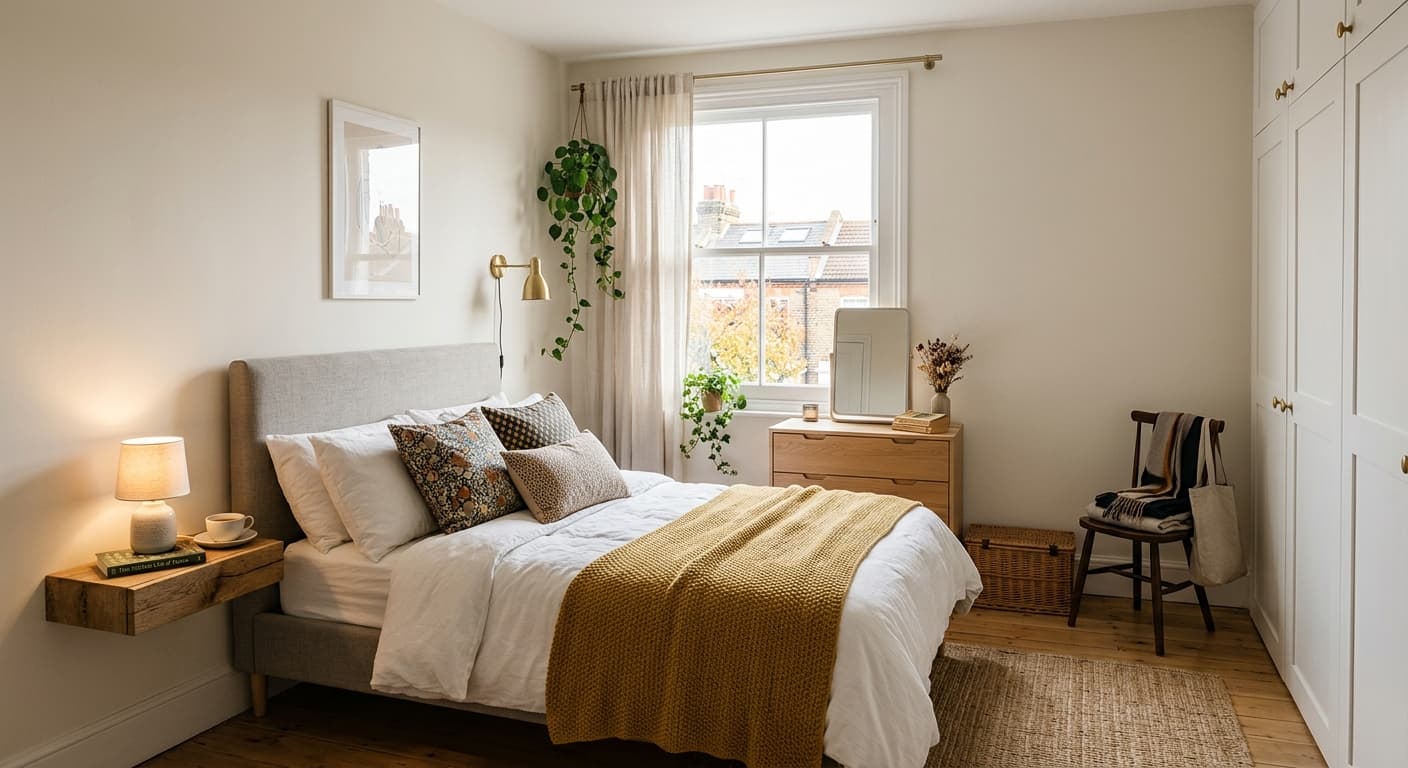
Struggling with limited bedroom space? You're not alone. With the average UK new-build bedroom measuring just 2.8 by 2.5 metres according to LABC Warranty, small bedroom ideas have become essential for homeowners looking to maximise every centimetre. We've compiled answers to the most common questions we hear from UK homeowners about creating functional, comfortable bedrooms that don't compromise on style or storage.
Key Takeaways
- Fitted wardrobes typically cost £1,000–£3,500 for small bedrooms, whilst freestanding alternatives start from £200–£800
- Replacing your mattress every 7-10 years is recommended, with pocket sprung and memory foam being top choices for UK sleepers
- Built-in storage solutions can reclaim up to 30% more usable space in small bedrooms compared to freestanding furniture
- Sliding wardrobes save approximately 1 metre of floor space compared to hinged doors, making them ideal for compact rooms
- Strategic furniture placement and multi-functional pieces are crucial for maximising space in bedrooms under 3 metres squared
How Much Do Fitted Wardrobes Cost in the UK?
The question we encounter most frequently concerns fitted wardrobe pricing. Based on listings in our bedrooms directory, expect to pay between £1,000 and £3,500 for a small bedroom installation, with costs rising to £4,000–£8,000 for larger spaces with premium finishes.
Here's what influences the final price:
- Materials: Melamine-faced chipboard costs £800–£1,500, whilst solid wood or high-gloss finishes push prices to £3,000+
- Internal fittings: Basic hanging rails and shelves are standard, but pull-out shoe racks, integrated lighting, and soft-close mechanisms add £300–£800
- Door type: Sliding doors typically cost £150–£300 more than hinged alternatives
- Regional variations: London prices run 15-25% higher than Manchester or Birmingham
According to Checkatrade's 2023 survey, the average fitted wardrobe installation takes 2-3 days, with labour accounting for roughly 40% of total costs.
Fitted Wardrobes vs Freestanding Cost Comparison
Freestanding wardrobes from retailers like IKEA or John Lewis range from £200 for basic models to £1,200 for solid wood pieces. The upfront saving is obvious, but fitted options deliver better space efficiency.
We've found that fitted wardrobes vs freestanding cost comparison isn't just about purchase price. Fitted solutions:
- Utilise awkward spaces and ceiling height that freestanding units waste
- Add property value (typically 2-3% according to estate agents we've consulted)
- Last 15-20 years compared to 5-10 years for flatpack furniture
- Provide 20-30% more storage capacity in the same footprint
For small bedrooms under 3 metres squared, fitted wardrobes become particularly cost-effective when you calculate storage per pound spent.
Are Sliding Wardrobes Better Than Hinged?
Sliding wardrobes have become increasingly popular for small bedroom storage ideas built-in solutions, and for good reason. The sliding door wardrobes pros and cons deserve careful consideration.
Advantages of sliding wardrobes:
- Save approximately 1 metre of clearance space (no door swing required)
- Create a sleek, contemporary aesthetic
- Work brilliantly in narrow bedrooms or where beds sit close to wardrobes
- Can incorporate mirrored panels to visually expand small spaces
- Less likely to be damaged by door collision in tight quarters
Disadvantages to consider:
- Only provide access to half the wardrobe width at any time
- Track mechanisms require maintenance and can accumulate dust
- Typically cost £150–£300 more than hinged equivalents
- Heavier doors can become difficult to slide over time without quality hardware
- Offer fewer internal configuration options due to tracking requirements
Our recommendation? For bedrooms narrower than 2.5 metres, sliding doors are practically essential. Wider rooms can accommodate hinged doors, which we prefer for full wardrobe access and long-term reliability.
How Do I Maximise Storage in a Small Bedroom?
Small bedroom storage ideas built-in solutions consistently outperform freestanding furniture for space efficiency. We've identified five strategies that deliver the biggest impact:
1. Exploit vertical space: Floor-to-ceiling fitted wardrobes reclaim the 30-40cm typically wasted above standard furniture. This alone can add 40% more storage capacity.
2. Utilise dead space: The area under beds, in alcoves, and above doors often goes unused. Built-in drawers under platform beds or made-to-measure alcove units transform these zones into valuable storage.
3. Choose multi-functional furniture: Ottoman beds with hydraulic lift mechanisms provide storage equivalent to a small chest of drawers. We've seen models at Dreams and Bensons for Beds storing up to 450 litres beneath the mattress.
4. Install wall-mounted solutions: Floating shelves and wall-mounted bedside units eliminate floor space requirements whilst maintaining functionality. Building Regulations Part K requires fixtures capable of supporting appropriate loads, so proper wall fixings are essential.
5. Consider walk-in wardrobe conversions: If you have an adjacent box room or large cupboard, walk-in wardrobe design ideas UK specialists can create surprisingly efficient storage. According to businesses in our directory, conversions start from £2,500 for basic installations.
What is the Best Mattress Type for Side Sleepers?
Side sleepers—roughly 70% of UK adults according to the Sleep Council—need mattresses that cushion shoulders and hips whilst supporting spinal alignment. The best mattress for back pain UK specialists consistently recommend depends on your sleeping position.
For side sleepers specifically:
Memory foam mattresses (£300–£1,200): Excellent pressure relief and contouring. Look for medium firmness ratings with at least 4-5cm memory foam comfort layer. Tempur and Emma are popular UK brands.
Pocket sprung mattresses (£400–£2,000): Individual springs respond independently, providing support where needed. We recommend 1,000+ spring count for double mattresses. Silentnight and Hypnos offer excellent UK-made options.
Hybrid mattresses (£500–£1,500): Combine pocket springs with memory foam or latex layers. These deliver the benefits of both technologies and suit most body types. Eve and Simba dominate the UK market.
Back and stomach sleepers need firmer support to prevent lower back sagging. Which? recommends testing mattresses for at least 10-15 minutes in your usual sleeping position before purchasing.
How Often Should You Replace a Mattress?
The National Bed Federation recommends replacing mattresses every 7-10 years, though several factors influence this timeline:
- Visible sagging or body impressions exceeding 2-3cm indicate structural breakdown
- Increased back pain or stiffness upon waking suggests inadequate support
- Spring noise from pocket sprung mattresses signals wear
- Allergy symptoms can worsen as mattresses accumulate dust mites (even with protectors)
We've noticed that budget mattresses under £300 typically last 5-7 years, whilst quality models over £800 can remain comfortable for 10-12 years with proper care. Using mattress protectors and rotating every 3 months extends lifespan significantly.
Interestingly, UK fire safety regulations changed in 1988, requiring fire-resistant materials. Pre-1988 mattresses should be replaced immediately regardless of condition.
What Bedroom Furniture Do I Really Need?
Small bedroom ideas often focus on minimalism by necessity. Strip your bedroom back to genuine essentials:
Absolutely essential:
- Bed frame and mattress (obviously)
- Wardrobe or hanging storage for clothes
- Blackout curtains or blinds (UK Building Regulations Part L requires thermal efficiency)
Highly recommended:
- Bedside table (even a wall-mounted shelf works)
- Reading light or bedside lamp
- Mirror (particularly useful in small spaces)
Nice to have but not essential:
- Chest of drawers (if wardrobe storage is adequate)
- Dressing table (can be replaced by desk or dining table)
- Armchair or seating (rarely used in small bedrooms)
- Television (sleep experts increasingly discourage bedroom screens)
For small bedrooms, we recommend investing in one excellent fitted wardrobe rather than multiple freestanding pieces. This approach maximises storage whilst maintaining floor space for movement.
Walk-In Wardrobe Design Ideas for UK Homes
Walk-in wardrobe design ideas UK homeowners request have evolved considerably. What was once a luxury reserved for large homes has become achievable in surprisingly compact spaces.
The minimum dimensions for a functional walk-in wardrobe are approximately 1.5 metres deep by 1.2 metres wide, though 2 x 1.5 metres provides more comfortable access. We've seen clever conversions of:
- Box rooms (common in Victorian and Edwardian properties)
- Large airing cupboards after boiler relocations
- Awkward alcoves or corridor spaces
- En-suite bathrooms when en-suite access exists elsewhere
Expect to invest £2,500–£6,000 for professional walk-in wardrobe installation, including:
- Internal hanging rails and shelving systems
- LED lighting (Building Regulations Part P requires qualified electrician)
- Full-height doors or curtain systems
- Possible ventilation improvements to prevent mustiness
Browsing our bedrooms category reveals specialists throughout the UK offering design consultations, often at no cost for projects exceeding £2,000. You can also browse all categories to find complementary services like electricians or decorators.
Finding the Right Bedroom Specialist
Whether you're planning fitted wardrobes, bedroom storage solutions, or complete renovations, selecting the right professional matters enormously. Our directory includes verified bedroom specialists who understand the unique challenges of UK properties—from Victorian ceiling heights to new-build space constraints.
Look for businesses offering:
- Free home consultations with 3D design visualisations
- Detailed written quotations breaking down materials and labour
- References or portfolio images from previous projects
- Guarantees on workmanship (typically 1-2 years minimum)
- Insurance and relevant certifications
Many bedroom furniture specialists listed on HouseJester operate across multiple regions, whilst others focus on specific cities like London or Manchester. If you're a bedroom specialist looking to reach more customers, you can list your business in our growing directory.
Small bedroom ideas don't require enormous budgets—just smart planning and quality execution. Start with a clear list of your storage needs, measure your space carefully, and consult professionals who can maximise every centimetre.
Browse Bedrooms businesses on HouseJester to find verified specialists in your area.
Sources & Further Reading
- The Sleep Council - UK Sleep Statistics and Mattress Guidance
- Which? - Mattress Buying Guide and Reviews
- Checkatrade - Fitted Wardrobe Costs and Installation Guide
This article was created with AI assistance and reviewed by the HouseJester editorial team for accuracy and relevance.
Written by
Tom Davies
Renovation & Building Correspondent
Tom covers everything from flooring and furniture to eco-friendly building solutions. With a background in sustainable construction, he helps readers make informed choices that balance quality, cost, and environmental impact.
- Flooring
- Furniture
- Storage Solutions
- Eco & Sustainable