
On this page
The British kitchen has undergone a quiet revolution. Gone are the days when appliances simply heated, cooled, or cleaned. Today's smart home appliances UK market offers connectivity, energy efficiency, and features that seemed impossible a decade ago. But with choice comes complexity – and significant expense.
Navigating the appliance market requires more than browsing John Lewis or Currys for the shiniest model. We're talking about purchases that will serve your household for 7-15 years, so getting it right matters.
Key Takeaways
- Smart connectivity is becoming standard, but reliability and energy efficiency should always trump flashy features
- Energy rating labels changed in March 2021 – old A+++ ratings are now typically B or C under the stricter UK/EU labelling system
- Induction hobs outperform ceramic on every metric except upfront cost, saving around £30-50 annually on electricity
- Integrated appliances cost 20-30% more than freestanding equivalents but deliver superior aesthetics and property value
- Heat pump tumble dryers pay for themselves within 3-5 years through reduced running costs
Understanding the New Energy Rating System
The energy rating labels explained UK appliances received a major overhaul in March 2021. The old A+++ to D scale was scrapped, replaced by a simpler A to G system with far stricter criteria. What does this mean for you?
Your old A+++ fridge is now probably rated B or C. This doesn't mean it's less efficient – the goalposts moved. According to the Energy Saving Trust, very few appliances currently achieve an A rating under the new system, which deliberately leaves room for future innovation.
When comparing models, focus on the specific kWh consumption figures rather than just the letter grade. A washing machine rated B using 220 kWh annually costs approximately £75 per year to run at current electricity prices (34p/kWh). That same machine a decade ago might have cost £40 annually – highlighting why efficiency matters more than ever.
For appliances installed as part of new builds or major renovations, Building Regulations Part L mandates minimum efficiency standards. Ensure any installer you work with understands these requirements.
What is the Most Reliable Washing Machine Brand UK?
Reliability trumps every other consideration. A washing machine that breaks down after three years, no matter how smart or energy-efficient, represents poor value.
Based on multiple Which? surveys and our conversations with repair technicians listed in our directory, the best washing machine brands UK reliability consistently include:
- Miele: Engineered for 20-year lifespans, but expect to pay £800-£2,000. Their W1 series represents the gold standard
- Bosch: Excellent mid-range option at £400-£800, with failure rates significantly below average
- LG: Strong reliability record at competitive prices (£350-£700), with impressive inverter motor warranties
- Siemens: Essentially rebadged Bosch models with slightly different styling, equally dependable
Avoid budget brands unless you're prepared to replace the machine within 4-6 years. The apparent £200 saving quickly evaporates when the drum bearing fails or the door seal perishes.
Capacity matters for UK households. An 8kg drum suits most families, whilst 9-10kg models make sense for households of five or more. Spinning at 1400-1600 RPM reduces drying time significantly compared to 1200 RPM models – particularly relevant given our damp climate.
Is an Induction Hob Better Than Ceramic?
The induction hob vs ceramic hob pros cons debate has a clear winner, though cost remains a factor.
Induction advantages are substantial:
- Speed: Boils water roughly twice as fast as ceramic
- Efficiency: 90% of energy goes directly into the pan versus 65% for ceramic
- Safety: The hob surface doesn't heat up (only the pan does), reducing burn risk
- Control: Instantaneous temperature adjustment, similar to gas
- Running costs: Saves approximately £30-50 annually on electricity bills
The ceramic hob case rests primarily on price. Decent ceramic hobs start around £200-£300, whilst comparable induction models begin at £350-£450. You'll also need induction-compatible pans – check with a magnet (if it sticks, the pan works).
Installation costs are identical since both require similar electrical connections. For kitchen refurbishments in London, expect electrician charges of £150-£250 for hob installation; prices drop to £100-£180 in Manchester and Birmingham.
Our view? Unless budget is extremely tight, choose induction. The performance difference is dramatic, and you'll recoup the premium through lower running costs and faster cooking times. If you're working with kitchen fitters for a full renovation, browse our fitted kitchens category to find specialists who understand appliance integration.
Integrated vs Freestanding: Making the Right Choice
The integrated vs freestanding dishwasher comparison extends beyond dishwashers to most kitchen appliances. This decision significantly impacts both aesthetics and budget.
Integrated appliances sit behind cabinet doors, creating seamless kitchen designs. Freestanding units are exactly what they sound like – visible, standalone appliances. Here's what matters:
Integrated benefits:
- Superior aesthetics – your kitchen looks uninterrupted
- Typically quieter operation (the cabinet door provides sound insulation)
- Higher perceived property value
- Protected from accidental damage
Integrated drawbacks:
- Cost 20-30% more than equivalent freestanding models
- More complex installation (requires precise cabinet dimensions)
- Slightly reduced capacity due to space taken by door mechanisms
- Replacement requires matching or replacing cabinet doors
When to choose integrated: You're installing a new kitchen or doing a major refurbishment, your budget allows for the premium, and aesthetics matter significantly to you.
When to choose freestanding: You're replacing a single appliance, working with a tight budget, or renting. Also sensible for utility rooms where appearance matters less.
For dishwashers specifically, integrated models from Bosch or Siemens start around £450-£550, whilst freestanding equivalents begin at £350-£400. Both types should last 10-12 years with proper maintenance.
American Fridge Freezer vs Standard Size UK: The Space Question
The American fridge freezer vs standard size UK debate is mostly about space – both physical and internal.
American-style units (those wide, double-door models with ice dispensers) offer 500-700 litres capacity and demand:
- Minimum 90cm width (often 100-120cm)
- Depth of 70-80cm (they protrude beyond standard 60cm kitchen units)
- Height of 175-190cm
- Clearance space for doors (at least 100cm in front)
- Often require plumbing for water/ice dispensers
Standard UK fridge-freezers provide 250-350 litres in a 60cm wide, 60cm deep footprint.
Running costs differ significantly. American models consume 300-500 kWh annually (£100-£170/year), whilst standard UK models use 150-250 kWh (£50-£85/year). Those ice makers and larger compressors demand power.
American models make sense for:
- Families of five or more
- Homes with kitchen space exceeding 15 square metres
- Households doing large weekly shops
- Properties with separate utility areas where one can fit
Standard UK models suit:
- Most British kitchens (average size 11-13 square metres)
- Households of 2-4 people
- Anyone prioritising energy efficiency
- Those unable to accommodate 90cm+ width
Prices: American models start around £600 (budget brands) to £3,000+ (Samsung/LG premium). Standard UK fridge-freezers range from £300 to £1,200.
Are Heat Pump Tumble Dryers Worth the Cost?
Absolutely – though the upfront investment requires consideration.
Heat pump dryers recycle hot air rather than venting it outside, reducing energy consumption by 50-65% compared to conventional condenser dryers. A typical heat pump model uses 150-200 kWh annually (£50-£70), whilst standard condensers consume 400-500 kWh (£135-£170).
The mathematics:
- Heat pump dryer: £500-£900
- Standard condenser: £250-£400
- Annual saving: £70-£100
- Payback period: 3-5 years
Given both types last 8-12 years, you'll bank £300-£700 in savings over the appliance's lifetime. Heat pump models also treat clothes more gently (lower temperatures) and don't require external venting.
The drawbacks? Longer drying times (typically 30-45 minutes extra per cycle) and higher purchase prices. For households doing 4+ loads weekly, these trade-offs make sense. For light users, a standard condenser remains viable.
Top performers include Miele (£800-£1,400), Bosch (£550-£850), and AEG (£600-£1,000). All carry A+++ ratings under the old system – now typically A or B under new labelling.
Smart Features: What Actually Matters?
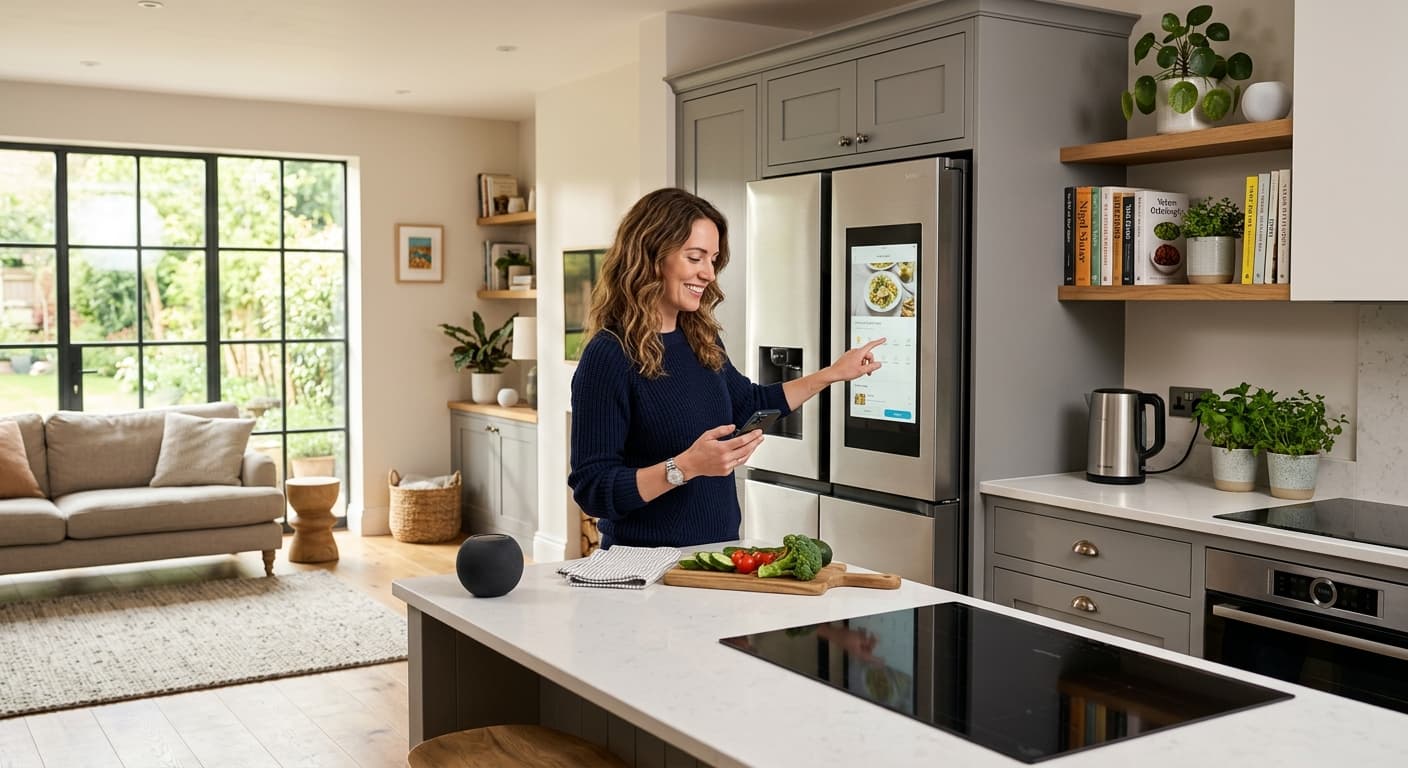
Smart home appliances UK offerings now include WiFi-connected everything – but which features deliver genuine value?
Actually useful smart features:
- Remote start/monitoring (check if washing finished whilst at work)
- Energy monitoring (track consumption and costs)
- Diagnostic alerts (appliance reports problems before total failure)
- Auto-replenishment (dishwasher orders its own tablets – controversial but convenient)
Marketing gimmicks:
- Cameras inside fridges (genuinely, who needs this?)
- Recipe suggestions from your oven (use your phone)
- Voice control for basic functions (walking to the appliance takes three seconds)
Most smart features require proprietary apps that may not receive updates after 3-4 years. We recommend treating smart capabilities as a bonus rather than a primary decision factor. Reliability, efficiency, and capacity should govern your choices.
Finding the Right Installer
Whilst many appliances are plug-and-play, certain installations require qualified tradespeople:
- Electric hobs/ovens: Qualified electrician (Part P compliance)
- Gas hobs: Gas Safe registered engineer (legal requirement)
- Plumbed appliances: Professional plumber for complex installations
- Integrated appliances: Kitchen fitter for cabinet integration
Installation costs vary regionally. London prices typically run 25-40% higher than national averages. A gas hob installation costs £80-£120 outside London, £120-£180 within the M25.
If you're searching for qualified professionals, browse all categories on HouseJester to find verified specialists in your area. Businesses can also list your business to reach homeowners planning appliance installations.
Making Your Purchase: Practical Steps
-
Measure everything twice: Cabinet spaces, door clearances, delivery routes. That American fridge-freezer won't magically shrink to fit your doorway.
-
Calculate running costs: Use the Energy Saving Trust's appliance calculator. Over 10 years, a £600 A-rated appliance often costs less than a £400 C-rated equivalent.
-
Check warranty terms: Extended warranties rarely represent value, but manufacturer guarantees vary dramatically. Miele offers 2 years standard; some budget brands offer just 12 months.
-
Read multiple reviews: Which? provides the most rigorous UK testing. Cross-reference with Trustpilot reviews for real-world reliability data.
-
Consider delivery and installation: Factor £50-£150 for delivery, installation, and old appliance removal. Some retailers bundle these; others charge separately.
-
Don't impulse buy during sales: Black Friday "deals" often discount already-overpriced models. Research thoroughly before sale periods.
Our team has found that independent appliance specialists often provide better service than large chains, particularly for premium brands. The search our company directory feature helps identify local retailers who may offer competitive pricing without the warehouse-store experience.
The Bottom Line
Smart home appliances UK options are more sophisticated, efficient, and expensive than ever. Focus on reliability, energy efficiency, and appropriate sizing rather than being seduced by touchscreens and WiFi.
Buy the best you can afford from manufacturers with proven reliability records. A Miele washing machine costs three times a budget brand but lasts four times longer and cleans more effectively. That's not snobbery – it's mathematics.
For integrated appliances within kitchen renovations, work with specialists from our fitted kitchens category who understand appliance dimensions and installation requirements. Getting measurements wrong costs hundreds in returns and re-fitting.
Browse Appliances businesses on HouseJester to find verified suppliers and installers across the UK.
Sources & Further Reading
- Which? Appliance Reviews – Comprehensive independent testing of UK-available appliances
- Energy Saving Trust: Appliance Running Costs – Calculator and guidance for comparing appliance efficiency
- Building Regulations Approved Document L – Energy efficiency requirements for new installations
This article was created with AI assistance and reviewed by the HouseJester editorial team for accuracy and relevance.
Written by
Emma Richardson
Kitchen & Bathroom Specialist
Emma has reviewed hundreds of kitchen and bathroom installations across the UK. She combines product knowledge with real-world testing to help homeowners choose the right fitters and materials for their projects.
- Fitted Kitchens
- Bathrooms
- Tiles
- Heating & Plumbing