
On this page
Protecting your home has never been more sophisticated or confusing. This comprehensive smart locks UK guide cuts through the marketing noise to help you build a genuinely effective home security system, from the latest keyless entry technology to CCTV cameras and monitored alarms.
Key Takeaways
- Smart locks from Yale, August, and Nuki offer keyless convenience but require professional installation for insurance compliance (typically £150-£300)
- Complete home security systems combining CCTV, alarms, and smart lighting range from £800-£3,500 depending on property size and features
- Monthly monitoring costs for burglar alarms vary from £15-£45, with significant regional differences between London and other UK cities
- Ring, Arlo, and Google Nest cameras each excel in different areas: Ring for ecosystem integration, Arlo for battery life, Google for AI detection
- Insurance discounts of 5-15% are available with professionally installed systems meeting British Standard BS EN 50131
Understanding Smart Lock Technology for UK Homes
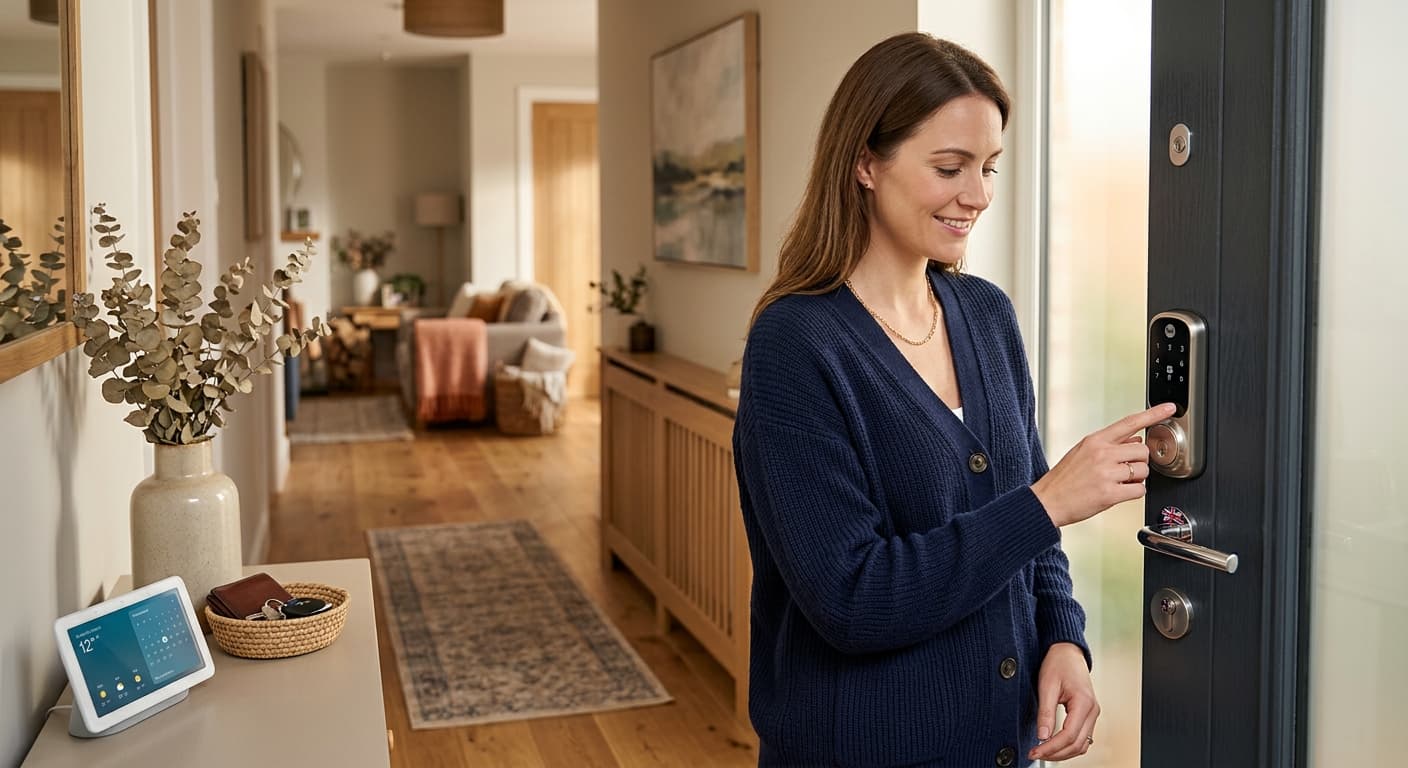
Smart locks have evolved beyond early reliability concerns. Modern systems from Yale, August, and Nuki now offer robust security that satisfies most UK insurers, provided you choose the right model and installation method.
The smart lock Yale vs August vs Nuki comparison reveals distinct strengths. Yale's Linus Smart Lock (£180-£250) fits most UK door types and integrates seamlessly with existing Yale cylinders. August's Smart Lock Pro (£230-£280) excels at retrofit installation, sitting over your existing lock mechanism. Nuki's Smart Lock 3.0 (£220-£270) offers the most flexible smart home integration but requires careful compatibility checking with UK door hardware.
We recommend professional fitting for any smart lock installation. DIY fitting might save £100-£200, but insurers frequently require certification to maintain cover. Based on listings in our home security directory, typical professional installation costs £150-£300 in most UK regions, rising to £250-£400 in London.
Are Smart Locks Safe and Reliable?
The reliability question deserves a nuanced answer. Quality smart locks now match traditional mechanisms for physical security, with most achieving Sold Secure Diamond or TS007 3-star ratings. The Yale Conexis L1, for instance, meets BS 8621 standards for emergency egress.
Digital vulnerabilities remain the primary concern. According to Which? testing in 2023, premium models from established manufacturers showed strong resistance to hacking attempts, whilst budget alternatives under £100 exhibited worrying weaknesses. The key differentiators:
- Encryption standards: Look for AES-128 or AES-256 encryption as minimum
- Two-factor authentication: Essential for remote access features
- Offline functionality: Critical backup when Wi-Fi fails
- Battery monitoring: Low battery alerts prevent unexpected lockouts
Battery life varies significantly. Yale's models typically last 8-12 months on four AA batteries. August claims similar performance. Nuki's rechargeable battery lasts 3-4 months between charges. All three provide weeks of low-battery warnings before complete failure.
Ring vs Arlo vs Google Nest Camera Comparison
Choosing the best home CCTV systems UK wireless options means understanding each platform's genuine strengths rather than believing marketing claims.
Ring's ecosystem dominates UK market share for good reason. The Ring Video Doorbell Pro 2 (£220) and Spotlight Cam Battery (£180) offer excellent value with solid 1080p recording. The mandatory subscription (£3.49/month per device or £8.99/month for unlimited devices) adds up quickly for multi-camera setups. Ring's strength lies in its mature ecosystem—add a Ring Alarm system and everything works together smoothly.
Arlo's cameras win on battery performance and video quality. The Arlo Pro 4 (£200-£250) delivers sharp 2K HDR footage and genuinely lasts 4-6 months between charges in normal use. Arlo's subscription (£2.79/month per camera or £8.99/month for unlimited) includes advanced AI detection that significantly reduces false alerts from passing cars or neighbourhood cats.
Google Nest cameras provide the most sophisticated detection algorithms. The Nest Cam Battery (£180) and wired Nest Cam (£100) leverage Google's AI to distinguish between people, animals, and vehicles with impressive accuracy. The subscription model (£6/month or £12/month for enhanced features) costs more but includes 30 days of continuous recording for wired cameras.
Our team has found that mixed systems often work best. A Ring doorbell for front door monitoring, Arlo cameras for perimeter coverage, and budget wired cameras for less critical angles creates comprehensive coverage without breaking the bank. Total system cost for a typical semi-detached: £600-£1,200 plus £15-£25 monthly subscriptions.
How Much Does CCTV Installation Cost UK?
Professional CCTV installation varies dramatically based on system complexity and regional labour rates. Here's what we've seen across businesses listed on HouseJester:
Basic wireless systems (2-4 cameras, DIY installation): £300-£800 Mid-range wireless (4-6 cameras, professional installation): £800-£1,500 Premium wired systems (6-8 cameras, full professional installation with recording): £2,000-£4,000 Commercial-grade systems (8+ cameras, network video recorders, professional monitoring): £4,000-£8,000+
Labour costs account for 30-40% of total expenditure on professional installations. Expect £200-£400 per day for qualified installers in most UK regions. London rates typically run 25-35% higher. A complete 4-camera wired system with proper cable routing through walls and loft spaces requires 1-2 days of professional work.
Cable runs significantly impact costs. Surface-mounted trunking keeps expenses down but looks industrial. Concealed cabling through cavity walls and ceilings adds £100-£200 per camera but delivers a professional finish. Listed buildings or solid stone construction can double installation costs due to restricted drilling options.
Burglar Alarm Systems and Monitoring Costs
The burglar alarm monitoring cost UK monthly varies from £15-£45 depending on response type and contract length. Understanding the options helps you avoid paying for services you don't need.
Self-monitoring (£0-£10/month): App notifications sent directly to your phone. You handle any response. Works for those confident in managing alerts and living close enough to respond quickly.
Monitoring centre alerts (£15-£25/month): Professional monitoring centre receives signals and contacts you and nominated keyholders. They'll call emergency services if unable to verify it's a false alarm.
Police response monitoring (£30-£45/month): Premium service including NSI Gold or SSAIB certification required for police response. The monitoring centre follows strict protocols before requesting police attendance.
According to the National Security Inspectorate, only certified systems meeting BS EN 50131 Grade 2 or higher qualify for police response. Installation costs £800-£2,500 for systems meeting these standards, with most semi-detached homes requiring £1,200-£1,800 for complete coverage.
Wireless alarm systems from Yale, Pyronix, and Texecom now rival wired reliability whilst dramatically reducing installation costs. The Yale IA-340 Smart Home Alarm (£350-£450) offers excellent DIY installation but won't qualify for police response without professional certification.
What is the Best Home Security System UK?
There's no single answer—the best system matches your specific circumstances, property type, and budget. However, our experience working with UK tradespeople reveals consistent patterns in what works.
For budget-conscious homeowners (£500-£1,000): Start with a Ring Video Doorbell (£90-£220), add two Blink Outdoor cameras (£80 each), install timer switches for lighting (£15-£30 each), and upgrade to a smart lock. Total investment under £600 provides visible deterrence and remote monitoring. Browse our company directory to find local installers who can help with smart lock fitting.
For comprehensive protection (£2,000-£3,500): Combine a professionally installed alarm system (£1,200-£1,800) with 4-6 quality cameras (£600-£1,200), smart locks on main entries (£400-£600 including installation), and integrated security lighting PIR motion sensor guide systems (£200-£400). This tier satisfies most insurance requirements for premium reductions.
For high-value properties (£5,000-£12,000+): Specification should include Grade 3 intruder alarms, professional CCTV with facial recognition, perimeter detection, and 24/7 monitoring. Properties in Manchester and Birmingham typically see 15-20% lower costs than equivalent London installations.
Security Lighting and Motion Detection
Exterior lighting deters opportunistic burglars more effectively than almost any other measure. The security lighting PIR motion sensor guide systems have improved dramatically with LED technology reducing running costs to negligible levels.
Passive infrared (PIR) sensors detect heat movement within their range. Quality matters enormously—cheap sensors (under £20) trigger constantly from wind-blown vegetation or passing cats, whilst premium units (£40-£100) offer adjustable sensitivity and pet immunity.
We recommend these proven options:
- Steinel IS 140-2: £45-£60, excellent adjustability, 140° detection angle
- Lutec Peri: £60-£85, integrated LED, 5-year warranty
- Ring Smart Lighting: £25-£50 per unit, integrates with Ring ecosystem
- Philips Hue outdoor sensors: £45-£65, full smart home integration
Smart lighting systems add significant convenience but require reliable Wi-Fi coverage across your property. Traditional PIR lights work independently, maintaining security even during internet outages. For most UK homes, a combination approach works best—smart lighting for frequently used areas like driveways, traditional PIR for side passages and rear gardens.
Installation costs £80-£150 per light fitting when hiring qualified electricians, though many homeowners comfortably handle PIR light installation as a DIY project. Ensure any mains electrical work complies with Part P Building Regulations—notifiable work requires certification.
Insurance Implications and Discounts
Home insurance providers increasingly offer discounts for verified security measures, but the devil lives in the details. Most insurers require professional installation certificates for smart locks and alarms to qualify for premium reductions.
Typical discounts we've seen:
- BS EN 50131 Grade 2 alarm with monitoring: 5-10% reduction
- Police-response certified alarm: 10-15% reduction
- Professionally installed CCTV: 3-5% reduction
- Approved smart locks meeting insurance standards: 2-5% reduction
These percentages compound on annual premiums of £300-£800 for typical UK homes, potentially saving £30-£120+ annually. A £2,000 security system investment breaks even through insurance savings alone within 15-25 years, though the primary value remains actual security improvement.
Always inform your insurer before installing security systems. Some policies mandate specific standards, and retrospective notifications can complicate claims if systems don't meet requirements.
Finding the Right Security Installer
Quality installation matters more than equipment brand for long-term reliability. Look for installers certified by recognised bodies:
- NSI Gold: Highest standard for security installers
- SSAIB: Alternative certification scheme, equally rigorous
- NACOSS Gold: Nationally recognised quality mark
- ECA/NICEIC: For electrical aspects of security installation
Request multiple quotes and verify certifications directly with issuing bodies. The cheapest quote rarely delivers best value—we've seen countless homeowners pay twice after budget installations failed within months.
You can browse all categories on HouseJester to find certified security specialists in your area. Those willing to list your business with verified credentials typically maintain higher professional standards than those avoiding directory listings.
Building Your Security Strategy
Effective home security combines multiple layers rather than relying on single solutions. Start with these foundational steps:
- Assess vulnerabilities: Walk your property perimeter noting dark areas, concealed access points, and weak entry points
- Prioritise visible deterrents: Security signs, cameras, and lighting discourage most opportunistic attempts
- Secure physical access: Quality locks, reinforced doors, and window locks form your primary defence
- Add electronic monitoring: Alarms and cameras catch determined intruders and provide evidence
- Maintain systems: Monthly tests, annual servicing, and prompt battery replacements keep everything functional
Budget £1,500-£2,500 for comprehensive security covering an average UK semi-detached property. Phased implementation spreads costs—start with locks and lighting this year, add cameras next year, complete with an alarm system the following year.
The best security system is one you'll actually use. Overly complex systems with constant false alarms get disabled within months. Simplicity and reliability trump feature lists every time.
Sources & Further Reading
- Which? Home Security Reviews - Independent testing and ratings of security equipment
- National Security Inspectorate (NSI) - Find approved security installers and understand certification standards
- Secured by Design - Police initiative providing home security guidance and approved product lists
This article was created with AI assistance and reviewed by the HouseJester editorial team for accuracy and relevance.
Written by
Tom Davies
Renovation & Building Correspondent
Tom covers everything from flooring and furniture to eco-friendly building solutions. With a background in sustainable construction, he helps readers make informed choices that balance quality, cost, and environmental impact.
- Flooring
- Furniture
- Storage Solutions
- Eco & Sustainable