
Introduction
Every UK home has at least one space that's chronically underused: the area beneath the stairs. Whether you're in a Victorian terrace, a modern new-build, or a compact flat, under stairs storage offers a genuine opportunity to reclaim wasted square footage. We've analysed pricing from dozens of joiners, carpenters, and storage solutions specialists across the UK to give you realistic costs for transforming this awkward nook into functional storage.
Key Takeaways
- Basic under stairs storage cupboards cost £400–£800 for DIY flat-pack solutions, whilst bespoke fitted installations typically range from £1,200–£3,500
- Pull-out drawer systems and complex configurations add 30–50% to base costs but significantly improve accessibility
- London and South East pricing runs 20–35% higher than the national average for professional installation
- Planning your storage layout carefully before engaging a tradesperson can save £500+ in design revisions and wasted materials
- Built-in storage solutions generally add value to your property, with quality installations recouping 60–80% of costs at resale
How Much Does Under Stairs Storage Cost UK?
The cost of under stairs storage varies dramatically based on complexity, materials, and who does the work. Let's break down the realistic price ranges you'll encounter.
DIY vs Professional Installation
Off-the-shelf solutions from B&Q or Wickes start around £200–£400 for basic shelving units designed to fit under stairs. These require self-assembly and won't be tailored to your specific dimensions.
For a professional carpenter or joiner to build bespoke under stairs storage, expect to pay:
- Basic cupboard with single door: £800–£1,500
- Multi-section cupboard with shelving: £1,200–£2,200
- Pull-out drawer system: £1,800–£3,500
- Premium installation with integrated lighting and soft-close mechanisms: £2,500–£4,500
These figures include materials and labour but exclude any structural modifications. According to Checkatrade's 2024 survey data, the average cost for under stairs storage in the UK is £1,850, though this varies significantly by region.
Pricing in London typically runs 25–35% higher than the national average, whilst Manchester and Birmingham tend to sit 10–15% below London rates. Rural areas often see slightly higher costs due to tradesperson travel time.
Material Cost Comparison
Your choice of materials substantially impacts the final price:
| Material | Cost Range (per m²) | Durability | Best Use Case |
|---|---|---|---|
| MDF (painted) | £40–£70 | Good (10–15 years) | Budget-conscious projects; painted finishes |
| Pine (softwood) | £60–£100 | Good (15–20 years) | Traditional aesthetics; staining or painting |
| Oak (hardwood) | £120–£200 | Excellent (25+ years) | High-end installations; natural wood grain |
| Birch plywood | £70–£110 | Very good (20+ years) | Modern designs; structural strength |
| Melamine-faced chipboard | £30–£50 | Moderate (8–12 years) | Internal cupboard sections; budget option |
We've found that mid-range birch plywood offers the best balance of cost, durability, and aesthetic appeal for most homeowners. Oak remains popular for period properties where matching existing woodwork matters.
Under Stairs Storage Ideas and Costs UK
The design you choose dramatically affects both cost and functionality. Here are the most popular configurations we've encountered across our directory listings:
Simple Cupboard Storage
The most straightforward option: a single door providing access to the entire under-stairs void. Costs range from £600–£1,200 professionally installed.
Best for: Storing bulky items like vacuum cleaners, suitcases, or seasonal decorations. Works well in smaller homes where complexity isn't justified.
Multi-Zone Compartmentalised Storage
Dividing the space into separate sections with individual doors creates organised zones for different items. Professional installation costs £1,400–£2,500.
This approach prevents the "black hole" effect where items get lost at the back. We recommend including at least one shallow section for frequently accessed items like shoes or cleaning supplies.
Pull-Out Drawer Systems
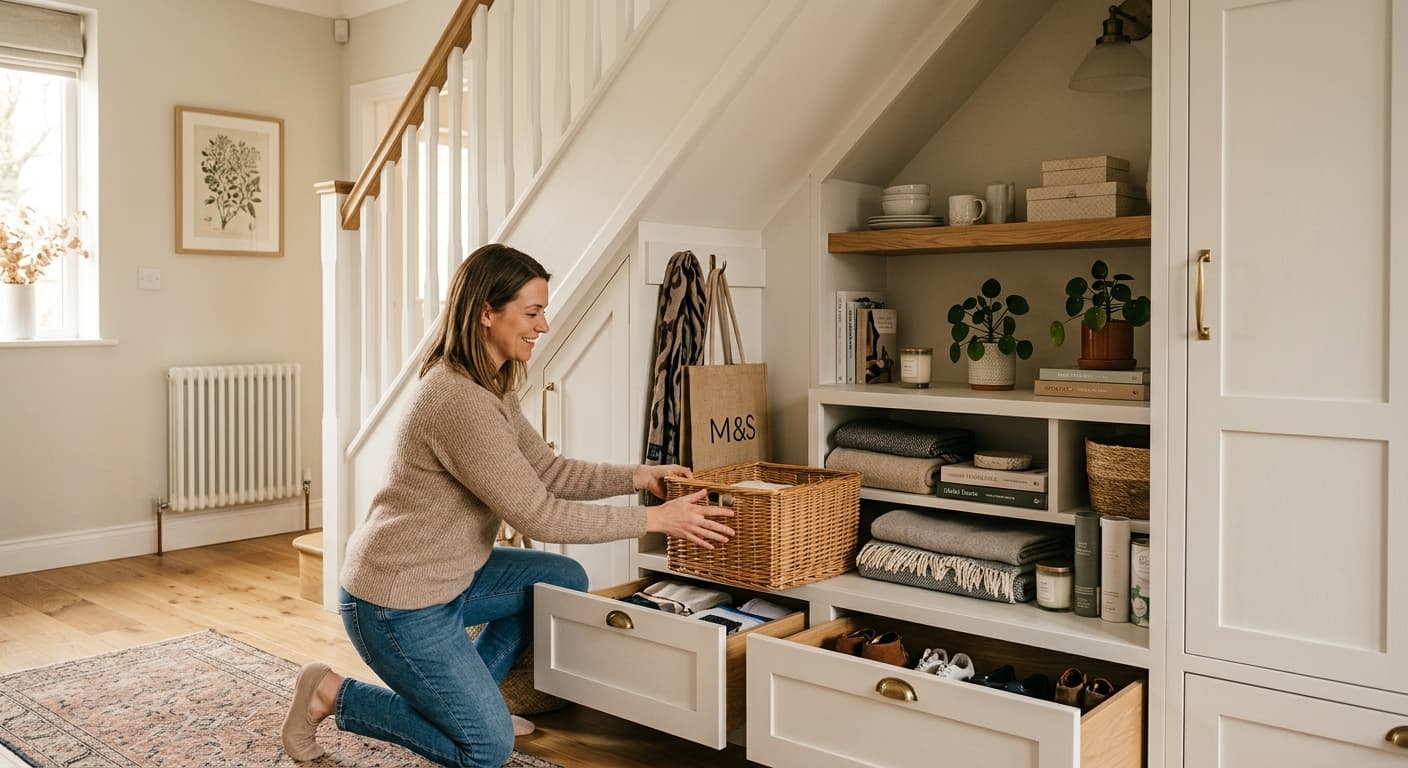
The premium option for accessibility. Deep sliding drawers make full use of the space and eliminate the need to crawl inside. Expect to pay £2,200–£3,800 installed.
The extra cost reflects the engineering required: heavy-duty drawer runners rated for 50kg+ loads, precise alignment, and robust construction. According to the Federation of Master Builders, these systems have become 40% more popular since 2020 as homeowners prioritise accessibility.
Open Shelving Display
Removing the cupboard doors entirely creates display shelving for books, plants, or decorative items. Costs run £500–£1,200 depending on finish quality.
This works brilliantly in open-plan living areas but requires maintaining visual tidiness. Consider LED strip lighting (add £80–£150) to create a feature.
Combination Office/Storage Nook
Tailoring the space for a compact home office with integrated storage above and below. Professional installation costs £1,800–£3,200.
Particularly popular post-pandemic, this solution typically includes a fold-down desk, electrical sockets, and shelving. Check Building Regulations Part M if installing fixed seating to ensure adequate manoeuvring space.
What Is the Best Way to Organise a Small Home?
Maximising storage in compact UK properties requires strategic thinking beyond just the under-stairs space. Read our complete guide to home storage solutions complete guide for comprehensive advice, but here are key principles we recommend:
Vertical Space Utilisation
Most small homes have abundant unused vertical space. Built-in alcove shelving ideas Victorian homes particularly benefit from this approach, as period properties typically feature chimney breast alcoves crying out for floor-to-ceiling fitted shelving.
Professional alcove shelving costs £400–£900 per alcove for painted MDF, or £800–£1,600 for hardwood. The investment proves worthwhile: properly designed alcove shelving can replace freestanding bookcases and display units, actually making rooms feel larger.
Garage Storage System Wall Mounted UK
If you're fortunate enough to have a garage, wall-mounted storage systems free up floor space for vehicles whilst providing organised tool and equipment storage.
Basic slatwall panel systems from Screwfix or Toolstation cost £80–£200 for materials, whilst professional-grade systems like StoreWall or Gladiator range from £400–£1,200 for a complete garage wall.
We've found that investing in a proper garage storage system wall mounted UK solution prevents the gradual creep of belongings into living spaces. Factor in around £200–£400 for professional installation if you're not confident with power tools.
Kitchen Storage Solutions for Small Kitchens
Kitchens in older UK homes notoriously lack storage. Modern kitchen storage solutions for small kitchens focus on maximising every centimetre:
- Pull-out larder units: £300–£700 per unit
- Corner carousel systems: £150–£400
- Under-sink organisers: £40–£120
- Drawer divider systems: £60–£180 per drawer
If you're undertaking a full kitchen renovation, budget an additional 15–20% of your total fitted kitchens cost for optimised storage solutions. The investment pays dividends in daily usability.
Loft Storage Boarding and Insulation Guide
Loft space represents the largest untapped storage area in most UK homes. However, simply throwing boxes into the loft risks damaging ceiling joists and compressing insulation.
Proper loft storage boarding and insulation guide recommendations include:
- Loft boarding (materials only): £200–£500 for 10m²
- Professional boarding installation: £400–£900 for 10m²
- Loft legs (to raise boards above insulation): £150–£300 for materials
- Loft ladder installation: £200–£600 fitted
Building Regulations Part L requires maintaining insulation effectiveness. Purpose-designed loft legs allow 270mm+ insulation depth beneath boarding, satisfying current thermal performance standards whilst creating usable storage.
Is Built-In Storage Worth the Investment?
The short answer: yes, for most UK properties.
Quality built-in storage typically returns 60–80% of its cost when you sell, according to research by HomeOwners Alliance. More importantly, it improves daily living in ways that freestanding furniture simply cannot match.
The Case For Bespoke Storage
Bespoke installations make efficient use of awkward spaces that standard furniture cannot accommodate. Under-stairs areas, sloping ceilings, chimney breast alcoves—these spaces remain wasted without custom solutions.
We've consistently observed that homeowners who invest in proper built-in storage report higher satisfaction with their homes. The psychological benefit of organisation and reduced clutter shouldn't be underestimated.
When to Choose Freestanding Instead
Bespoke storage makes less sense if:
- You're renting or planning to move within 2–3 years
- Your property has unusual dimensions that would require exceptionally expensive custom work
- You prefer flexibility to reconfigure layouts regularly
- Budget constraints make even basic professional work unaffordable
IKEA's PAX and BILLY systems, whilst not bespoke, offer excellent value for renters or those wanting flexibility. A well-planned IKEA storage solution costs 40–60% less than equivalent bespoke carpentry.
Money-Saving Tips for Storage Projects
Do Your Own Painting and Finishing
Many joiners quote for installation only, with painting as a separate line item. Doing your own painting and finishing can save £200–£400 on a typical under-stairs project.
Use Dulux Trade or Crown Trade paint for durability—domestic ranges don't hold up as well in high-traffic storage areas.
Source Your Own Hardware
If your carpenter is amenable, sourcing your own handles, hinges, and drawer runners can reduce costs by 15–25%. Check browse all categories for suppliers offering trade-quality hardware at reasonable prices.
Websites like Ironmongery Direct and SD Products offer professional-grade fixtures at better prices than many tradespeople's supplier accounts.
Combine Multiple Projects
If you're planning under-stairs storage plus alcove shelving or other carpentry, commissioning everything simultaneously typically saves 20–30% compared to separate projects. Tradespeople offer better day rates for longer jobs with assured income.
Off-Peak Scheduling
Many carpenters and joiners have quieter periods during January-February and July-August. Booking work during these months can yield 10–15% discounts, though you'll need flexibility with exact timing.
Get Multiple Detailed Quotes
Obtain at least three written quotes specifying materials, dimensions, and finishes. Variations often reflect different assumptions rather than price differences—ensure you're comparing like-for-like.
Our team has found that the cheapest quote frequently omits elements included by others. The middle quote often represents the best value once you account for all factors.
Factors Affecting Storage Installation Costs
Beyond the obvious material and labour components, several factors significantly impact your final bill:
Structural Modifications
If your under-stairs area requires removing walls, relocating plumbing, or electrical work, costs escalate quickly. Budget an additional £400–£1,200 for these complications.
Always check whether modifications require Building Regulations approval. Removing any wall element, even non-structural, may require notification under Building Regulations Part A if it affects structural stability or Part P if electrical work is involved.
Access and Site Conditions
Awkward access increases labour time and costs. Upper-floor installations, properties without vehicle parking nearby, or protected flooring requiring extra care all add 10–20% to baseline costs.
Finish Quality and Details
Soft-close hinges, integrated LED lighting, premium paint finishes, and quality ironmongery add 25–40% to basic installation costs but dramatically improve the end result.
We recommend prioritising these upgrades for frequently used storage like under-stairs cupboards whilst accepting simpler finishes for purely functional spaces like loft storage.
Professional Qualifications
Member carpenters from the Institute of Carpenters or the British Woodworking Federation typically charge 15–25% more than unaffiliated tradespeople but offer guaranteed workmanship and professional indemnity insurance.
For significant investments above £2,000, this premium provides valuable peace of mind. You can search our company directory for qualified professionals in your area.
Finding the Right Storage Professional
Choosing the right tradesperson makes the difference between a storage solution you'll love for decades and a frustrating compromise.
Questions to Ask Potential Installers
- Can you provide photos of previous under-stairs installations?
- What warranty do you offer on materials and workmanship?
- Are you insured for public liability and professional indemnity?
- Will you handle any required Building Regulations notifications?
- What's your payment schedule? (Never pay more than 25% upfront)
Red Flags to Avoid
- Quotes without detailed materials specifications
- Pressure to decide immediately or "special offers expiring today"
- No fixed business address or landline number
- Requests for full payment before work commences
- Inability to provide verifiable references
The HouseJester directory includes 661 verified businesses across 21 categories, making it straightforward to find reputable storage solutions professionals. You can also list your business if you're a storage specialist looking to reach homeowners.
Regional Price Variations Across the UK
Storage installation costs vary considerably by location:
London and South East: 25–35% above national average. A £1,500 job elsewhere costs £1,875–£2,025 in London.
Home Counties: 15–25% above national average.
Major cities (Manchester, Birmingham, Leeds, Glasgow): 5–10% below to 5% above national average, depending on specific postcode.
Northern England, Wales, Scotland (excluding major cities): 10–20% below national average.
Northern Ireland: Roughly aligned with Northern England pricing, though fewer specialist providers can limit competition.
These variations reflect labour costs, business overheads, and local competition rather than quality differences. You're paying for the same skills regardless of location.
Conclusion: Making Your Storage Investment Count
Under stairs storage represents one of the most cost-effective ways to add functional space to UK homes. With professional installations starting from £800 and offering decades of utility, the investment makes financial and practical sense for most homeowners.
Prioritise quality materials and workmanship over rock-bottom prices. A well-executed storage project improves daily life whilst adding tangible value to your property. The £500 you save by choosing the cheapest quote rarely justifies the compromises in durability and finish.
Start by clearly defining your storage needs, obtain multiple detailed quotes, and choose a qualified tradesperson with proven experience in similar projects. The weeks spent planning and selecting the right professional pay dividends in the finished result.
Browse Storage Solutions businesses on HouseJester to find qualified professionals in your area who can transform your under-utilised spaces into valuable storage.
Sources & Further Reading
- Checkatrade: Cost of Under Stairs Storage - Comprehensive UK tradesperson pricing data
- Federation of Master Builders: Storage Solutions Guide - Professional standards and homeowner advice
- Building Regulations Approved Documents - Official UK building standards including Parts A, L, M, and P
This article was created with AI assistance and reviewed by the HouseJester editorial team for accuracy and relevance.
