
On this page
Key Takeaways
- Textured and tactile wallpapers are dominating wallpaper trends UK markets in 2024, with grasscloth and linen-effect designs replacing flat prints
- Earthy neutrals and sage greens continue their reign, whilst bold maximalist florals are making a comeback in bedrooms and dining rooms
- Matt paint finishes are overtaking eggshell for walls, with premium brands like Farrow & Ball competing with more affordable alternatives from Dulux and Valspar
- Feature walls are being replaced by whole-room wallpapering, particularly in hallways and bedrooms where homeowners want cohesive schemes
- Peel-and-stick wallpapers are losing favour as homeowners discover their limitations, with traditional paste-the-wall options proving more durable
The Current State of Wallpaper Trends UK
The wallpaper trends UK landscape has shifted dramatically over the past 18 months. Gone are the geometric patterns and grey monotones that dominated 2020-2022. We're seeing a return to nature-inspired designs with genuine texture, alongside a surprising resurgence of English country florals that would have felt dated just three years ago.
Based on conversations with businesses in our paint & wallpaper directory, the average cost of wallpapering a standard bedroom has risen from £300-500 to £450-700, driven partly by material costs but mostly by demand for higher-quality papers that require professional installation. In London, these figures climb to £600-900 for the same room.
Read our complete guide to wallpaper guide UK for comprehensive advice on choosing and installing wallpaper throughout your home.
What's Dominating: Texture Over Pattern
The single biggest shift we've observed is the move towards tactile wallpapers. Grasscloth, raffia, and linen-effect papers now account for nearly a third of all wallpaper sales according to decorators we've spoken with. These papers create depth through texture rather than printed pattern, working particularly well in living rooms and hallways where you want visual interest without overwhelming smaller furniture pieces.
This trend has practical implications. Textured wallpapers are significantly harder to hang than standard papers. You'll need to be more precise with pattern matching, and most require specific adhesives. Always check the manufacturer's wallpaper paste types and application guide before starting – using standard ready-mixed paste on a natural fibre paper can lead to discolouration and poor adhesion.
The price difference is substantial too. Whilst a standard printed wallpaper from brands like Graham & Brown costs £15-30 per roll, genuine grasscloth papers start at £60 per roll and climb to £120+ for premium options from Cole & Son or Phillip Jeffries. Budget for 10-15% waste with textured papers due to their more complex hanging requirements.
Colour Trends: Greens, Creams, and Surprising Florals
Earthy neutrals remain the safe choice for most UK homeowners, but we're seeing more adventurous colour selections than in recent years. Sage green – which peaked in 2022 – is still selling well, but deeper moss and olive tones are taking over. These work particularly effectively in north-facing rooms where cooler greys can feel bleak.
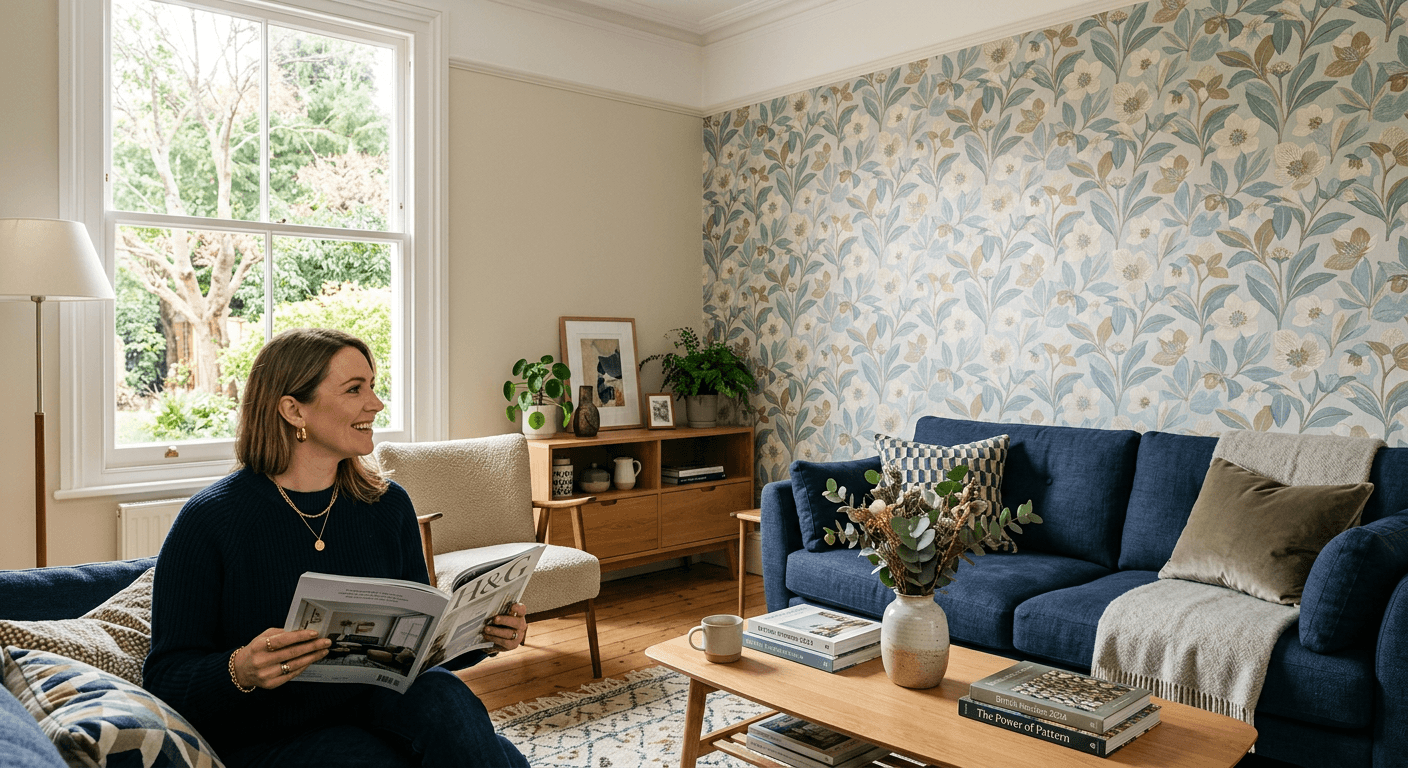
The real surprise? Maximalist florals are back, particularly in bedrooms and dining rooms. Not the small ditsy prints of the 2010s, but large-scale English garden designs reminiscent of Sanderson's classic patterns. Chinoiserie is also seeing renewed interest, especially among homeowners in period properties who want to emphasise original features.
According to a 2024 Homebuilding & Renovating survey, 42% of UK homeowners now prefer warmer neutrals (creams, taupes, warm greys) over cool greys, representing a complete reversal from 2020 figures. This shift affects both wallpaper and paint choices, with businesses across Manchester and Birmingham reporting similar regional trends.
Paint Trends: Matt Finishes and Premium Alternatives
What is the best paint for interior walls UK?
The best interior paint brands UK compared shows interesting market dynamics. Farrow & Ball remains the aspirational choice, but their £89 per 2.5L tin pricing has pushed many homeowners towards mid-tier alternatives. Dulux Heritage (£45-55 per 2.5L) offers similar depth of colour with better coverage, whilst Valspar at B&Q provides acceptable results for £25-30 per 2.5L.
Our team has found that premium paints genuinely do cover better – typically needing two coats versus three for budget options – which narrows the actual cost difference when you factor in time and labour. For a standard 4m x 4m living room, you're looking at £150-200 in premium paint versus £80-100 for economy options, but potentially saving 4-6 hours of work.
Matt vs Eggshell vs Satin Paint Finish
The matt vs eggshell vs satin paint finish debate has shifted decisively towards matt for walls. Modern matt formulations from brands like Little Greene and Paint & Paper Library are far more scrubbable than traditional flat paints, making them practical for family homes.
Here's what works where:
- Matt: Living rooms, bedrooms, ceilings – hides imperfections, creates a contemporary look, easier to touch up
- Eggshell: Hallways, stairs, kitchens – more durable than matt, subtle sheen, good for high-traffic areas
- Satin: Woodwork, doors, window frames – wipeable finish, more modern than gloss, harder-wearing
Eggshell on walls is fading fast, particularly in modern new-builds where perfectly smooth plaster doesn't need matt's imperfection-hiding properties. We've seen this trend accelerate in 2024, with even conservative decorators switching their default recommendation to matt for most applications.
What paint finish is best for living rooms?
Matt emulsion has become the overwhelming favourite for living rooms across the UK. The flat finish creates a sophisticated, contemporary look that works with both modern and traditional furniture. The lack of sheen also prevents light from highlighting minor wall imperfections – crucial in older properties where perfectly flat walls are rare.
For living rooms that double as family spaces with young children, consider a "modern matt" or "matt emulsion" formulation from Dulux Trade or Crown Trade. These offer significantly better wipeable properties than traditional matt whilst maintaining the desired flat finish. Expect to pay £40-55 per 5L tin versus £30-40 for standard matt.
What's Fading: Peel-and-Stick and Statement Ceilings
Peel-and-stick wallpapers had their moment during lockdown when DIY enthusiasm peaked. The reality has been disappointing. Most peel-and-stick papers struggle on British walls, which often have slightly uneven plaster or previous paint layers that prevent proper adhesion. We've heard countless reports of papers peeling within 6-12 months, particularly on external walls where slight temperature changes cause expansion and contraction.
Traditional paste-the-wall wallpapers remain more reliable for UK homes. The wallpaper paste types and application guide from manufacturers like Paste the Wall by Superfresco shows that modern non-woven wallpapers are nearly as easy to hang as peel-and-stick options but offer far superior longevity.
Statement ceilings – the "fifth wall" trend – are also declining. Painting ceilings in bold colours or adding patterned wallpaper felt fresh in 2021-22 but now reads as dated. The exception is period properties with high ceilings (3m+) where a deeper ceiling colour can make spaces feel more intimate. For standard 2.4m ceiling heights in most UK homes, stick with white or near-white.
Emerging Trends for 2025
Several trends are building momentum as we head into 2025. Murals and scenic wallpapers are growing in popularity, particularly in dining rooms and home offices where you want a focal point that discourages screen mounting. These large-scale designs work best on single walls, with remaining walls in coordinating plain paint.
Colour-drenching – painting walls, woodwork, and ceilings in the same colour – continues to gain traction. This works particularly well in small rooms where contrasting trim can feel busy. Farrow & Ball vs Dulux Heritage comparison shows both brands now offer expanded woodwork paint ranges specifically for this trend, though Dulux Heritage at £35-40 per litre substantially undercuts Farrow & Ball's £55-65.
Vintage and antique wallpapers are seeing renewed interest, with homeowners seeking out original Victorian or Edwardian papers from architectural salvage. Professional restoration and hanging costs £80-120 per hour in most of the UK, reflecting the specialist skills required. This remains a niche trend but one we're tracking closely.
Can You Wallpaper Over Painted Walls?
Yes, you can wallpaper over painted walls, provided the paint is in good condition and properly prepared. The surface must be clean, grease-free, and any loose or flaking paint removed. For best results, lightly sand glossy painted surfaces to provide a key for the wallpaper paste.
Emulsion-painted walls generally accept wallpaper well. Apply a coat of wallpaper size (£8-12 for 5L) first to seal the surface and prevent the wall from absorbing moisture from the paste too quickly. This gives you more time to position the wallpaper and prevents bubbles forming.
Never wallpaper over silk or vinyl paint without thorough preparation – these create a non-porous barrier that prevents proper adhesion. Either remove the paint entirely or apply multiple coats of wallpaper size to create sufficient grip.
How to Paint Over Wallpaper UK
Whilst how to paint over wallpaper UK guides suggest it's possible, we strongly recommend against it in most cases. Paint reactivates the wallpaper paste, causing bubbles, peeling, and an uneven finish that looks amateur. The textured seams between wallpaper strips will also show through paint, creating visible lines.
Removing wallpaper takes 2-4 hours for a standard bedroom and costs £150-300 if hiring a decorator. It's worth doing properly. However, if removal absolutely isn't possible:
- Check the wallpaper is firmly adhered with no loose edges or bubbles
- Apply oil-based primer (Zinsser B-I-N at £25-30 per litre) to seal the paper and prevent moisture penetration
- Use thick, high-coverage paint applied with a roller to minimise brushstrokes highlighting seams
- Accept that the finish won't be perfect and be prepared to remove and replaster if you're unhappy
For properties in our directory across the UK, we typically see removal and replastering quoted at £400-700 for a standard room, including materials and two coats of paint. In London and the South East, expect £550-900 for the same work.
Practical Advice for UK Homeowners
Start by ordering samples. Every wallpaper and paint looks different under your specific lighting conditions. Most brands offer A4 wallpaper samples for £3-8, and paint samples cost £3-5 for 100ml tester pots. Live with samples for at least a week, observing how they look in morning and evening light.
Budget realistically for professional installation, particularly with expensive wallpapers. A skilled decorator charges £150-200 per day outside London (£200-280 in the capital). Hanging wallpaper in a standard bedroom takes a full day, so factor £150-280 labour costs on top of materials.
If you're planning multiple rooms, consider working with businesses listed in our browse all categories section. Many paint & wallpaper specialists offer package discounts for whole-house projects, potentially saving 10-15% on total costs.
For those wanting to list your business on HouseJester, we're particularly interested in decorators who specialise in textured wallpapers and colour consultation services – these skills are increasingly in demand but remain relatively rare.
Making Your Decision
The current wallpaper trends UK market offers more choice than ever, but that abundance can feel overwhelming. Focus on longevity over trendiness. A well-chosen neutral textured wallpaper will look current for 5-7 years, whilst bold patterns may feel dated within 2-3 years.
Consider your property type too. Period features in Victorian and Edwardian homes actively benefit from traditional patterns and richer colours. Modern new-builds often work better with subtle textures and lighter neutrals that complement contemporary architecture.
Paint remains the more economical choice for most rooms. A complete redecoration using quality paint costs £400-600 for a living room including labour, versus £600-900 for wallpaper and hanging. However, wallpaper creates impact that plain paint simply cannot match, making it worth the premium in key spaces like entrance halls and main bedrooms.
Browse Paint & Wallpaper businesses on HouseJester to find verified specialists who can help you navigate these trends and create a scheme that works for your specific property and budget.
Sources & Further Reading
- Homebuilding & Renovating Paint & Wallpaper Trends Survey 2024 – Annual survey tracking UK homeowner preferences and emerging design trends
- Which? Best Buy Paint Reviews – Independent testing of interior paint brands available in the UK, including coverage, durability, and value assessments
- British Coatings Federation – Trade association providing technical guidance on paint types, finishes, and application standards for UK properties
This article was created with AI assistance and reviewed by the HouseJester editorial team for accuracy and relevance.
Written by
Sarah Mitchell
Interior Design Editor
Sarah has spent over 12 years covering UK interiors and design trends. She works closely with interior designers and soft furnishings specialists across the country to bring readers expert insights on creating beautiful, functional living spaces.
- Interior Design
- Soft Furnishings
- Paint & Wallpaper
- Lighting